
"Tether" in 2025: Capital Analysis

Chainfeeds Guide:
This article explores the capital adequacy of Tether as an unregulated bank, evaluating Tether’s net capital by comparing it with the capital adequacy standards of traditional banks. It explains the composition of its balance sheet and whether it holds enough total capital to withstand the volatility of its asset portfolio.
Source:
Author:
Luca Prosperi
Opinion:
Luca Prosperi: It has been two and a half years since I last discussed one of the crypto world’s most intriguing mysteries—the asset and liability structure of Tether. The question of whether USDT’s global reserves are real has always affected market sentiment. However, most discussions still focus on a binary judgment of whether it is insolvent or well-capitalized, lacking the proper analytical framework. Unlike traditional companies, the solvency of financial institutions is not simply about assets exceeding liabilities, but rather about statistical risk-bearing capacity: whether capital can absorb fluctuations in asset allocation and reliably honor liability redemption rights. Therefore, to understand Tether’s balance sheet, one must approach it from a banking logic, not from the perspective of cash flow, profit, or asset custody. Tether’s core business is not to act as a custodian, but to issue digital deposits with redemption rights and invest the funds, profiting from the interest spread. This means Tether’s economic nature is closer to that of an unregulated bank rather than a money transfer institution. Thus, the core question is no longer whether they have money, but whether their capital is sufficient to cover the risks of their asset portfolio. This is the correct starting point for understanding the stability of USDT. To assess whether Tether’s capital is adequate, the banking regulatory system should be used as a reference framework. The Basel Accords divide the risks faced by banks into three categories: credit risk, market risk, and operational risk, and require banks to hold corresponding capital buffers to absorb potential losses. For example, credit risk typically accounts for over 80% of the risk exposure of large global banks, while market and operational risks are relatively smaller. Regulators further specify the capital structure, including Common Equity Tier 1 (CET1), Tier 1 capital, and total capital, with minimum requirements of 4.5%, 6%, and 8% respectively. In addition, capital conservation buffers, countercyclical buffers, and systemic surcharges are added, so large banks usually need to hold 10-15% total capital. The stress testing mechanism and Pillar 2 framework of Basel III often push actual capital requirements beyond this range. From this perspective, when examining Tether, the goal is not to prove whether USDT is a scam, but to determine whether it has sufficient capital buffers to withstand asset price volatility, liquidity risk, and redemption pressure. In other words, the question is not whether it can redeem today, but how much extreme shock it can withstand. According to public reserve disclosures, Tether holds about $181.2 billions in assets, of which 77% are cash equivalents with extremely low risk weights; 13% are commodities such as gold and bitcoin; and the rest are harder-to-assess loans and miscellaneous investments. The bitcoin exposure is a key variable in calculating risk-weighted assets: under the most conservative Basel standards, bitcoin requires a 1250% risk weight, which is equivalent to a 1:1 capital coverage requirement; but if treated as a highly volatile digital commodity, a more reasonable risk weight would be about three times that of gold, since BTC’s annualized volatility is about 3-4 times that of gold. Based on different parameters, Tether’s risk-weighted assets range from about $62.3 billions to $175.3 billions, while its capital buffer is only about $6.8 billions, corresponding to a capital adequacy ratio range of 10.89% to 3.87%. This means that under a relatively lenient model, Tether barely meets the minimum capital safety line, but under strict regulatory standards, there is a clear capital shortfall. Although the Tether group has retained earnings of over $10 billions at the group level, these funds are not structurally committed to servicing USDT redemptions and thus cannot be simply regarded as regulatory capital. This also means that Tether’s stability is not built on a prudent regulatory regime, but on the market’s belief in its continued profitability, confidence, and willingness to fulfill its obligations—a typical dirt road with no clear answer, only results that are constantly being tested.
Source of ContentDisclaimer: The content of this article solely reflects the author's opinion and does not represent the platform in any capacity. This article is not intended to serve as a reference for making investment decisions.
You may also like
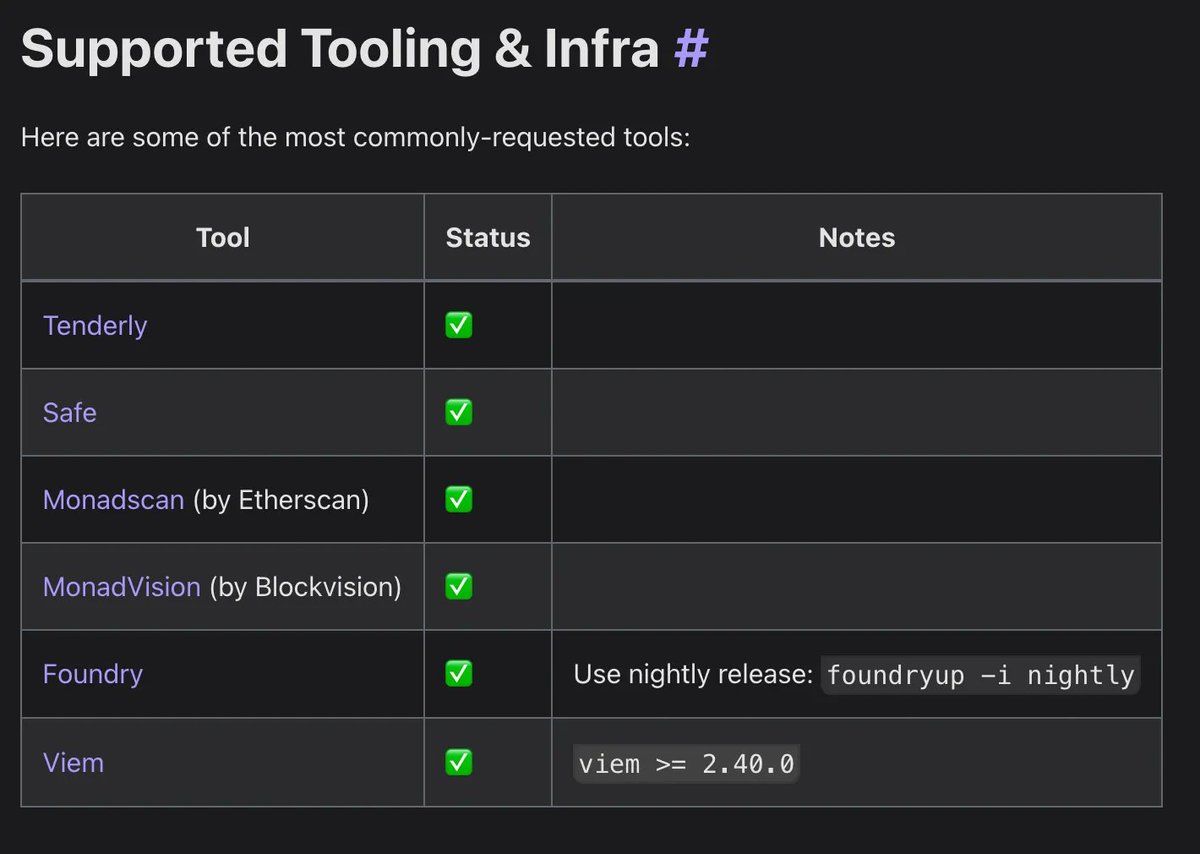
Monad Practical Guide: Welcome to a New Architecture and High-Performance Development Ecosystem
This article will introduce some resources to help you better understand Monad and start developing.
Alphabet’s TPUs Emerge as a Potential $900 Billion Chip Business
Ethereum Loses 25% of Validators After Fusaka: The Network Nears a Critical Failure
US Stablecoin Rules Are Splitting Global Liquidity, CertiK Warns
Trending news
MoreCrypto prices
More





