
Ethereum Loses 25% of Validators After Fusaka: The Network Nears a Critical Failure

A bug that occurred just after the Fusaka update caused a massive drop of validators on Ethereum. The crypto network has just come close to losing finality. Which could have paralyzed Layer 2s, bridges, and DEXs. More details in the following paragraphs !
In brief
- A bug in the Prysm client caused Ethereum validator participation to drop by 25% after Fusaka.
- The crypto network came close to losing finality, revealing a dangerous dependency on few consensus clients.
Prysm bug: Ethereum on the verge of losing its finality
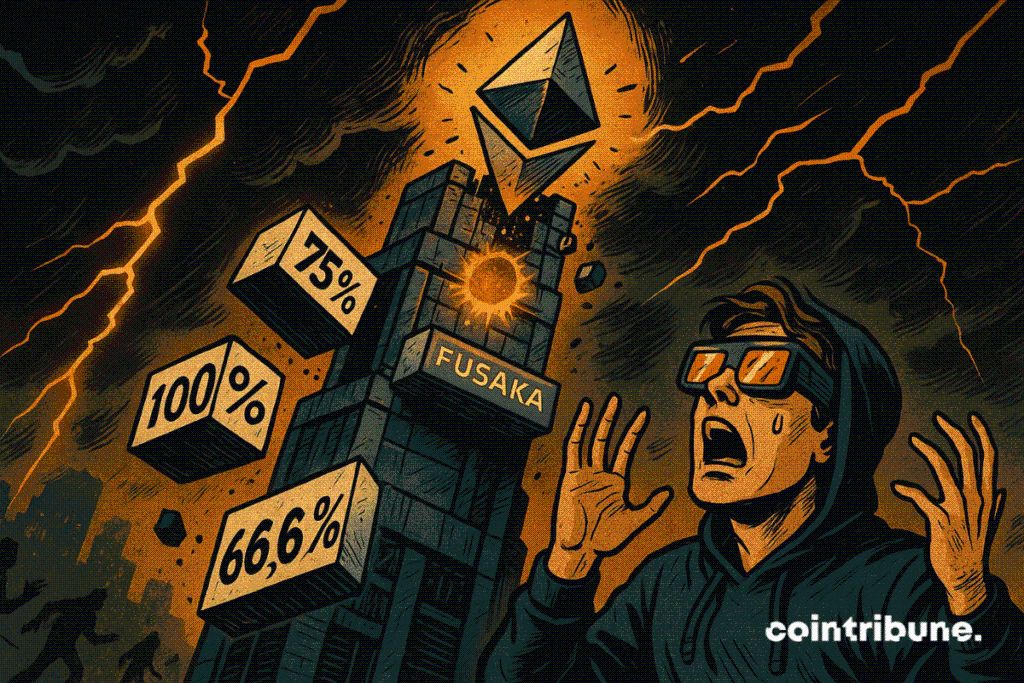
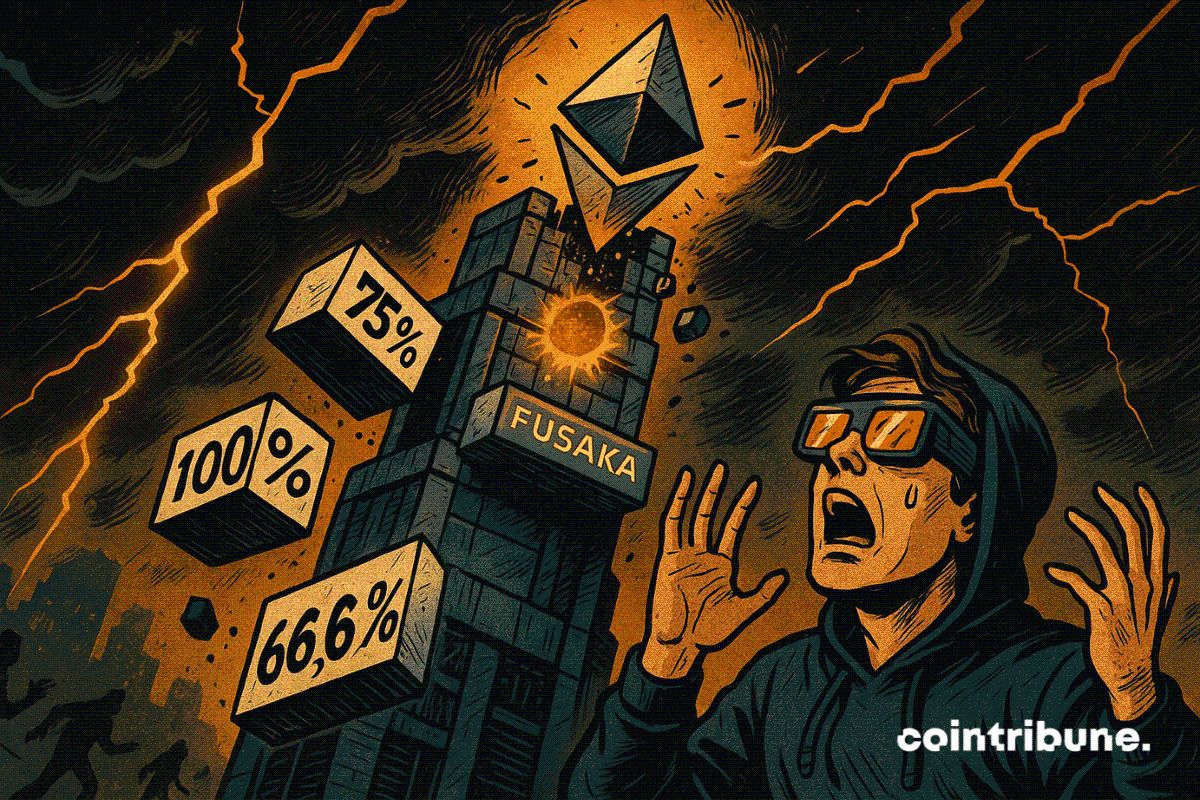
Shortly after the activation of Fusaka , a Prysm client malfunction caused the production of obsolete states. Result: nearly 25% of validator nodes went offline.
Ethereum then fell below the critical 75% voting participation threshold, dangerously approaching the supermajority threshold at 66.6%. This is essential to maintain the crypto network finality.
The emergency fix, based on the –disable-last-epoch-targets flag, quickly restored synchronization. Validation thus returned to nearly 99% within the following hours. However, this instability raises serious questions about Ethereum network robustness, especially in case of a bug in a dominant consensus client.
The massive staking on Prysm proved to be a systemic risk. If the bug had affected Lighthouse (which controls over 50% of validators), Ethereum would likely have lost its finality. This scenario would have caused :
- blocked withdrawals ;
- frozen rollups ;
- a potential chain reorganization.
Diversity of Ethereum clients remains insufficient
The bug not only highlights a technical flaw. It also exposes a structural weakness: Ethereum client diversity. Despite repeated warnings since 2021, Prysm still holds a major share of validators. The data shows a peak at 22.71% before the incident. After the crisis, this share dropped to 18%.
Ethereum today relies on a fragile balance. This refers to a crypto ecosystem too centralized around a few consensus clients. This weakens network resilience. Developers understand this: it is necessary to encourage adoption of alternative clients (such as Lodestar, Nimbus, or Teku) to prevent a single technical bug from compromising the entire chain.
In any case, the latest alerts on Ethereum show that technical decentralization can no longer remain a pipe dream. Faced with increasing risks, the community must strengthen its resilience to guarantee the security of all actors in the crypto ecosystem.
Disclaimer: The content of this article solely reflects the author's opinion and does not represent the platform in any capacity. This article is not intended to serve as a reference for making investment decisions.
You may also like
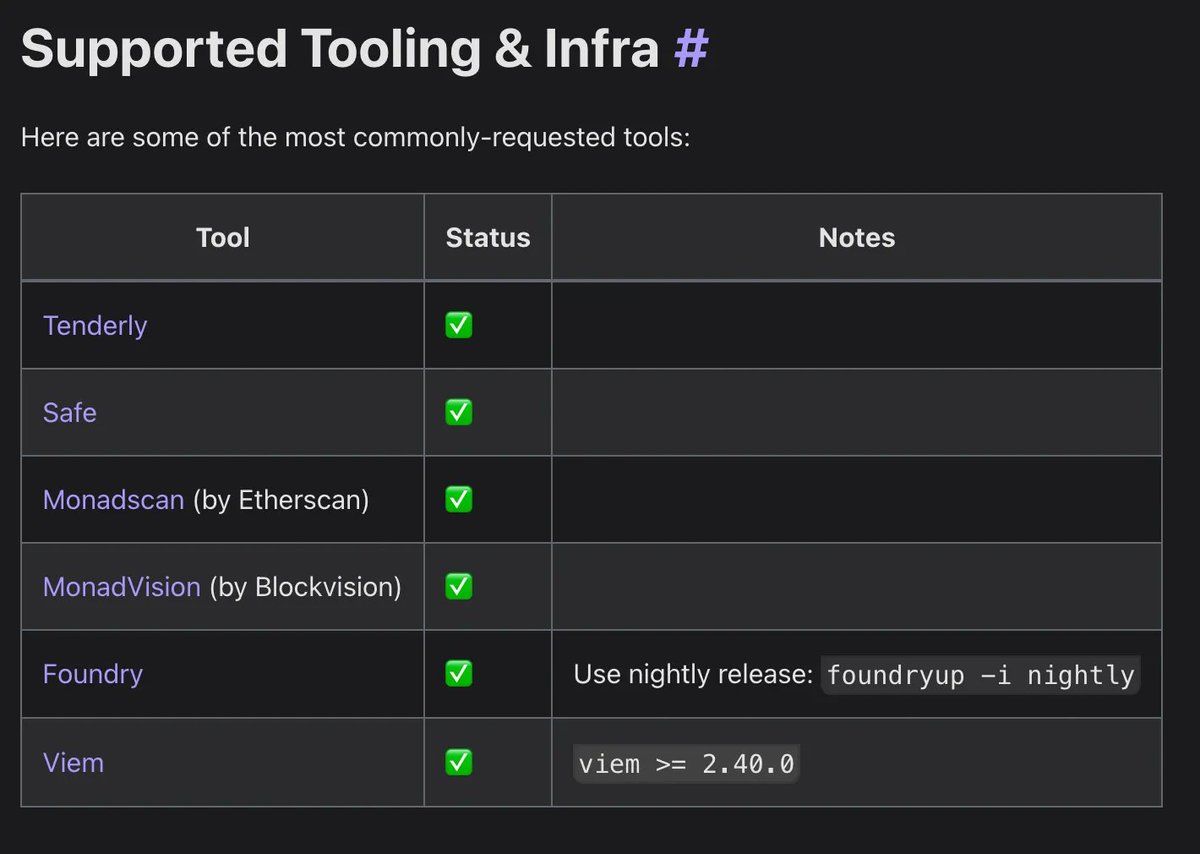
Monad Practical Guide: Welcome to a New Architecture and High-Performance Development Ecosystem
This article will introduce some resources to help you better understand Monad and start developing.
Alphabet’s TPUs Emerge as a Potential $900 Billion Chip Business
US Stablecoin Rules Are Splitting Global Liquidity, CertiK Warns

JPMorgan Sees Bitcoin Reaching $170K if Strategy Holds Firm

Trending news
MoreCrypto prices
More





