
The Rise of Financial Wellness: Exploring a New Era in Impact Investing
- Financial wellness movement integrates emotional, mental, and systemic solutions to address rising financial stress affecting 53% of Americans. - Employers adopt earned wage access (EWA) and SECURE Act 2.0-driven retirement programs to reduce workplace financial strain and boost productivity. - Fintech/edtech leverages AI for personalized financial tools, while impact investors allocate $1.164T to projects combining social good and returns. - Corporate wellness programs now include budgeting apps and AI
The Evolution of Financial Wellness
The landscape of financial well-being is undergoing a significant transformation, influencing how individuals, organizations, and investors approach both personal finance and overall health. With ongoing economic challenges and shifting generational values, there is a rising appetite for resources that blend financial literacy, emotional support, and scalable solutions. For those focused on impact investing, this movement presents a unique opportunity to achieve both positive social outcomes and financial gains, with innovation flourishing in areas such as fintech, edtech, and wellness platforms.
Embracing a Comprehensive Approach to Financial Health
Gone are the days when financial wellness was limited to managing budgets and saving money. Today, a broader perspective is taking hold—one that considers emotional, psychological, and systemic factors that influence financial security. Recent research reveals that over half of Americans feel burdened by their financial situation, and nearly a third experience stress related to money. This highlights the urgent need for solutions that address the underlying causes of financial anxiety, not just the symptoms.
Businesses are increasingly weaving financial wellness into their overall employee health strategies. For example, earned wage access (EWA) programs, which let workers tap into their earned income before payday without extra charges, are becoming popular as an effective way to ease financial strain. Additionally, legislative changes like the SECURE Act 2.0 are encouraging employers to incorporate retirement planning into their wellness offerings, signaling a move toward more holistic, long-term support for employees.
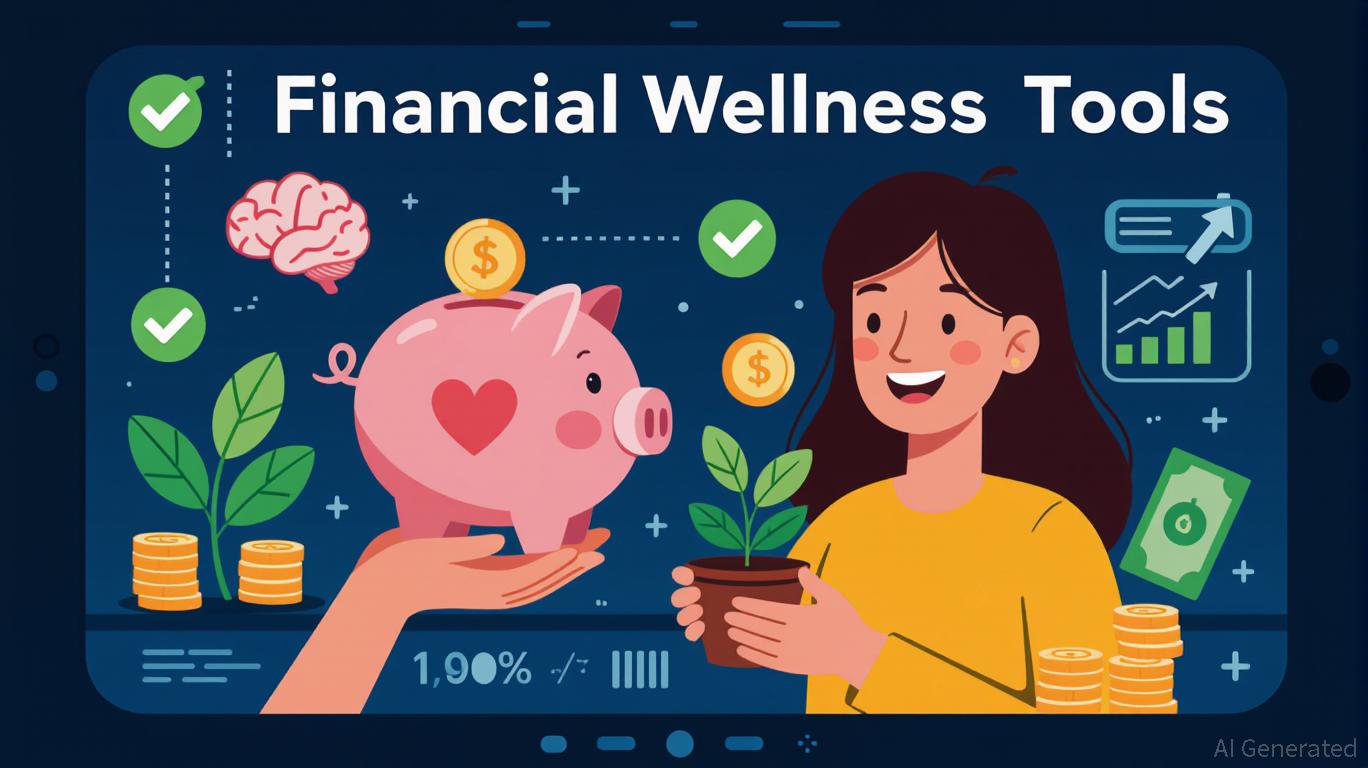
Fintech and Edtech: Driving Tailored Financial Solutions
Technological advancements in fintech and edtech are playing a pivotal role in this shift. By harnessing artificial intelligence and data analytics, these sectors are delivering highly personalized financial guidance. Modern AI-driven platforms provide instant insights, encourage healthier spending behaviors, and even offer mental health resources aligned with financial objectives. Companies like CHC Wellbeing are introducing gamification elements, rewarding users for making positive financial choices and linking these incentives to overall well-being.
In the education technology space, venture capital firms such as Kapor Capital are investing in startups that work to close educational gaps and foster financial literacy, particularly within underserved communities. These efforts reflect a growing understanding that true financial wellness is deeply connected to access to quality education and professional growth opportunities.
Impact Investing: Merging Purpose with Profit
The convergence of investor priorities and consumer needs is especially pronounced in the realm of impact investing. Assets managed in this sector have exceeded $1.164 trillion as of 2025, with a strong emphasis on reducing economic disparities and promoting sustainable development. Investors are increasingly utilizing blended finance models and catalytic capital to support projects in emerging economies, with 43% planning to boost their investments in these regions this year.
Success stories abound, such as Calvert Impact’s involvement in the Forest Resilience Bond, which restored natural habitats while generating returns for investors. Similarly, Beyond Capital has achieved a 26% return on its portfolio by backing ventures in healthcare and agriculture within low-income areas. These examples demonstrate how impact investing can yield both financial rewards and meaningful social change, particularly in sectors that address both financial and emotional well-being.
The Influence of Corporate and Public Sector Initiatives
Corporate wellness initiatives are rapidly expanding to include financial education as a fundamental element. According to a recent survey, 62% of companies now provide wellness programs designed to enhance employee health and productivity. These offerings often feature budgeting tools, virtual workshops, and AI-powered coaching, all of which have been linked to improved staff retention and morale.
Government programs, such as the Education Innovation and Research (EIR) initiative, are also making a significant impact by supporting grants for projects that promote financial literacy. These efforts not only empower individuals to manage their finances more confidently but also strengthen the resilience of the broader economy.
Looking Ahead: Building a Lasting Foundation for Financial Wellness
Financial wellness has moved from a specialized concern to a central priority for both consumers and investors. As the demand for integrated, innovative solutions continues to grow, sectors like fintech, edtech, and wellness platforms are set for rapid expansion. By focusing on creativity, scalability, and inclusivity, impact investors have the opportunity to help create a future where financial and emotional well-being are within reach for everyone.
Disclaimer: The content of this article solely reflects the author's opinion and does not represent the platform in any capacity. This article is not intended to serve as a reference for making investment decisions.
You may also like
The HYPE Token Crypto Rally: Unveiling the Driving Force Behind Its Week-Long Surge
- HYPE Token's 7-day surge in late 2025, reaching $35.08, was driven by protocol upgrades, institutional backing, and retail FOMO. - Institutional investments like Paradigm’s $581M stake and retail-driven momentum mirrored the 2021 Dogecoin rally. - However, looming token unlocks and bearish indicators, including a $11B unlock of 237M tokens, raised sustainability concerns. - Technical analysis showed mixed signals, with consolidation near support levels and short-term volatility risks, while broader trend

How CFTC-Recognized Platforms Such as CleanTrade Are Transforming the Landscape of Clean Energy Investments
- CFTC-approved CleanTrade introduces a regulated SEF for clean energy derivatives, addressing market fragmentation and liquidity gaps. - The platform enables institutional-scale trading of vPPAs/RECs, achieving $16B notional volume in two months by aggregating demand/supply. - Integrated risk analytics (e.g., CleanSight) enhance transparency, allowing investors to hedge project-specific risks like grid congestion and curtailment. - Dual investment pathways attract hedge funds/pension funds through direct

The Rise of CFTC-Regulated Clean Energy Markets: Opening a New Chapter for Institutional Investors
- CFTC's 2025 approval of REsurety's CleanTrade as a SEF marks a landmark shift in clean energy markets by introducing standardized, transparent trading for VPPAs and RECs. - The platform attracted $16B in notional value within two months, enabling rapid institutional-grade transactions that previously took months to negotiate. - By addressing liquidity gaps and enabling precise risk modeling, CleanTrade is accelerating capital flows into decarbonization while bridging ESG investment gaps for institutional

The Increasing Overlap Between Health and Financial Wellbeing in Managing Personal Finances
- Global wellness economy to hit $9 trillion by 2028, driven by holistic well-being trends. - Millennials/Gen Z prioritize wellness as lifestyle, with 55% spending over $100/month on health. - Employers integrate financial wellness into health programs to reduce burnout and boost productivity. - Investors target wellness-driven SaaS, healthcare tech , and financial literacy platforms for holistic solutions.

Trending news
MoreCrypto prices
More





