
Is an Altcoin Season Coming? If So, What Will It Look Like? Strategist Raoul Pal Weighs In

Speaking at Binance Blockchain Week 2025, Real Vision CEO Raoul Pal made exciting and bold predictions about the future of cryptocurrency markets.
Pal describes the current market pullbacks not as the beginning of a widespread bear market, but as a healthy correction within a major bull run. According to the renowned strategist, 2026 will be a period when macro liquidity floods into the markets. This could cause the market to break its traditional four-year cycle patterns, giving way to one of the largest crypto supercycles in history.
Pal's “2026 Alpha Thesis” centers on global liquidity flows. Arguing that 90% of Bitcoin price movements can be directly explained by liquidity, Pal states that the Trump administration's fiscal stimulus and regulations within the US Treasury system (such as SLR) will force banks into a massive influx of capital.
Pal argues that January and February 2026 will serve as a litmus test for the market, predicting that a strong surge during these months will ultimately prove the supercycle theory. Particularly with the weakening of the dollar and the increase in the global money supply, capital is expected to shift from Bitcoin to assets lower down the risk curve.
Raoul Pal, who also delivered important messages regarding the altcoin world, points to a clear macro indicator for the “altcoin season” that investors are eagerly awaiting. Arguing that altcoins, which move in parallel with the business cycle, will experience a real boom once the ISM survey surpasses the 50-point threshold, the strategist predicts that Bitcoin dominance will rapidly decline during this period.
Pal argues that the AI narrative will be permanent, but the highest risk-return ratio will still be found in the crypto ecosystem, particularly in next-generation Layer 1 projects like Sui, where network metrics are rapidly growing. According to Pal, the influx of new capital into the market will be so large that token unlocks or supply increases will not be enough to halt this rise.
Disclaimer: The content of this article solely reflects the author's opinion and does not represent the platform in any capacity. This article is not intended to serve as a reference for making investment decisions.
You may also like
The PENGU USDT Sell Alert: Is This a Turning Point for Stablecoin Approaches?
- PENGU/USDT's 2025 collapse triggered a $128M liquidity shortfall, exposing algorithmic stablecoin fragility and accelerating market shift to regulated alternatives. - USDC's market cap surged to $77.6B by 2025, while MiCA-compliant euro-stablecoins gained $680M in cross-border adoption amid regulatory clarity. - DeFi protocols adopted oracle validation and reserve-backed models post-PENGU, reducing exploit losses by 90% since 2020 through institutional-grade security upgrades. - Regulators now prioritize

Emerging Prospects in EdTech and AI-Powered Learning Systems: Ways Educational Institutions Are Transforming Programs and Enhancing Student Achievement
- AI is transforming education by reshaping curricula, enhancing student engagement, and optimizing institutional efficiency. - Universities like Florida and ASU integrate AI literacy across disciplines, offering microcredentials and fostering innovation. - AI tools like Georgia Tech’s Jill Watson and Sydney’s Smart Sparrow boost performance and engagement through personalized learning. - AI streamlines administrative tasks but faces challenges like ethical misuse and skill gaps, requiring structured train

Anthropological Perspectives on Technology and Their Impact on Education and Workforce Preparedness for the Future
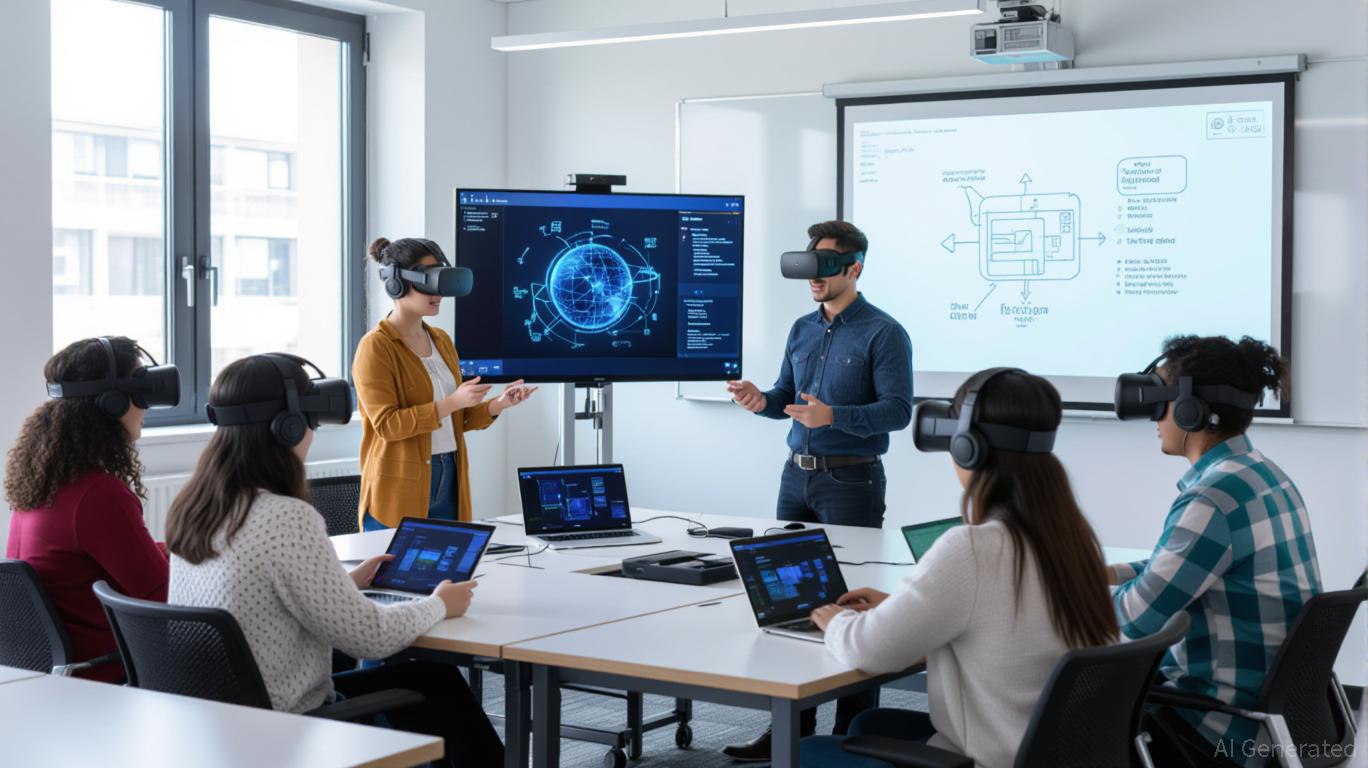
- Interdisciplinary STEM/STEAM education integrates technology tools like AI and VR to bridge theory and real-world skills, driven by $163B global edtech growth. - U.S. faces 411,500 STEM teacher shortages and 28% female workforce representation gaps, prompting equity-focused programs like Girls Who Code. - STEM occupations earn $103K median wages (vs. $48K non-STEM), with 10.4% job growth projected through 2033, driving investor opportunities in edtech and workforce alignment. - Strategic investments in t
The Revival of Educational Technology in Higher Education After the Pandemic
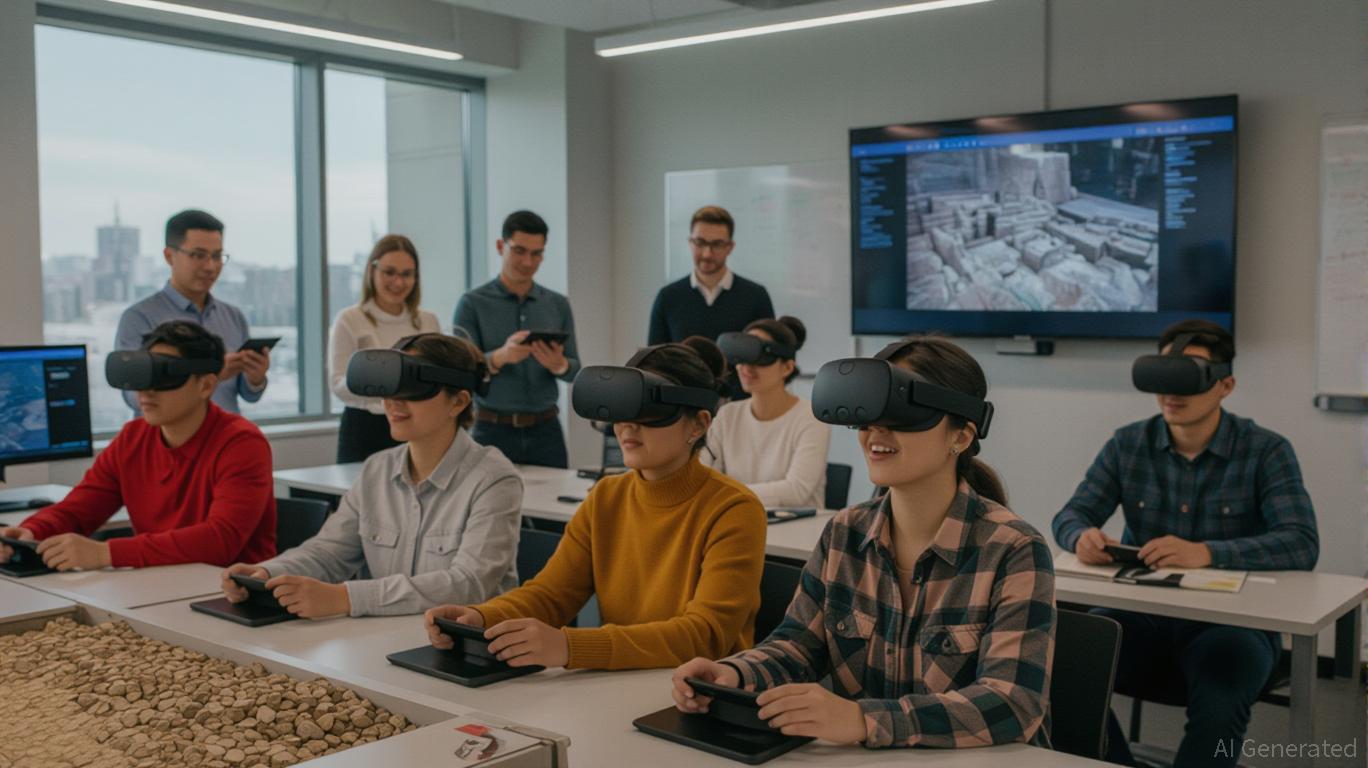
- Global EdTech market grows to $7.3T by 2025, driven by hybrid learning and AI/AR/VR adoption in higher education. - Institutions like MIT and Harvard integrate AI across disciplines, boosting enrollment and workforce alignment through $350M-$500M investments. - EdTech platforms enabling personalized learning and immersive experiences see rising demand, with 45% annual growth in AI-related programs since 2020. - Undervalued EdTech stocks offer investment opportunities as $16B+ VC funding accelerates innov
Trending news
MoreCrypto prices
More





