
The Influence of Institutional Strategists on the Evolution of Long-Term Investment Patterns
- Thomas Sowell's analysis of market signals and decentralized systems shapes institutional investors' strategies to avoid policy-distorted markets. - His critiques of rent control and centralized interventions inform avoidance of regulated real estate and subsidy-dependent sectors like renewables. - The Hoover Institution amplifies Sowellian principles through data-driven policy advocacy, aligning with conservative investment frameworks prioritizing market-tested solutions. - While direct case studies are
Thomas Sowell’s Insights: Shaping Institutional Investment and Policy Analysis
Thomas Sowell’s perspectives on policy and society provide a valuable lens for understanding how institutional investors and think tanks approach evolving market conditions. By focusing on the dynamics of incentives, the challenges of information gaps, and the unforeseen outcomes of centralized policies, Sowell’s scholarship has influenced investment philosophies that value market transparency and evidence-based decision-making. This article explores the ways in which his skepticism of progressive reforms and support for decentralized systems continue to inform institutional strategies, even though recent, concrete examples are scarce.
Core Principles: Sowell’s Theories and Their Impact on Markets
In his influential book Knowledge and Decisions, Sowell highlights the importance of prices as information signals that help coordinate economic activity across dispersed participants. This concept is central to how institutional investors operate, especially when steering clear of markets where policy interventions—such as price controls—disrupt these crucial signals. For example, Sowell’s analysis of rent control and similar regulations demonstrates how such measures can lead to shortages and inefficient resource distribution. As a result, many institutional investors avoid real estate markets with heavy zoning restrictions or rent caps, recognizing the inefficiencies these policies introduce.

Sowell also distinguishes between “constrained” and “unconstrained” visions of policy. The unconstrained view assumes human nature can be perfected and large-scale interventions are practical, a stance often critiqued by conservatives. Investors who share this outlook tend to be wary of sectors dominated by government mandates or subsidies—such as renewable energy or public housing—since, as Sowell argues, these initiatives frequently overlook trade-offs and the ways people adapt to new rules.
Think Tanks: Advancing Sowell’s Approach in Policy and Investment
The Hoover Institution, where Sowell has long served as a senior fellow, has played a key role in promoting his ideas through research and advocacy. Initiatives like “Facts Against Rhetoric” champion data-driven analysis over ideological argument, a philosophy that resonates with investors seeking objective, depoliticized approaches to economic decisions. While there are no direct case studies linking specific investment tactics to Sowell’s work at Hoover, the think tank’s focus on empirical evidence aligns with investment strategies that favor proven market solutions over idealistic reforms.
Sowell’s critiques of welfare dependency and the risks of socialist policies have also shaped the agendas of conservative think tanks that promote fiscal discipline. These organizations often collaborate with institutional investors to encourage private-sector innovation rather than government-led programs. For example, Sowell’s assertion that “there ain’t no such thing as a free lunch” (TANSTAAFL) highlights the hidden costs of subsidies and regulation—a lesson institutional investors heed when evaluating the long-term viability of industries reliant on government support.
Limitations: Tracing Direct Influence in Recent Practice
Although Sowell’s intellectual contributions are widely acknowledged, explicit references to his work in recent institutional investment decisions are rare. A 2025 academic study compared investment approaches inspired by Sowell and Ben Carson but did not provide detailed financial results. Similarly, while the Hoover Institution has celebrated Sowell’s legacy, there is little documentation connecting his theories to specific investment portfolios. This suggests that his influence is more deeply embedded in the broader conservative economic tradition than in individual investment products.
Nevertheless, Sowell’s analysis of risk and reward—such as distinguishing between the fixed nature of bonds and the variable returns of equities—continues to guide asset allocation. Investors applying this logic may favor stocks in sectors with strong growth prospects and transparent value, while avoiding markets where government guarantees obscure true risk levels.
Conclusion: The Lasting Impact of Sowell’s Thought on Institutional Strategy
Thomas Sowell’s body of work remains a guiding force for institutional investors confronting the complexities of policy-driven markets. By highlighting the pitfalls of centralized planning and the strengths of decentralized, market-based systems, his theories support strategies that seek sustainable, evidence-backed results. While direct examples of his influence on recent investment choices are limited, his legacy endures in think tanks and policy groups advocating for prudent fiscal management and market independence. As regulatory environments grow more intricate, Sowell’s focus on practical outcomes and unintended effects continues to offer valuable guidance for institutional decision-makers.
Disclaimer: The content of this article solely reflects the author's opinion and does not represent the platform in any capacity. This article is not intended to serve as a reference for making investment decisions.
You may also like
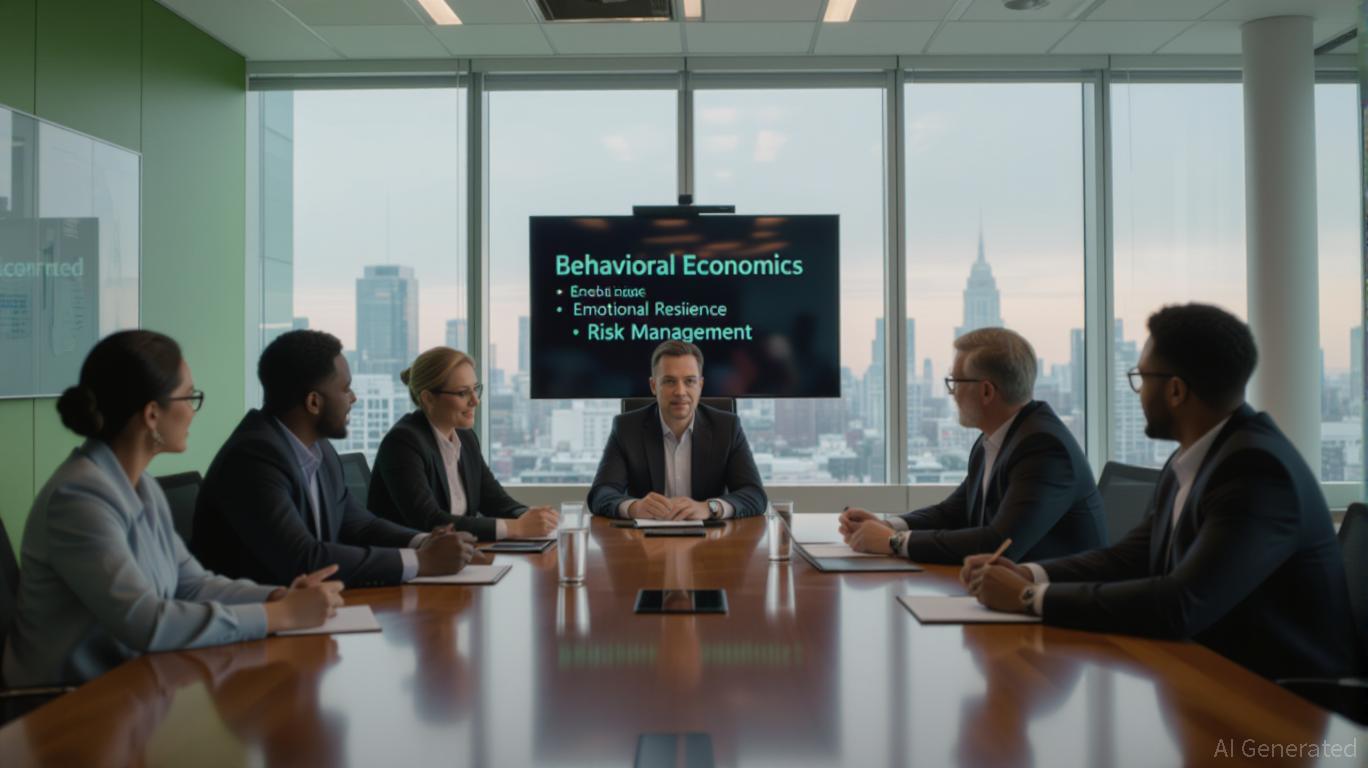
The Financial Wellness Aspect: The Influence of Investor Actions on Market Results
- Behavioral economics integrates psychology to explain how emotional, intellectual, and environmental wellness shape investor decisions and market outcomes. - Emotional resilience reduces cognitive biases like loss aversion, while intellectual engagement through AI tools improves long-term investment returns according to 2024-2025 studies. - Environmental factors such as ESG frameworks and workplace wellness programs demonstrate measurable economic benefits, including 20% higher productivity and reduced f
Regulatory Changes in U.S. Agriculture: The Impact of USDA Policy Decisions on Long-Term Investments in Livestock and Poultry Industries
- USDA’s 2023–2025 Organic Livestock and Poultry Standards (OLPS) impose stricter animal welfare rules, with phased compliance until 2029 to ease small producers’ adjustments. - Compliance costs for organic producers are high initially but projected to yield $59.1–$78.1 million annual benefits via enhanced consumer trust and premium pricing. - Investors favor scalable, tech-driven operations amid OLPS-driven capital shifts, though small producers face compliance challenges and market exit risks in poultry

ZK Atlas Enhancement: Marking a Milestone for Scalable Blockchain Frameworks
- ZKsync's 2025 Atlas Upgrade revolutionizes blockchain with 43,000 TPS, $0.0001 per-transaction costs, and sub-second finality via Airbender zkVM. - Modular EVM compatibility attracts Deutsche Bank , Sony , and $15B institutional investment, accelerating DeFi, NFTs, and cross-border payments. - ZK rollups' TVL surges to $28B, with 60.7% CAGR projected through 2031, driven by Bitcoin ETF inflows and $7.59B ZKP market growth by 2033. - Regulatory clarity under U.S. GENIUS Act and EU MiCA accelerates adoptio

ZK (Zero-Knowledge) Technology and Its Rapidly Growing Market Attention
- Zero-knowledge (ZK) technology is revolutionizing blockchain and fintech by enabling scalable, private, and compliant systems, with the ZKP market projected to grow from $1.535B in 2025 to $7.585B by 2033 at 22.1% CAGR. - Institutional adoption by firms like Goldman Sachs , Walmart , and HSBC highlights ZK's role in confidential transactions and supply chain transparency, supported by regulatory frameworks like the U.S. GENIUS Act and EU MiCA. - Enterprise platforms (Quorum, Hyperledger Fabric-X) and inn

Trending news
MoreCrypto prices
More





