
Rate Hike in Japan: Will Bitcoin Resist Better Than Expected?

One year after its peak at $103,900, bitcoin faces a new challenge: the imminent rise of Japanese rates. While markets fear an unwind of the yen carry trade, the real risks for BTC lie elsewhere. Analysis of a tense December, between Japanese anticipation and American relief.

In brief
- The BOJ is expected to raise its rates in December 2025, but this already integrated decision limits the risks of a sudden shock on bitcoin.
- Despite Japanese pressure, bitcoin benefits from the decline in US rates, which mitigates the impact of a possible unwind of the yen carry trade.
- The threat to bitcoin does not come from Japan but from a Fed reversal, regulation, or a slowdown in institutional adoption.
BOJ: Rate hike expected in a few days
The Bank of Japan (BOJ) is preparing to raise its rates on December 18 and 19, 2025, a widely anticipated decision. Markets are pricing in a 0.25 point increase, bringing the benchmark rate to 0.75%, an unprecedented level since 1995. Japanese 10-year bond yields now hover around 1.95%, more than 100 basis points above the projected official rate. A 76% probability is now set, according to market data.
However, unlike August 2025, when a surprise hike triggered widespread panic, investors seem prepared this time. The yen, although slightly appreciated (+0.03% on December 9), remains under structural pressure. Analysts point out that this monetary normalization will surprise no one, so the shock will be limited. Speculators have reduced their short positions on the yen since February, limiting the risk of a sudden unwind.
Bitcoin between two fires: Japanese rates VS US rate cuts
Bitcoin, often correlated with global liquidity, is subject to dual influence. On one hand, the rise in Japanese rates could reduce the appeal of the yen as a cheap financing currency, weighing on risky assets. On the other, the recent Fed rate cut injects liquidity into the system, easing pressure. Mid-December, BTC fluctuates around $87,500, far from the $103,900 reached a year earlier.
Yet, the dynamic is different: in 2024, US rates remained high, suffocating markets. In 2025, their decline offers a cushion. Bitcoin ETFs, despite record outflows in November, benefit from a more favorable environment. If an unwind of the yen carry trade could trigger temporary sales , the impact would be limited by the US context. The real test for BTC will be the ability of US liquidity to offset Japanese tightening. As Ignacio Aguirre, CMO at Bitget, believes:
The Japanese rate hike contrasts with the expected Fed cuts in 2026, creating increased volatility that often opens attractive accumulation windows for long-term investors.
The real risks for bitcoin do not come from Japan
While the yen carry trade captures attention, the most serious threats to bitcoin come from elsewhere. First risk: an unexpected Fed reversal in 2026, which would challenge the rate cut scenario. Second issue: regulation, with increasing pressure on ETFs and stablecoins.
Moreover, institutional adoption, often presented as a driver, could also become a brake. Finally, competition from traditional assets, such as gold or tech stocks, could divert capital if bond yields become too attractive. In the short term, BTC could consolidate between $85,000 and $95,000. In the longer term, its future will depend less on Japan than on the US’s ability to maintain an accommodative environment.
As 2026 approaches, eyes turn to the BOJ. Bitcoin has already proven its resilience to monetary shocks. This time, its ability to reinvent itself will determine its role in tomorrow’s financial landscape. And you, do you think the BOJ’s upcoming announcements will be beneficial or not for BTC ?
Disclaimer: The content of this article solely reflects the author's opinion and does not represent the platform in any capacity. This article is not intended to serve as a reference for making investment decisions.
You may also like
Five charts to help you understand: Where does the market go after each policy storm?
After this regulatory crackdown, is it a harbinger of an impending downturn, or the beginning of a new cycle where all negative news has been fully priced in? Let’s examine the trajectory after the storm through five key policy milestones.

Mars Morning News | The crypto market rebounds across the board, Bitcoin rises above $94,500; The "CLARITY Act" draft is expected to be released this week
The crypto market has fully rebounded, with bitcoin surpassing $94,500 and US crypto-related stocks rising across the board. The US Congress is advancing the CLARITY Act to regulate cryptocurrencies. The SEC chairman stated that many ICOs are not securities transactions. Whales are holding a large number of profitable ETH long positions. Summary generated by Mars AI. The accuracy and completeness of the content generated by the Mars AI model is still being iteratively updated.

Federal Reserve’s Major Shift: From QT to RMP, How Will the Market Transform by 2026?
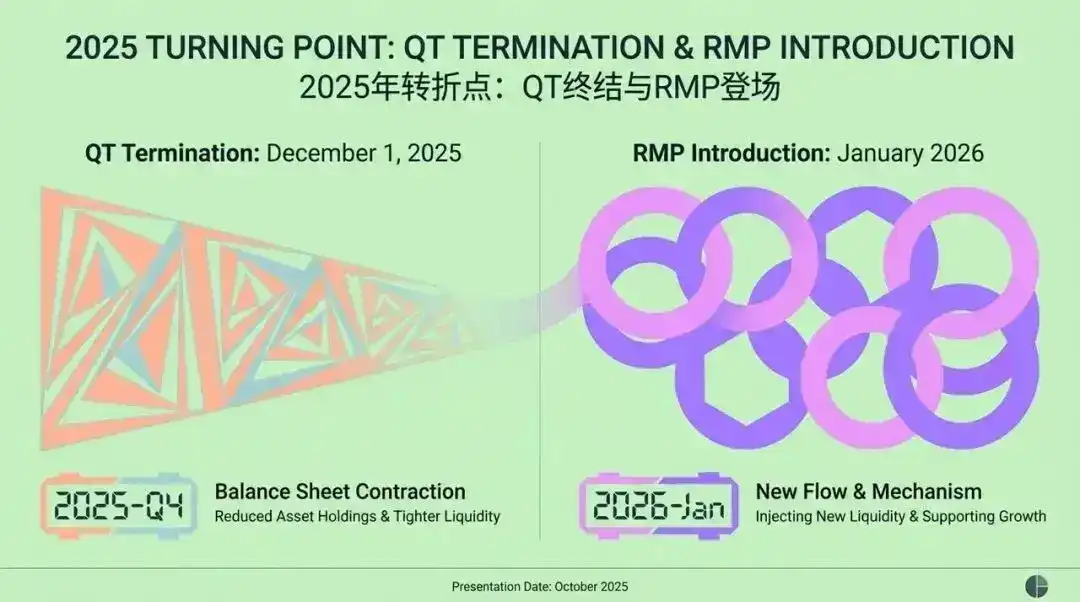
The article discusses the background, mechanism, and impact on financial markets of the Federal Reserve's introduction of the Reserve Management Purchases (RMP) strategy after ending Quantitative Tightening (QT) in 2025. RMP is regarded as a technical operation aimed at maintaining liquidity in the financial system, but the market interprets it as a covert easing policy. The article analyzes RMP's potential effects on risk assets, the regulatory framework, and fiscal policy, and provides strategic recommendations for institutional investors. Summary generated by Mars AI This summary was generated by the Mars AI model, and the accuracy and completeness of its content are still in the process of iterative improvement.
Crucial Decision: Trump’s Final Interviews for Federal Reserve Chair Could Reshape Markets
Trending news
MoreCrypto prices
More





