
Short-Term Bitcoin Holders Are Dominating Profits, But Will It Lead To Recovery?

Bitcoin is making another attempt to break the downtrend that has kept the crypto king capped since late October. Price is hovering near $91,000 as investors watch a rare shift in market structure unfold.
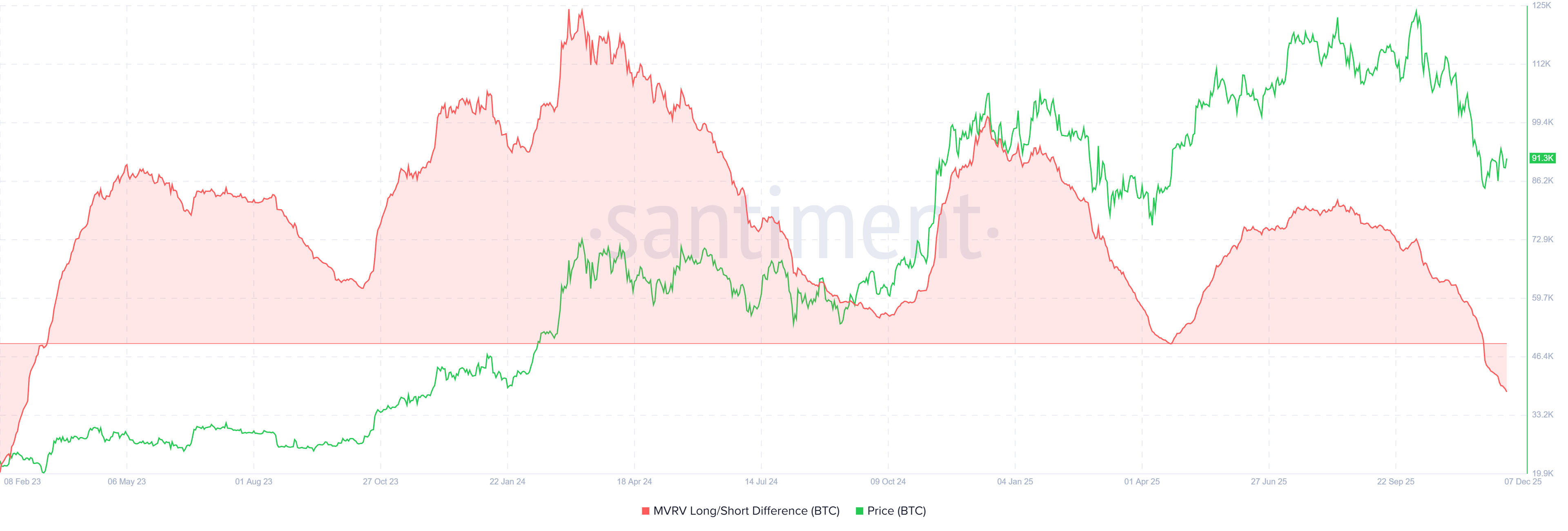
For the first time in more than two and a half years, short-term holders have surpassed long-term holders in realized profits, creating both opportunities and risks for BTC.
Bitcoin Sees Some Shift
The MVRV Long/Short Difference highlights a notable change in Bitcoin’s profit distribution. A positive reading usually signals long-term holders hold more unrealized gains, while a negative value indicates short-term holders are ahead.
In Bitcoin’s case, the difference has dipped into negative territory for the first time since March 2023. This marks 30 months since short-term holders last led in profits.
Such dominance raises concerns because short-term holders tend to sell aggressively when volatility increases. Their profit-taking behavior could add pressure on BTC’s price if the broader market weakens, especially during attempts to break the downtrend.
Want more token insights like this? Sign up for Editor Harsh Notariya’s Daily Crypto Newsletter here.
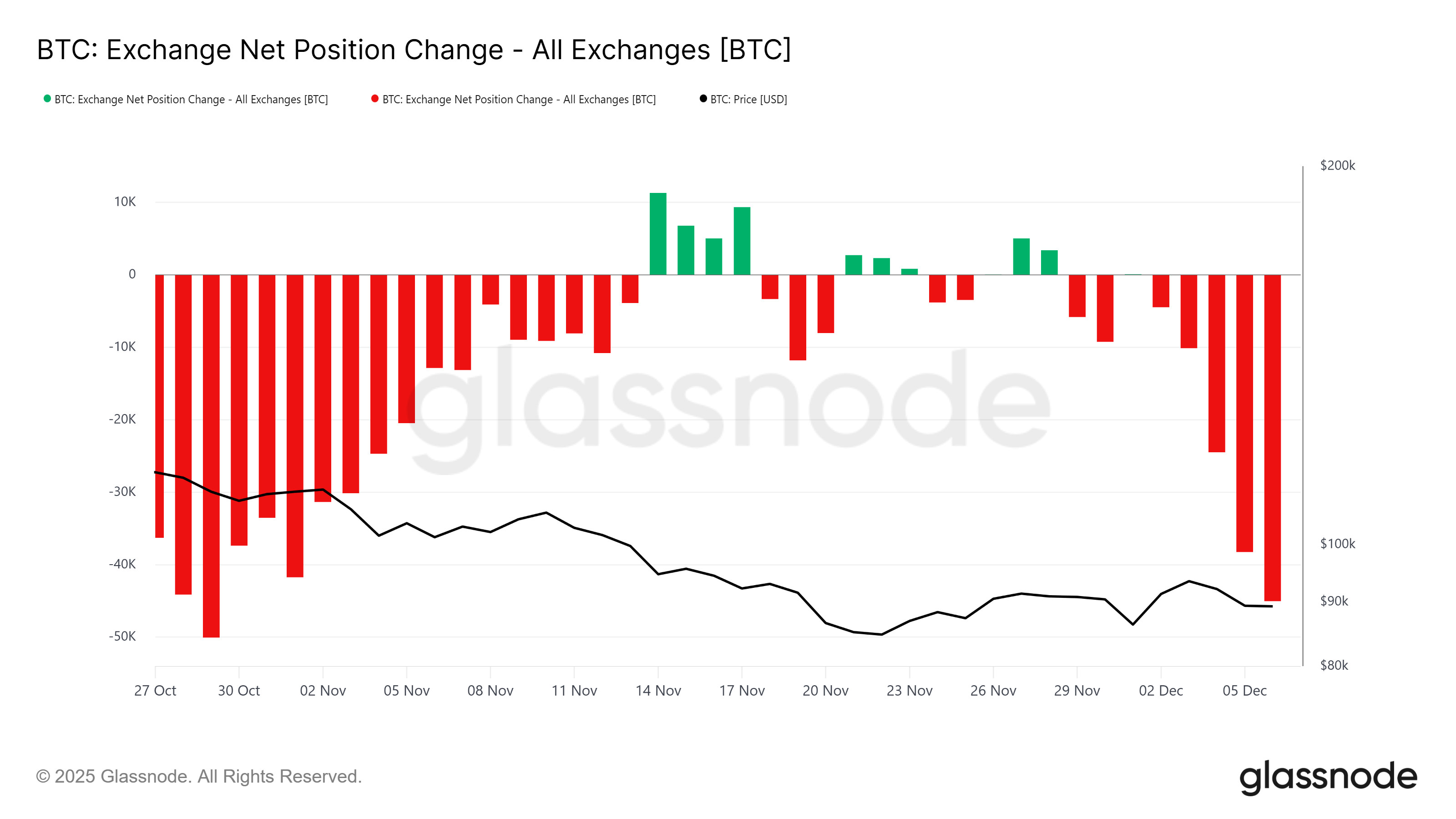
Despite this shift, Bitcoin’s broader momentum shows encouraging signs. Exchange net position change data confirms rising outflows across major platforms, signaling a shift in investor accumulation. BTC leaving exchanges is often treated as a bullish indicator, reflecting confidence in long-term appreciation.
This trend suggests that many traders view the $90,000 range as a reasonable bottom zone and are preparing for a potential recovery. Sustained outflows support price stability and strengthen the probability of BTC breaking above immediate resistance levels.
BTC Price Is Trying Its Best
Bitcoin is trading at $91,330 at the time of writing, positioned just below the $91,521 resistance. Reclaiming this level and flipping it into support is essential for BTC to challenge the month-and-a-half-long downtrend. Without this breakout, upside momentum remains limited.
If short-term holders refrain from selling and accumulation continues, Bitcoin could climb toward $95,000. A successful break above that level may send BTC toward $98,000, signaling renewed bullish strength.
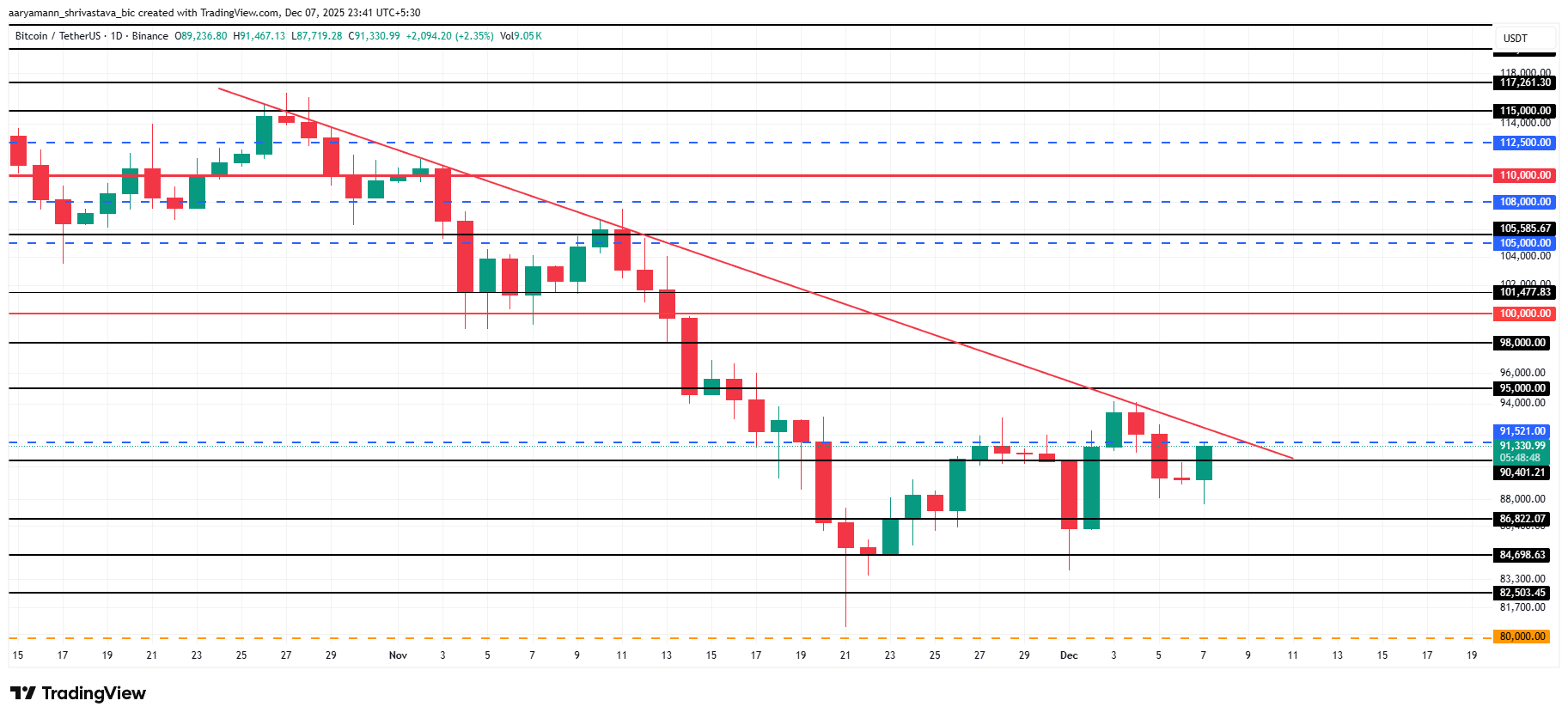
However, if short-term holders start taking profits, the pressure could push BTC back toward $86,822. A drop to this level would prevent any meaningful breakout and invalidate the bullish setup, keeping Bitcoin confined within its multiweek downtrend.
The post Short-Term Bitcoin Holders Are Dominating Profits, But Will It Lead To Recovery? appeared first on BeInCrypto.
Disclaimer: The content of this article solely reflects the author's opinion and does not represent the platform in any capacity. This article is not intended to serve as a reference for making investment decisions.
You may also like
El Salvador's Bitcoin holdings surpass 7,500.
Trump says his U.S. investment plan is not yet fully in effect.
Vitalik Buterin's Latest Support for ZKsync and What It Means for the Layer 2 Scalability Market
- Vitalik Buterin endorsed ZKsync's Atlas upgrade, boosting Ethereum's Layer 2 scalability with 43,000 TPS and low fees. - The endorsement drove a 143% surge in $ZK token value and institutional adoption by Deutsche Bank and Sony . - ZKsync's Fusaka upgrade aims for 30,000 TPS, aligning with Ethereum's scalability goals and projected $0.15–$0.20 price by 2025. - Despite competition from Arbitrum and short-term volatility, ZKsync's deflationary tokenomics and enterprise partnerships strengthen its market po

The Rise of CFTC-Regulated Clean Energy Trading Platforms and Their Influence on the Liquidity of Renewable Assets
- CFTC's 2025 approval of CleanTrade as a SEF marked a regulatory milestone, addressing fragmentation and boosting clean energy liquidity. - Institutional clean energy investments surged to $125T by 2032, driven by ESG mandates and platforms like CleanTrade offering real-time analytics and risk tools. - Q3 2025 saw $75B in U.S. clean energy investment, highlighting growing demand for renewables despite Q2 volatility in manufacturing sectors. - CFTC's regulatory flexibility, including no-action relief for S
Trending news
MoreCrypto prices
More





