
Evaluating the Recent PENGU Price Rally: Could This Signal the Next Major Digital Asset Surge?
PENGU Token: Examining the Surge and Its Implications
In the closing months of 2025 and the start of 2026, the PENGU token—linked to the Pudgy Penguins meme coin—has become a focal point in the cryptocurrency world. Its value has soared, driven by both widespread retail excitement and growing curiosity from institutional players. With its market capitalization briefly topping $2 billion and daily trading volumes surpassing $560 million, experts are debating whether PENGU's rise is a short-lived speculative spike or the beginning of a larger digital asset movement. This overview explores how investor psychology and institutional involvement are shaping PENGU’s future.
Investor Sentiment: FOMO, Swings, and Crowd Behavior
The dramatic price movements of PENGU have largely been fueled by individual investors. In July 2025, the token experienced a remarkable 480% increase, propelled by viral social media buzz and endorsements from prominent figures. However, this optimism quickly faded in October, when a wave of panic selling led to a 28.5% decline, highlighting the fragile nature of meme coin enthusiasm. Behavioral patterns such as herd mentality and overconfidence in rapid gains have intensified these fluctuations.
The surge in December 2025, where PENGU climbed 37% within two days, further demonstrates the influence of retail psychology. Blockchain data indicated that major holders reduced their stakes by 3.62%, suggesting profit-taking and a dip in confidence. At the same time, technical signals like the Relative Strength Index pointed to underlying bearish trends, hinting at a possible downturn. Nevertheless, the token’s resilience above $0.0110 and the potential to break past $0.0138 reflect ongoing optimism among retail traders, as noted by market analysts.

Institutional Momentum: Partnerships, Infrastructure, and Regulation
While retail activity drives short-term volatility, institutional engagement is providing a more stable base for PENGU’s growth. Strategic alliances have broadened the token’s practical uses. For example, a partnership with Bitso is set to introduce PENGU-based derivatives in early 2026, targeting the Latin American market. Additionally, the launch of SOL Strategies’ white-label validator service in April 2025 has positioned Pudgy Penguins as a significant player in blockchain infrastructure.
Regulatory progress is also drawing institutional attention. In the third quarter of 2025, the Pudgy Penguins team submitted an application for an NFT-token hybrid ETF to the SEC—a move that could attract substantial institutional investment if approved. The project’s roadmap also outlines plans for a public offering by 2027, contingent on achieving over $50 million in annual revenue, signaling an ambition to bridge the gap between Web3 innovation and traditional finance. Collaboration with Sharps Technology, a Solana-focused treasury firm, further highlights efforts to institutionalize the project.
Weighing Optimism and Caution
The intersection of enthusiastic retail participation and robust institutional infrastructure creates a complex environment for PENGU. On one side, the token’s price achievements—such as reaching $0.03169 in late 2025—demonstrate strong demand from individual investors, with technical analysis pointing to possible targets in the $0.039–$0.040 range. On the other, significant activity by large holders and bearish technical signals suggest the potential for a correction.
PENGU’s dependence on social media trends also leaves it exposed to rapid shifts in sentiment. Initiatives like the Pudgy Party game and Kung Fu Panda collaborations are designed to expand the token’s utility, but their long-term impact will depend on sustained user interest. Furthermore, regulatory uncertainties, especially regarding the ETF application, introduce additional unpredictability.
Final Thoughts: Lasting Innovation or Passing Trend?
PENGU’s rapid ascent is a prime example of how market psychology can amplify speculative cycles, yet its growing institutional backing lends it added legitimacy. While the token’s volatility is reminiscent of previous meme coin surges, its strategic partnerships and regulatory ambitions indicate a desire to evolve beyond mere hype.
Ultimately, the future of PENGU hinges on whether institutional support can bring stability or if the token will remain at the mercy of market excitement. For now, PENGU stands as a symbol of the crypto market’s dual nature—where grassroots enthusiasm meets institutional ambition. As the boundaries between meme culture and mainstream finance continue to blur, PENGU’s trajectory may offer a glimpse into the next chapter of digital asset development.
Disclaimer: The content of this article solely reflects the author's opinion and does not represent the platform in any capacity. This article is not intended to serve as a reference for making investment decisions.
You may also like
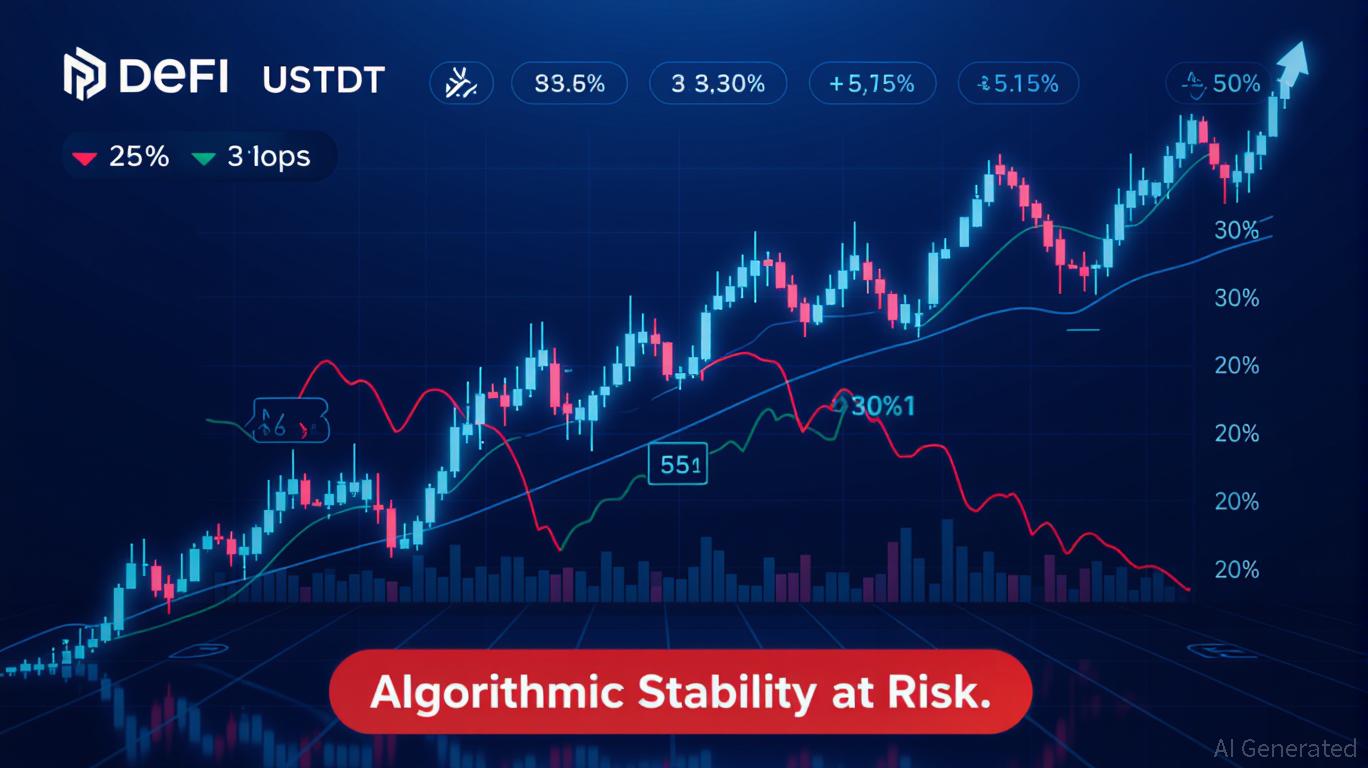
How PENGU USDT Sell Signals Influence Sentiment in the Crypto Market
- PENGU USDT's 2025 volatility exposed algorithmic stablecoin fragility, triggering DeFi sell-offs and reshaping trading strategies. - Contradictory technical indicators highlighted instability in algorithmic rebalancing mechanisms, while $66.6M team wallet outflows raised liquidity concerns. - Retail investors shifted to fiat-backed stablecoins post-UST collapse, accelerating USDC's market share growth amid regulatory ambiguity. - Market correlations (42-46% crypto-equity linkages) and macroeconomic press
The COAI Price Reduction: Impact on Technology and Green Energy Industries
- COAI's 88% price drop in Nov 2025 exposed governance failures and regulatory ambiguity, triggering investor reassessment of AI-linked assets. - U.S. clean energy investment fell 36% due to Trump-era policy shifts, while global clean energy attracted $3.3 trillion in 2025 despite AI sector turmoil. - Investors migrated to stable AI stocks (Microsoft/Nvidia) and non-AI renewables, prioritizing transparency over speculative crypto projects like COAI. - The crisis accelerated capital reallocation toward ethi

Timeless Strategies for Investing in Today's Market
- R.W. McNeel and Warren Buffett share timeless value investing principles emphasizing emotional discipline, long-term vision, and intrinsic value. - Both stress faith in the U.S. economy, with Buffett's Berkshire Hathaway exemplifying this through long-term investments in American icons like Apple and Coca-Cola . - Retained earnings and margin of safety strategies, demonstrated by Apple's reinvestment and Berkshire's share buybacks, highlight compounding's role in mitigating market volatility. - Modern be
Investing for Tomorrow: Preparing the Workforce and Advancing Tech Education in the Digital Age
- AI, cybersecurity, and data analytics are reshaping industries, driving 29% growth in cybersecurity roles and 56% wage premiums for AI skills. - Educational institutions like CCBC and Cengage Work are bridging skill gaps through AI-powered training and industry partnerships. - Government-industry collaborations aim to train 500 AI researchers by 2025, emphasizing workforce readiness as a shared responsibility. - ROI metrics for tech education now include operational efficiency gains and strategic alignme

Trending news
MoreCrypto prices
More





