
The Increasing Expenses of Dementia Treatment and Their Influence on Healthcare Investment Prospects
- Global dementia cases surge to 55M in 2025, projected to triple to 139M by 2050 due to aging populations and Alzheimer's rise. - U.S. dementia costs hit $781B in 2025, with Medicare/Medicaid covering $164B and families paying $52B out-of-pocket. - Home healthcare and AI caregiver tech markets grow rapidly (10-17% CAGR), reaching $381B and $5.3B by 2033-2032 respectively. - Dementia biotech faces risks but attracts $3.1B in Q3 2025 venture funding (+70.9% QoQ), despite $161M losses at Alector/Denali. - St
The Escalating Global Dementia Challenge
Dementia is becoming an increasingly urgent global issue, fueled by an aging population and a sharp rise in Alzheimer's cases. By 2025, more than 55 million people worldwide are expected to be living with Alzheimer's and related dementias. This figure is anticipated to soar to 139 million by 2050. In the United States alone, 7.2 million seniors aged 65 and above are currently affected, with projections indicating this number will climb to 13.8 million by 2060. These trends highlight a significant public health crisis and signal a major shift in how healthcare resources must be allocated.
The Financial Impact of Dementia: Driving Systemic Reform
The economic strain of dementia care is immense. In 2025, the United States is projected to spend $781 billion on dementia-related expenses. This includes $232 billion for direct medical and long-term care, $233 billion in unpaid caregiving, and $302 billion attributed to reduced quality of life for those affected. Government programs like Medicare and Medicaid are responsible for $164 billion of these costs, while families pay $52 billion out of pocket. These numbers reveal a glaring shortfall in the current healthcare system’s ability to meet the growing demand for long-term care, caregiver assistance, and innovative therapies.
Looking ahead, U.S. healthcare spending is expected to increase by an average of 5.8% annually from 2024 to 2033, reaching $8.6 trillion by the end of that period. Factors such as the rising costs of prescription medications, advances in gene therapies, increased behavioral health claims, and a growing elderly population with chronic illnesses are all contributing to this surge. For investors, these trends present both challenges and opportunities, particularly in areas that address the unmet needs of dementia care.
Emerging Opportunities: Home Healthcare and Caregiver Technology
The home healthcare sector stands out as a promising area for investment. By 2033, the U.S. home healthcare market is expected to grow from $162.35 billion in 2024 to $381.40 billion, driven by a robust 10% annual growth rate. This expansion is propelled by the demand for tailored care, outpatient therapies, and mental health services—needs that are especially relevant for dementia patients. On a global scale, the elderly care market is projected to rise from $53.29 billion in 2025 to $98.19 billion by 2032.
Technological advancements are also reshaping dementia care. AI-powered platforms for dementia management are forecasted to expand at a compound annual growth rate of 17.2% between 2024 and 2032, reaching a market value of $5.3 billion by 2032. Innovations such as wearable devices for remote monitoring and smart home technologies are essential for easing caregiver stress and enhancing patient well-being. The long-term care services sector, supported by AI diagnostics and personalized medicine, is projected to hit $40.64 billion by 2030.

Biotechnology in Dementia: High Potential, High Risk
The biotechnology industry offers significant potential in dementia care, though it comes with considerable risks. The global market for dementia care products is expected to increase from $25.56 billion in 2025 to $45.95 billion by 2034, reflecting a 6.73% annual growth rate. However, companies in the clinical development stage often experience financial instability. For instance, Alector, Inc. reported a net loss of $34.7 million in the third quarter of 2025, while Denali Therapeutics faced a $126.9 million loss during the same period. Despite these setbacks, venture capital investment in biotech surged by 70.9% in Q3 2025 compared to the previous quarter, reaching $3.1 billion.
Key Investment Strategies
- Home Healthcare Services: As more seniors prefer to receive care at home, this sector offers scalable growth and resilience against the rising costs associated with hospital-based care.
- Caregiver Support Technology: Digital platforms leveraging AI and telehealth can streamline care delivery and help retain caregivers, addressing the $8 billion in lost wages linked to caregiving responsibilities.
- Dementia Biotech: While early-stage clinical research carries risks, companies with advanced pipelines and strong intellectual property are better equipped to navigate industry challenges.
Conclusion
Dementia is no longer a distant concern—it is a pressing economic and societal issue. As healthcare systems contend with escalating costs and workforce shortages, sectors such as home healthcare, caregiver technology, and dementia-focused biotech offer promising avenues for investment. For those prepared to engage with the complexities of this evolving field, the potential benefits are significant, both financially and in terms of positive societal impact.
Disclaimer: The content of this article solely reflects the author's opinion and does not represent the platform in any capacity. This article is not intended to serve as a reference for making investment decisions.
You may also like
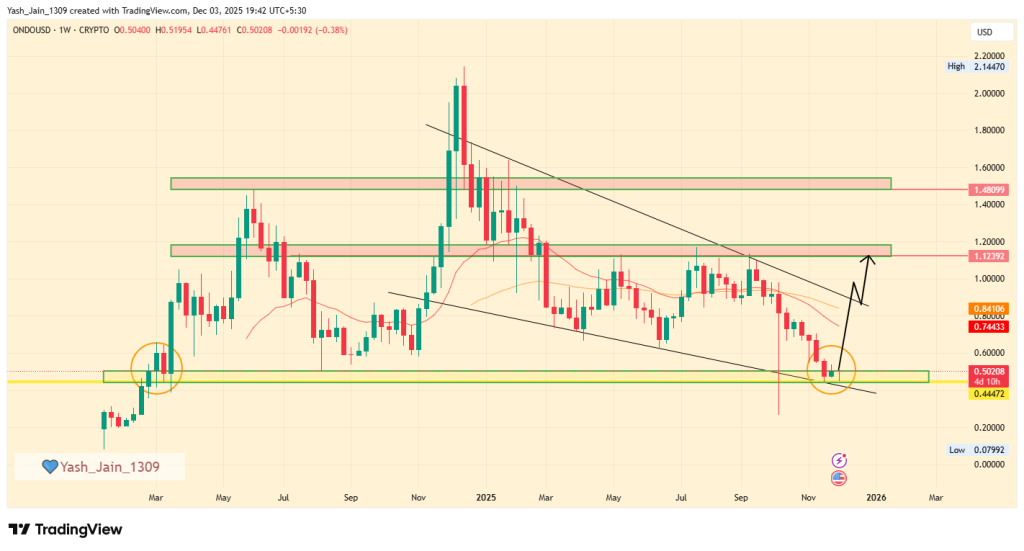
ONDO Price Eyes 120% December Rally as Falling Wedge Pattern Strengthens
Crypto News Today: SEC Stops ProShares From Launching XRP and Other Leveraged Crypto ETFs
Bitcoin Leverage Liquidation and Potential Dangers of Excessive Exposure in 2025
- 2025 crypto market saw $1B+ leveraged liquidations as Bitcoin fell from $126k to $92k amid Fed policy uncertainty and geopolitical tensions. - Retail traders suffered disproportionately from 10x-20x leverage during price corrections, while institutions used ETFs and hedging to mitigate risks. - Derivatives market vulnerabilities exposed include liquidity crunches, algorithmic feedback loops, and cross-market contagion risks via crypto-treasury overlaps. - Post-2025 lessons emphasize 3x-5x leverage caps,

The Recent Fluctuations in the Solana Network and What They Mean for Blockchain Investors
- Solana's 2025 volatility highlights risks for blockchain investors from market psychology and infrastructure flaws. - November 2025 saw 6.1% price drops driven by leverage, Fed rate uncertainty, and plummeting on-chain activity metrics. - $3.1B in DeFi losses from smart contract exploits and AWS outage risks exposed technical vulnerabilities despite decentralization gains. - Investors must balance sentiment indicators (fear/greed index) with technical metrics (TVL, DEX volume) to navigate Solana's instab

Trending news
MoreCrypto prices
More






