
Fintech company Marquis notifies numerous US banks and credit unions about a data breach following a ransomware incident
Marquis Data Breach Impacts Hundreds of Thousands of Banking Customers
Marquis, a financial technology firm, has begun alerting numerous banks and credit unions across the United States after a cyberattack earlier this year resulted in the theft of sensitive customer information.
The incident came to light this week as Marquis submitted data breach notifications to several U.S. states, confirming that the August 14 security event was a ransomware attack.
Based in Texas, Marquis specializes in marketing and compliance solutions for financial institutions, enabling them to aggregate and analyze customer data. The company serves over 700 banks and credit unions nationwide, giving it access to substantial amounts of personal and financial information from banking customers throughout the country.
According to official disclosures reviewed by TechCrunch and filed in Iowa, Maine, Texas, Massachusetts, and New Hampshire, at least 400,000 individuals have been confirmed as victims of the breach so far.
Texas residents have been hit the hardest, with at least 354,000 people in the state affected by the data theft.
In a notice to Maine’s attorney general, Marquis revealed that most of the notifications in Maine were related to customers of Maine State Credit Union, representing about one in nine of those impacted in the state.
The total number of affected individuals is expected to increase as additional states report their own breach notifications.
Marquis disclosed that the attackers accessed names, birth dates, mailing addresses, and financial details such as bank account, debit, and credit card numbers. Social Security numbers were also among the compromised data.
The company’s latest statements attribute the ransomware attack to cybercriminals who exploited a previously unknown vulnerability—known as a zero-day—in Marquis’s SonicWall firewall. This flaw had not been identified by SonicWall or its users before being targeted by the hackers.
While Marquis has not officially named the group responsible, reports suggest the Akira ransomware gang was behind a series of attacks on SonicWall users during that period.
TechCrunch reached out to Marquis for clarification on the total number of affected customers, whether the company received any demands from the attackers, or if a ransom was paid, but did not receive a response before publication.
Sponsored: Experience AWS re:Invent 2025 Live
Discover the latest advancements in AI, cloud technology, security, and more from Amazon Web Services’ premier event in Las Vegas. This video is presented in collaboration with AWS.
Disclaimer: The content of this article solely reflects the author's opinion and does not represent the platform in any capacity. This article is not intended to serve as a reference for making investment decisions.
You may also like
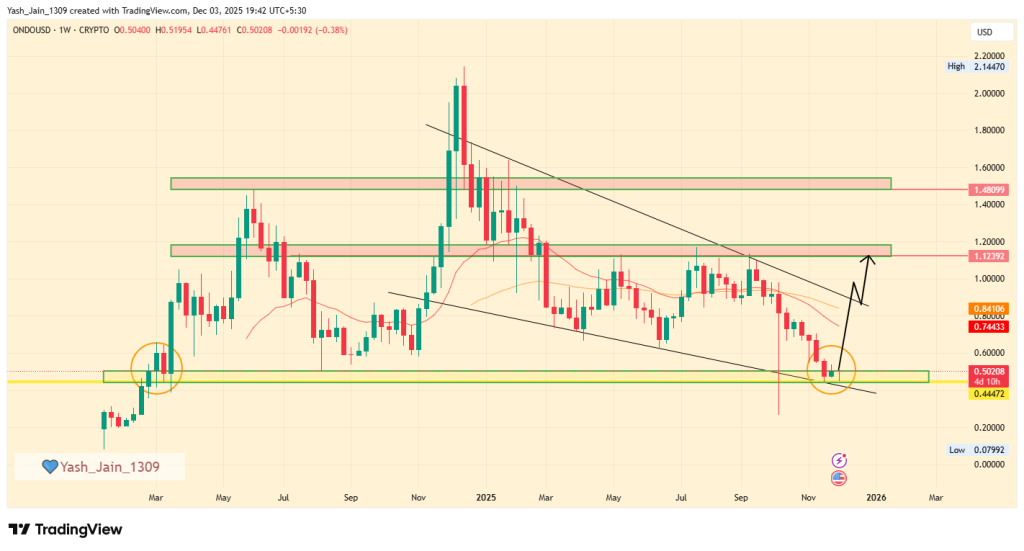
ONDO Price Eyes 120% December Rally as Falling Wedge Pattern Strengthens
Crypto News Today: SEC Stops ProShares From Launching XRP and Other Leveraged Crypto ETFs
Bitcoin Leverage Liquidation and Potential Dangers of Excessive Exposure in 2025
- 2025 crypto market saw $1B+ leveraged liquidations as Bitcoin fell from $126k to $92k amid Fed policy uncertainty and geopolitical tensions. - Retail traders suffered disproportionately from 10x-20x leverage during price corrections, while institutions used ETFs and hedging to mitigate risks. - Derivatives market vulnerabilities exposed include liquidity crunches, algorithmic feedback loops, and cross-market contagion risks via crypto-treasury overlaps. - Post-2025 lessons emphasize 3x-5x leverage caps,

The Recent Fluctuations in the Solana Network and What They Mean for Blockchain Investors
- Solana's 2025 volatility highlights risks for blockchain investors from market psychology and infrastructure flaws. - November 2025 saw 6.1% price drops driven by leverage, Fed rate uncertainty, and plummeting on-chain activity metrics. - $3.1B in DeFi losses from smart contract exploits and AWS outage risks exposed technical vulnerabilities despite decentralization gains. - Investors must balance sentiment indicators (fear/greed index) with technical metrics (TVL, DEX volume) to navigate Solana's instab

Trending news
MoreCrypto prices
More






