
Webster, NY Receives $9.8M FastNY Grant and Revitalizes Xerox Campus: An Infrastructure-Led Model for Boosting Real Estate Value
- Webster , NY, secures $9.8M FAST NY Grant to redevelop Xerox campus into a 300-acre advanced manufacturing hub. - Infrastructure upgrades and tax incentives attract manufacturers, with vacancy rates projected to drop to 2% by 2025. - Strategic transportation networks and municipal reforms position Webster as a competitive industrial hub, boosting real estate value by 10.1% annually.
Webster, NY: A New Epicenter for Industrial Growth
Webster, New York, is rapidly establishing itself as a key force in the resurgence of upstate New York’s industrial sector. This transformation is fueled by a $9.8 million FAST NY Grant, which is being used to convert the former Xerox campus into a sprawling 300-acre center for advanced manufacturing. Strategic investments, municipal restructuring, and attractive tax incentives are drawing significant interest from logistics, manufacturing, and commercial real estate investors. The combination of upgraded infrastructure and supportive policies is creating a prime environment for long-term economic expansion.
Infrastructure Investments Drive Transformation
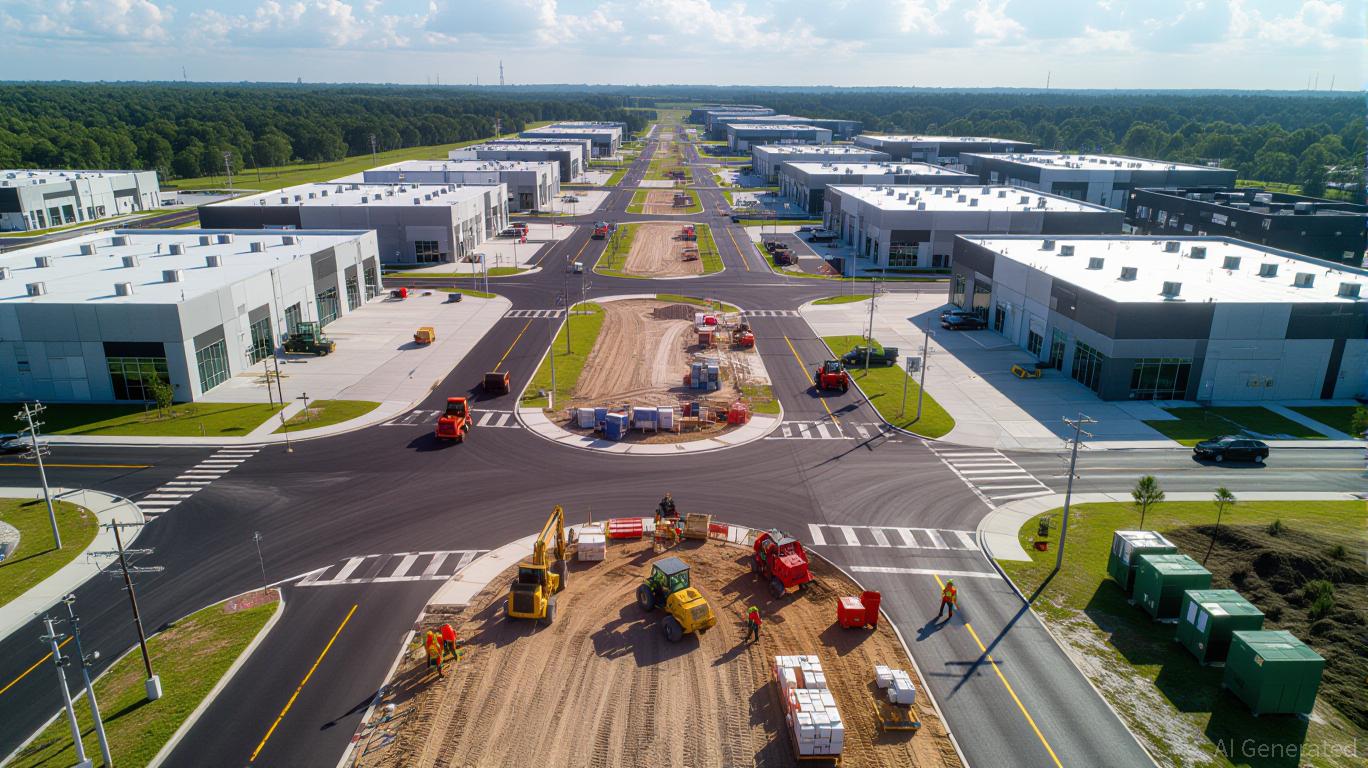
The FAST NY Grant has sparked a wave of infrastructure enhancements, preparing the Xerox campus for high-tech industrial development. The funding is being used for road improvements, expanding sanitary sewer systems, and modernizing electrical infrastructure across nearly 300 acres. These upgrades are essential for attracting advanced manufacturers and logistics companies that depend on reliable utilities and efficient transportation. By 2025, the site is expected to provide over one million square feet of industrial space, with vacancy rates projected to drop to just 2%—significantly lower than the national average of 7.5%.
Infrastructure improvements extend beyond the campus itself. The Community Access Project is upgrading roads, sidewalks, and multi-use trails, linking the site to the Webster Recreation Center and the wider region. These efforts are part of the Reimagine Webster Initiative, a partnership between local government and private stakeholders aimed at fostering sustainable economic growth.
Municipal Changes and Zoning Enhancements
Webster’s revitalization goes beyond infrastructure, encompassing municipal boundary changes and updated zoning policies. In the past year, the town has expanded its industrial zone to cover 1,400 contiguous acres, making it one of the largest ready-to-develop sites in upstate New York. This growth, supported by public-private collaborations and the area’s designation as a Brownfield Opportunity Area, streamlines regulatory processes and increases access to state funding.
Tax incentives further boost the area’s attractiveness. Plans to expand Webster’s Tax Increment Financing (TIF) district would dedicate $400,000 in the first year to downtown improvements and nuisance reduction. State tax credits, such as the $1 million awarded to McAlpin Industries for a $23 million manufacturing facility, highlight the town’s dedication to attracting high-quality employers. These incentives lower development costs, making Webster a competitive alternative to more expensive coastal markets.
Enhanced Transportation and Logistics
Webster’s industrial sector benefits from robust transportation infrastructure. NY Route 104, a major highway with four interchanges within the 1,400-acre NEAT zone, offers direct routes to Rochester and beyond. The Ontario-Midland Railroad, with 286 rail access points, supports bulk freight movement. Additionally, a new 80,000-square-foot Highway Department facility, scheduled to open in spring 2025, will further strengthen infrastructure maintenance and efficiency.
These transportation assets are vital for logistics and manufacturing companies that rely on just-in-time supply chains. Proximity to highways and rail lines reduces distribution costs and expands market reach, positioning Webster as a regional logistics powerhouse.
Opportunities for Investors
The synergy of infrastructure upgrades, policy support, and transportation access is generating real value. Recent data shows property values in Webster have climbed by 10.1% annually, fueled by demand for industrial and residential development near the Xerox campus. Major projects like the $650 million fairlife® dairy facility, expected to create 250 jobs by 2025, further reinforce the area’s economic stability.
For commercial real estate investors, low vacancy rates and rising demand for advanced manufacturing space present a unique chance to secure assets in a rapidly growing market. Logistics companies can also take advantage of Webster’s transportation network to enhance supply chain performance.
Summary
Webster, NY, stands as a testament to how focused infrastructure spending and innovative municipal strategies can unlock new value in industrial real estate. The redevelopment of the Xerox campus, supported by the FAST NY Grant and strategic planning, serves as a blueprint for communities seeking to attract investment and talent in a changing economy. For investors, Webster’s blend of infrastructure, incentives, and connectivity offers a strong case for sustained returns in logistics, manufacturing, and commercial property.
Disclaimer: The content of this article solely reflects the author's opinion and does not represent the platform in any capacity. This article is not intended to serve as a reference for making investment decisions.
You may also like
Hyperliquid (HYPE) Price Rally: The Role of DeFi Advancements and Investor Sentiment in Driving Recent Market Fluctuations
- Hyperliquid (HYPE) surged to $59.39 in 2025 before retreating, driven by DeFi innovations and volatile market sentiment. - Technical advancements like HyperBFT consensus and USDH stablecoin attracted 73% of decentralized trading volume, while institutional partnerships stabilized the ecosystem. - Despite short-term volatility near $36, bullish RSI patterns and $3 trillion trading volume suggest potential for a $59 rebound, though sustained momentum above $43 is critical. - Analysts project HYPE could rea

The Driving Forces Behind Economic Growth in Webster, NY
- Webster , NY, transformed a 300-acre Xerox brownfield into a high-tech industrial hub via a $9.8M FAST NY grant, boosting industrial and real estate growth. - Public-private partnerships enabled infrastructure upgrades, attracting $650M fairlife® dairy projects and 250 high-paying jobs by 2025. - Industrial vacancy rates dropped to 2%, while residential values rose 10.1% annually, highlighting synergies between infrastructure and economic development. - The model underscores secondary markets' potential
Unlocking Potential: The Impact of Targeted Grants and Public-Private Partnerships on Transforming Medium-Sized Real Estate Markets in the U.S.
- U.S. mid-sized cities leverage infrastructure investment and PPPs to drive commercial real estate growth, outpacing large cities in value creation. - Federal programs like IIJA enable upgrades in transportation and broadband, reducing business costs while boosting property values in Tampa and Grand Rapids. - PPPs in cities like Montgomery County combine affordable housing incentives with CRE development, balancing equity and economic resilience through data-driven strategies. - Market projections show $2
Modern Monetary Theory and the Transformation of International Markets: Inflation Trends, Asset Movements, and Currency Shifts in 2025
- Modern Monetary Theory (MMT) reshapes fiscal-monetary coordination, linking government spending to inflation and resource constraints in post-pandemic economies. - Central banks face challenges anchoring inflation expectations as CPI lags asset market pressures, risking self-fulfilling inflationary spirals amid eroding public trust. - Currency valuations shift with fiscal stimulus (e.g., euro's 2025 rebound) and U.S. dollar uncertainty, compounded by gold reserve diversification and rising bond yields. -

Trending news
MoreCrypto prices
More






