
Trust Wallet Token (TWT) Price Forecast for 2026: What Factors Are Fueling the Rapid Increase?
- Trust Wallet Token (TWT) surged to $1.6 in 2025, driven by on-chain adoption and institutional DeFi interest. - Trust Premium program and DAO governance upgrades boosted TWT utility through rewards and cross-chain/RWA applications. - Institutional investments like DWF Labs' $75M and PayPal's PYUSD partnership validate TWT's infrastructure value. - 2026 price forecasts range from $0.98 to $3.38, depending on regulatory clarity and macroeconomic conditions. - MiCA compliance and RWA tokenization frameworks
Trust Wallet Token (TWT): 2026 Outlook and Key Growth Drivers

Trust Wallet Token (TWT) has captured significant attention within the decentralized finance (DeFi) sector, particularly as its price movement heading into 2026 draws increased interest from both investors and analysts. After climbing from $0.7 to $1.6 by October 2025, TWT has become a focal point for those tracking DeFi trends. This analysis explores the factors fueling TWT’s momentum, including on-chain adoption, institutional involvement, and the potential impact on its valuation in 2026.
On-Chain Growth: Enhancing Utility and Engagement
The recent revival of TWT is closely linked to innovative developments within the Trust Wallet ecosystem. The introduction of the Trust Premium program in 2025 has created a self-reinforcing cycle, encouraging users to interact with TWT through a system of tiered incentives. These include reduced gas fees, discounted swaps, and access to exclusive features, all of which motivate users to hold and use TWT for tangible benefits.
Additionally, a significant governance upgrade has made the token’s decentralized autonomous organization (DAO) more transparent and adaptable. This has addressed previous concerns from institutional investors regarding governance opacity. By expanding TWT’s use cases to include cross-chain transactions and real-world asset (RWA) tokenization, Trust Wallet has transformed TWT from a simple utility token into a versatile asset with broader applications.
Institutional Adoption: Fueling DeFi Infrastructure
In 2025, institutional investors have increasingly focused on DeFi infrastructure, encouraged by clearer regulations and the maturation of decentralized platforms. For example, DWF Labs made a notable commitment of $75 million to DeFi initiatives in November 2025, reflecting growing confidence in the sector’s scalability and readiness for institutional participation. Similarly, DeFi protocols like Spark have shifted towards serving institutional needs, prioritizing liquidity infrastructure and forming major partnerships, such as a $1 billion investment in PayPal’s PYUSD.
TWT’s ecosystem is benefiting from these trends. Features like FlexGas, which allows users to pay transaction fees with TWT, cater to institutional requirements for efficiency and flexibility. Furthermore, endorsements from industry leaders—such as Binance co-founder Changpeng Zhao’s support for TWT—underscore its relevance in cross-chain operations and RWA tokenization.
2026 Price Forecasts: Scenarios and Influences
Market analysts offer a wide range of predictions for TWT’s price in 2026, reflecting varying expectations and market conditions:
- Binance users anticipate a price near $0.98.
- Changelly projects TWT could reach $1.01 by December 2025.
- DigitalCoinPrice presents a more optimistic target of $3.38, contingent on continued institutional adoption and favorable macroeconomic factors.
TWT’s performance during the November 2025 Bitcoin downturn also offers valuable insights. Protocols such as tBTC and OP_NET demonstrated resilience during the market correction, attracting institutional interest. TWT’s integration with these robust infrastructures could further enhance its appeal as a stable, utility-focused asset in turbulent markets.
Regulatory Developments and Market Trust
Regulatory advancements have played a crucial role in attracting institutional capital. The implementation of the EU’s Markets in Crypto-Assets (MiCA) regulations and the tokenization of RWAs under IOSCO’s international standards have established a more secure and predictable environment for institutional investors. These changes lower compliance risks and make TWT an attractive option for traditional financial institutions seeking yield opportunities in DeFi.
Conclusion: The Intersection of Adoption and Institutional Support
TWT’s recent price surge is the result of a combination of increased on-chain activity and growing institutional interest in DeFi infrastructure. Initiatives like the Trust Premium program, governance enhancements, and strategic alliances have strengthened TWT’s utility, while regulatory clarity and institutional investments have expanded its market potential. As 2026 approaches, investors should closely watch how these dynamics evolve—especially TWT’s ability to sustain user engagement and secure institutional partnerships—to assess its future trajectory.
Current data indicates that TWT is well-placed to benefit from ongoing changes in the DeFi landscape, with price expectations for 2026 ranging from $0.98 to $3.38, depending on broader economic and regulatory developments.
Disclaimer: The content of this article solely reflects the author's opinion and does not represent the platform in any capacity. This article is not intended to serve as a reference for making investment decisions.
You may also like
Bitcoin’s Sharp Decline: What Sparks Anxiety During a Bullish Market?
- Bitcoin's 2025 bull market collapsed 30% to $83,824 amid Fed policy shifts and liquidity contractions, defying typical risk-on dynamics. - A 0.72 correlation to Nasdaq 100 and $19B leveraged liquidation event exposed Bitcoin's vulnerability to macro risks and institutional sentiment shifts. - AI-driven algorithms and algorithmic feedback loops amplified volatility, with Treasury yields and dollar strength triggering cascading sales. - Market psychology metrics (Fear & Greed Index, stablecoin outflows) an

Infrastructure Initiatives Fuel Real Estate Growth in Upstate New York: The Impact of Local Government Projects on Industrial Market Transformation
- Webster , NY leveraged a $9.8M FAST NY grant to transform a 300-acre Xerox brownfield into a high-tech industrial hub, slashing vacancy rates to 2%. - Infrastructure upgrades attracted food processing and semiconductor firms , with a $650M fairlife® dairy plant expected to create 250 jobs by 2025. - Strategic site readiness and pre-leased industrial space at the NEAT site reduced investor risk, driving 10.1% residential property value growth since 2023. - The model highlights underpenetrated markets' pot

ZEC Rises 4.81% After Major Investor Increases Long Position with 10x Leverage
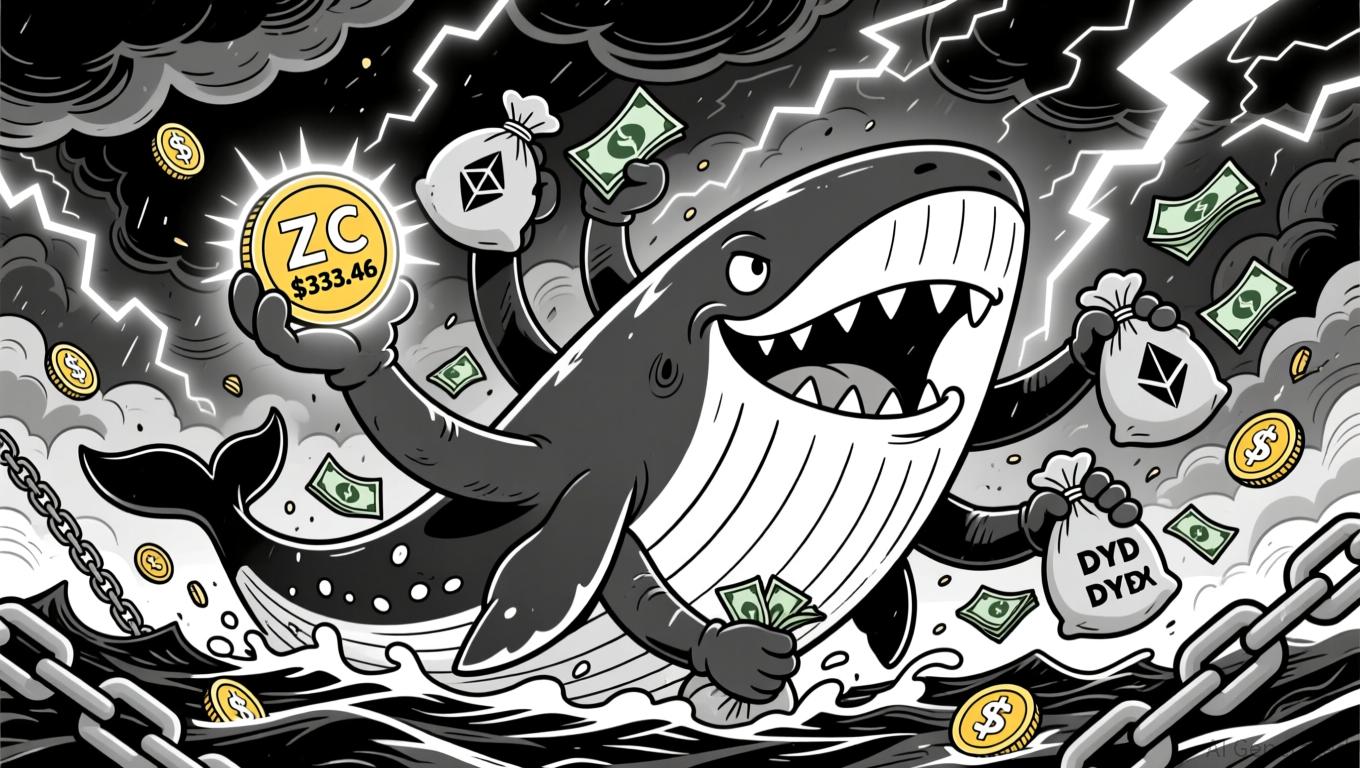
- ZEC surged 4.81% in 24 hours to $330.5 amid a whale's 10x leveraged long position on HyperLiquid targeting $333.46. - The whale also holds 20x ETH and 5x DYDX longs but faces $2.7M total losses, highlighting risks of leveraged trading during crypto volatility. - Grayscale's ZEC ETF filing and Chainlink's ETF launch signal growing institutional interest in altcoins, potentially boosting ZEC liquidity and demand. - ZEC's 482.71% annual gain contrasts with 27.45% weekly drop, reflecting its cyclical nature
Amazon takes on rivals by introducing on-site Nvidia ‘AI Factories’
Trending news
MoreCrypto prices
More






