
AI’s Energy Dilemma: Improved Efficiency Meets Rising Power Demands
- AI is transforming energy operations through predictive maintenance, smart grids, and renewable optimization, but its energy demands strain infrastructure. - Energy firms like Baker Hughes and C3.ai deploy AI to reduce downtime, while platforms autonomously cut building energy waste. - Data centers powering AI drive electricity price spikes (e.g., 13% in Virginia), prompting regulatory scrutiny over tech subsidies and sustainability. - C3.ai faces financial challenges with 20.5% revenue decline expected,
The Growing Influence of AI in the Energy Industry
Artificial intelligence is rapidly reshaping the energy landscape, enabling companies to streamline operations, cut expenses, and tackle environmental concerns. From enhancing predictive maintenance to managing intelligent power grids, AI is becoming a crucial tool for energy providers as they shift toward renewables and decentralized energy models. Despite these advancements, the industry faces a dilemma: while AI boosts efficiency, its significant power requirements are placing additional strain on energy infrastructure, fueling ongoing debates about sustainability and regulatory oversight.
AI Applications Across the Energy Value Chain
Within power generation and distribution, AI-driven solutions are optimizing every stage of the energy process. For example, advanced algorithms analyze seismic data to refine drilling strategies, anticipate pipeline equipment issues, and manage reservoirs with greater accuracy. Leading companies such as Baker Hughes (NYSE:BKR) and C3.ai (NYSE:AI) utilize enterprise AI platforms to oversee assets and minimize operational downtime. Meanwhile, systems developed by Brainbox AI and Enerbrain automatically regulate building energy use, significantly reducing waste. In the renewables sector, AI is equally vital—tools from Clir and WindESCo employ machine learning to identify underperforming wind turbines, while Envision and PowerFactors oversee extensive networks of solar and wind installations.

These technological advancements are critical as utilities work to integrate variable renewable sources into the grid, ensuring real-time balance between electricity supply and demand.
Energy Consumption and Regulatory Challenges
However, the energy demands of AI itself are introducing new obstacles. The proliferation of data centers supporting AI applications is driving up electricity consumption, especially in areas with dense clusters of these facilities. For instance, Virginia—home to 666 data centers—has experienced a 13% year-over-year increase in residential electricity rates, the second-highest in the nation. Similar patterns are emerging in Illinois, where 244 data centers are linked to a 15.8% rise in energy prices. The substantial power needs of AI have drawn the attention of regulators, with critics arguing that government incentives for tech companies may be contributing to these trends. In response, some states are considering innovative solutions, such as Oklo’s (NYSE:OKLO) approach to on-site power generation for data centers.
Financial Performance of AI Companies
The financial results of AI firms mirror these industry shifts. C3.ai (NYSE:AI), a prominent provider of enterprise AI, is under scrutiny as it prepares to release its third-quarter earnings. Analysts project a 20.5% year-over-year drop in revenue to $75.03 million, with an adjusted loss of -$0.33 per share. This comes after a difficult 2024, during which C3.ai missed revenue expectations by 25.3% in the previous quarter. Over the last month, the company’s stock has declined by 17.4%, lagging behind competitors like Teradata and Elastic, which have reported mixed results. Nonetheless, C3.ai’s solutions remain essential to the energy and industrial sectors, underscoring the industry’s dependence on AI despite ongoing financial challenges.
Looking Ahead: Balancing Innovation and Sustainability
As artificial intelligence continues to play a larger role in the energy sector, industry leaders must weigh its advantages against its environmental and economic impacts. The sector’s capacity to innovate while managing energy use and regulatory demands will be crucial for its future success. For now, AI is driving significant changes in energy systems, even as it introduces new complexities to be addressed.
Disclaimer: The content of this article solely reflects the author's opinion and does not represent the platform in any capacity. This article is not intended to serve as a reference for making investment decisions.
You may also like
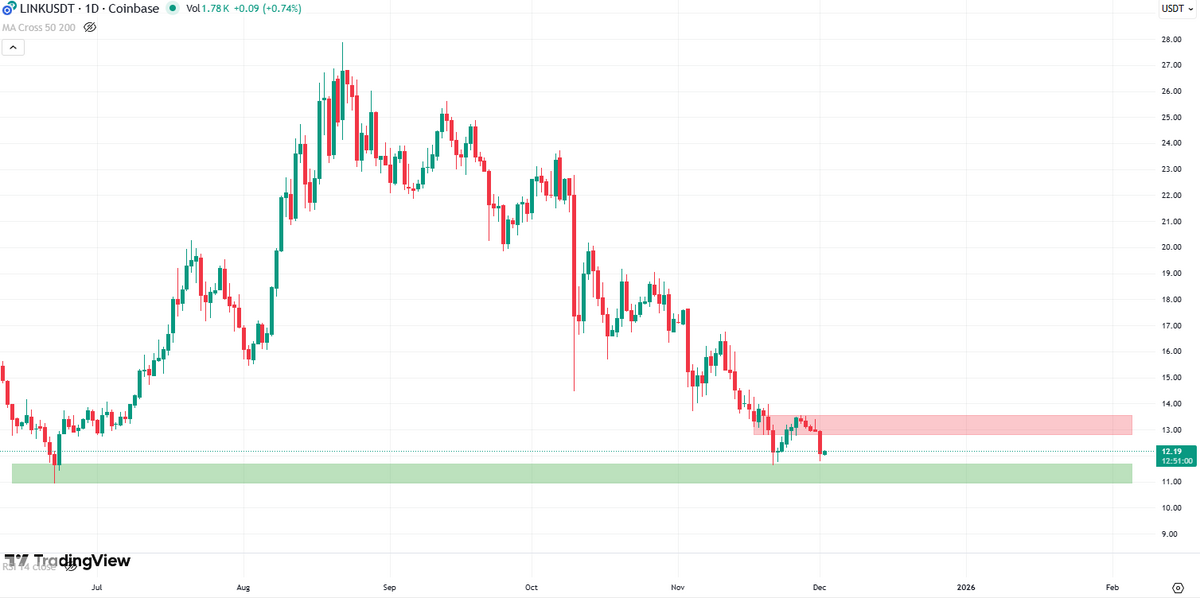
Chainlink ETF Set to Debut as LINK Slips Amid Market Weakness
Striking baristas win $38.9 million in compensation, yet contract disputes continue
- Starbucks settles NYC Fair Workweek Law violations for $38.9M, including $35.5M restitution to 15,000+ workers. - Striking baristas demand collective bargaining amid ongoing labor disputes and unionization efforts at 550 stores. - Mayor-elect Mamdani and Sen. Sanders join protests, framing demands as moral issues against corporate resistance. - Settlement addresses 500,000 scheduling violations since 2021, with workers receiving $50/week compensation. - Starbucks defends labor law complexity but faces cr

Alphabet's AI-driven ecosystem accelerates flywheel momentum, driving shares up by 68% in 2025
- Alphabet's stock surged 68% in 2025, outperforming peers like Microsoft and Nvidia , driven by strong AI monetization and cloud growth. - Analysts raised price targets to $375-$335, citing Google Cloud's $15.2B Q3 revenue (34% YoY) and $155B cloud backlog growth. - The company's AI ecosystem spans Search, YouTube, and Workspace, generating premium subscriptions and ad yield through Gemini's 650M MAUs. - Projected cloud revenue could exceed estimates by $40B, but risks include regulatory scrutiny and comp

XRP News Today: Vanguard Changes Position on Crypto ETFs, Pointing to Market Maturity and Increased Demand
- Vanguard Group will enable crypto ETF trading on its platform from December 2, 2025, reversing years of opposition to digital assets. - The firm supports Bitcoin , Ethereum , XRP , and Solana ETFs but excludes memecoins, treating crypto as non-core assets like gold . - Market maturation, $25B+ ETF inflows, and regulatory compliance drive the shift, positioning Vanguard as the last major U.S. broker to adopt crypto ETFs. - The move reflects growing institutional confidence in regulated crypto structures a
Trending news
MoreCrypto prices
More





