
South Korea’s $350B U.S. Deal Stalls on Cash Timing as Tariffs Test KRW, Crypto

Korea pledged up to $350 billion for U.S. projects in July 2025 to unlock relief on U.S. tariffs on Korean exports. Negotiators then argued over how much must be paid in cash versus loans, guarantees, or equity. On October 20, Industry Minister Kim Jung-kwan said Washington softened the idea of all-cash funding. Even so, the gap remains wide: reports put the U.S. ask near $200 billion in cash over eight years, while Seoul says it can manage about $15 billion per year without straining reserves or domestic credit. That tension now defines the policy path, the currency path, and the crypto-liquidity path.
What the $350B ask means for markets and why cash matters to crypto
Cash is immediate. Loans and guarantees are not. A larger cash component forces USD outflows on a fixed schedule and tightens KRW liquidity at home. When banks and corporates prioritize dollars, local funding costs rise and FX desks move defensively.
Crypto feels that shift first through fiat on-ramps, order-book depth in KRW pairs, and the cost of market-making inventory. Depth thins. Spreads widen. Traders rotate to USD and stablecoin pairs because those rails move when domestic liquidity hesitates.
Why U.S. tariffs sit at the center of the negotiation
The investment framework links directly to U.S. tariffs on Korean exports, including autos and parts. As long as those tariffs remain, exporters defend margins by building USD buffers, which pulls liquidity away from KRW risk. If the cash formula proves too heavy, tariff relief stalls and the won stays sensitive.
If funding shifts toward phased disbursements and credit backstops, tariff relief becomes more likely and KRW stress eases. Policy choices ripple into crypto positioning because the same liquidity that powers factories powers KRW buy-side on exchanges.
How a larger cash call would hit KRW and Korea’s crypto industry
A heavy cash share means near-term dollar demand and won pressure. The Bank of Korea can lean against volatility, but banks still ration balance sheet.
In that setting, KRW deposits into exchanges slow, stablecoin usage rises as a USD proxy, and altcoins lose relative attention while traders cluster in BTC and ETH where liquidity is deeper. The behavior is rational: defend the base, then add risk when currency and credit stabilize.
What changes if the U.S. accepts phased funding instead of heavy cash
A phased or credit-weighted structure smooths the FX profile. KRW liquidity holds up, banks keep on-ramp capacity, and market-makers carry inventory more comfortably.
With tariff relief in view, exporters loosen the dollar grip, the won steadies, and the crypto market’s breadth improves. In that path you see tighter spreads in KRW pairs, firmer altcoin participation, and less dependence on stablecoins for hedging.
Disclaimer: The content of this article solely reflects the author's opinion and does not represent the platform in any capacity. This article is not intended to serve as a reference for making investment decisions.
You may also like
A decade-long tug-of-war ends: "Crypto Market Structure Bill" sprints to the Senate
At the Blockchain Association Policy Summit, U.S. Senators Gillibrand and Lummis stated that the "Crypto Market Structure Bill" is expected to have its draft released by the end of this week, with revisions and hearings scheduled for next week. The bill aims to establish clear boundaries for digital assets by adopting a classification-based regulatory framework, clearly distinguishing between digital commodities and digital securities, and providing a pathway for exemptions for mature blockchains to ensure that regulation does not stifle technological progress. The bill also requires digital commodity trading platforms to register with the CFTC and establishes a joint advisory committee to prevent regulatory gaps or overlapping oversight. Summary generated by Mars AI. The accuracy and completeness of this summary, generated by the Mars AI model, is still being iteratively updated.
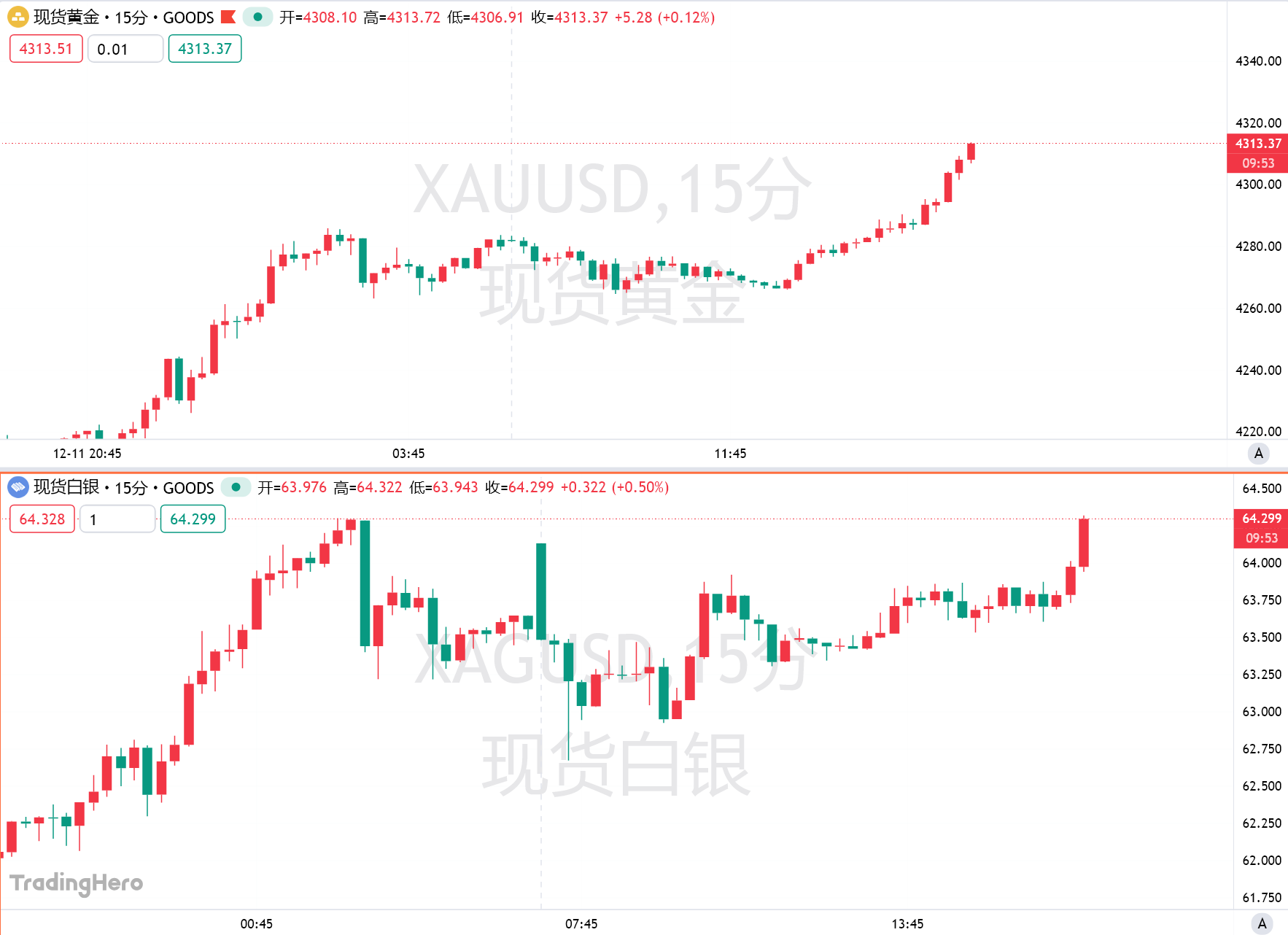
Gold surpasses the $4,310 mark—Is the "bull frenzy" returning?
Boosted by expectations of further easing from the Federal Reserve, gold has risen for four consecutive days. Technical indicators show strong bullish signals, but there remains one more hurdle before reaching a new all-time high.
Trend Research: Why Are We Still Bullish on ETH?
Against the backdrop of relatively accommodative expectations in both China and the US, which suppress asset downside volatility, and with extreme fear and capital sentiment not yet fully recovered, ETH remains in a favorable "buy zone."

Trending news
MoreCrypto prices
More





