
Tether Eyes Fresh Investments to Push USAT Stablecoin to 100M Americans at December Launch

LUGANO, Switzerland — Tether, the crypto company behind the world's largest stablecoin, USDT USDT$1.0001, is planning fresh investments to bring its U.S.-focused U.S. dollar stablecoin to a 100 million American user base, Tether CEO Paolo Ardoino said in an interview on Friday.
The USAT token, designed specifically for the U.S. market to comply with federal regulations set by the GENIUS Act's requirements, is set to launch this December, Ardoino said. It is issued by Tether America, a joint venture between Tether and regulated U.S. crypto bank Anchorage Digital.
A key element for Tether to distribute the upcoming token is Rumble (RUM), the video sharing platform Tether invested $775 million into last year, and its upcoming crypto wallet, also coming out later this year. Rumble alone has 51 million active monthly users in the U.S. that can potentially onboard for USAT tokens, Ardoino said.
"We are investing in two-three companies that would bring that number from 51 million to 100 million," he said.
Without naming specific firms, he said the investment targets may include social media companies, content platforms similar to Rumble as Tether aims to position its USAT token for payments in the creator economy.
"For the U.S. market, you need to create a more professional and digital approach to money that can compete with PayPal and so on," he said. "The beauty is that we already have a user base that would use that money in the economy [...] so the offering will be unbeatable."
"We are going to hit the ground running, and we're going to start taking away market share from our competitors that were the ones that tried to kill us in the first place," Ardoino said.
Read more: Tether Unveils USAT Stablecoin for U.S. Market, Names Bo Hines to Lead New Division
Gold rush
Tether, while still mainly focusing on emerging markets where dollar access is limited, has been benefitting from rapid stablecoin adoption, in part bolstered by regulatory advances such as the GENIUS Act in the U.S. that allows digital tokens to be more embedded in global payments. The firm's flagship token USDT rose to a $182 billion supply, swelling by a third since the start of the year and dominating the roughly $300 billion asset class. Circle's (CRCL) token USDC$0.9998 is currently second with $72 billion, growing about 70% this year.
Meanwhile, the firm's other token, the physical gold-backed XAUT$4,125.89, also surged over the past months as the yellow metal rallied to fresh all-time highs. XAUT's market size rose to a record $2.2 billion, more than tripling since the start of the year.
That growth comes in large part from retail demand, Ardoino said.
"We see retail in Central and South America and Asia piling up now, starting to learn about tokenized gold," he said. Due to the retail frenzy for gold, market makers also increasingly tapped tokenized gold as they could sell them on secondary markets for a bigger spread with CME futures on the other side of the trade.
Nasdaq-listed firm Prestige Wealth recently raised $150 million, anchored by bitcoin BTC$110,433.33 lender Antalpha, to hoard Tether's tokenized gold, also adding to the demand.
Read more: Tether Unveils Synthetic AI Dataset to Democratize STEM Intelligence
Disclaimer: The content of this article solely reflects the author's opinion and does not represent the platform in any capacity. This article is not intended to serve as a reference for making investment decisions.
You may also like
COAI Token Fraud: Insights for Cryptocurrency Investors During Times of Regulatory Ambiguity
- COAI token's 88% collapse in late 2025 exposed systemic risks in AI-driven DeFi ecosystems, with $116.8M investor losses. - Governance flaws included 87.9% token concentration in ten wallets, untested AI stablecoins, and lack of open-source audits. - Panic selling accelerated by AI-generated misinformation and CEO resignation, amid conflicting global crypto regulations. - Lessons emphasize scrutinizing token distribution, demanding transparent audits, and avoiding jurisdictions with regulatory ambiguity.

Renewable Energy Training as a Key Investment to Meet Future Workforce Needs
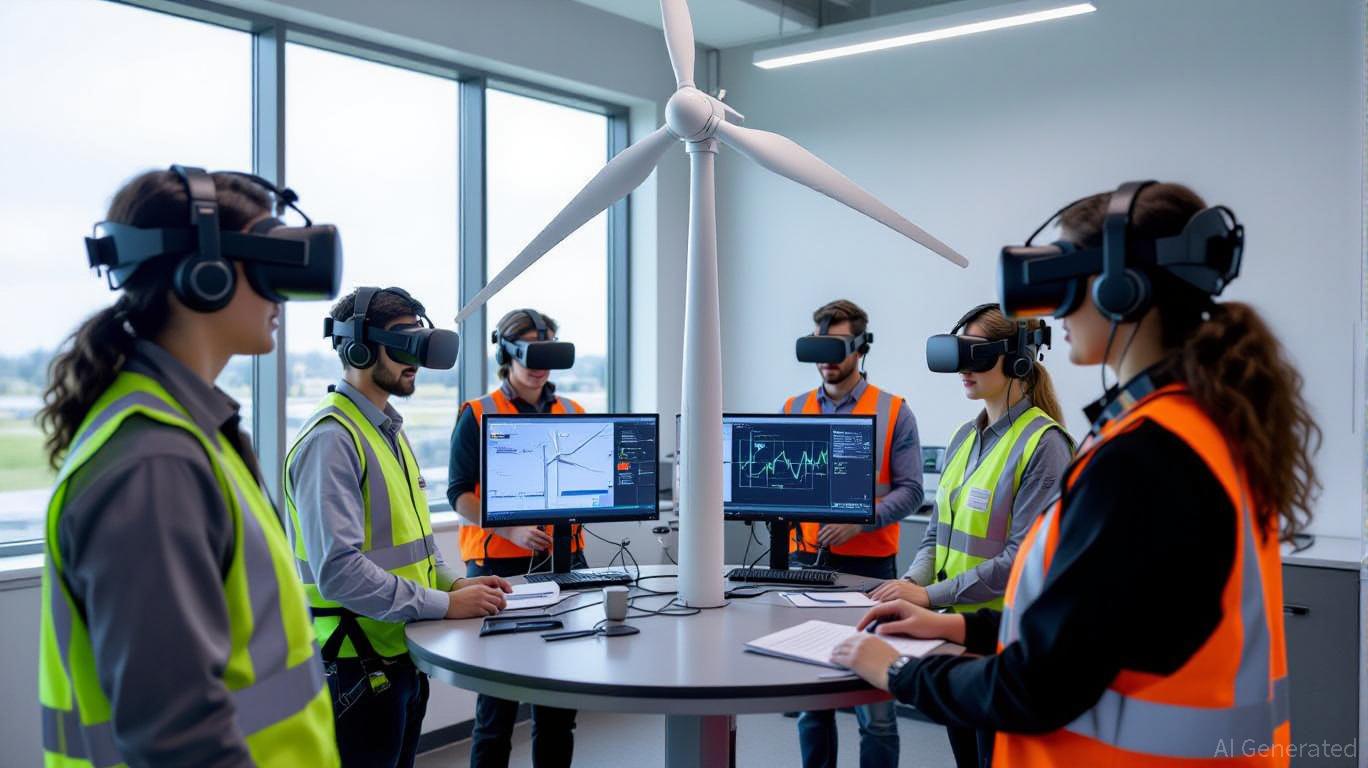
- Farmingdale State College's Wind Turbine Technology program aligns with surging demand for skilled labor in decarbonizing economies, driven by U.S. renewable energy targets. - Industry partnerships with Orsted, GE Renewable Energy, and $500K in offshore wind funding validate the program's role in addressing workforce shortages in expanding wind sectors. - Hands-on training with GWO certifications and VR simulations prepares graduates for high-demand, high-salary roles ($56K-$67K annually), reducing corpo
The Revival of STEM Learning as a Driving Force for Tomorrow’s Technology Investments
- Emerging STEM universities are driving tech innovation through interdisciplinary curricula and industry partnerships, focusing on AI, biotech , and advanced manufacturing. - U.S. programs like STEM Talent Challenge and NSF Future Manufacturing allocate $500K-$25.5M to bridge skills gaps and fund projects in quantum tech and biomanufacturing. - Leadership-focused STEM programs at institutions like Florida State and Purdue boost startup success rates (75-80%) and align with venture capital trends favoring

Assessing KITE’s Price Prospects After Listing as Institutional Interest Rises
- Kite Realty Group (KRG) reported Q3 2025 earnings below forecasts but raised 2025 guidance, citing 5.2% ABR growth and 1.2M sq ft lease additions. - Institutional investors showed mixed activity, with Land & Buildings liquidating a 3.6% stake while others increased holdings, reflecting valuation debates. - Technical indicators suggest bullish momentum (price above 50/200-day averages) but a 23.1% undervaluation vs. 35.1x P/E, exceeding sector averages. - KRG lags peers like Simon Property in dividend yie

Trending news
MoreCrypto prices
More





