
MIRA's VWAP Bridges Price Discrepancies, Drawing Interest from Institutional Investors
- MIRA's on-chain/off-chain price gap closed via 1307.5% 24h volume surge ($10.6M) and new listings on BinanceTR/OrangeX with 25x leverage. - VWAP mechanism aggregating 2 exchanges/2 markets stabilizes pricing, while 191M circulating supply (19% of max) reduces volatility. - BNB airdrop (4% of tokens) and dual trading pairs drove liquidity, stabilizing price at $1.4075 (46.15% below ATH) with $0.10-$1.9449 24h range. - AI model verification on-chain addresses regulatory concerns, attracting institutional i
The price gap between on-chain and off-chain markets for Mira (MIRA) has been resolved after a significant increase in trading volume and targeted exchange launches. Live pricing from decentralized platforms, such as
The narrowing of price differences is further supported by MIRA’s use of a volume-weighted average price (VWAP) system, which combines data from two exchanges and two markets to provide a globally accurate price Mira Price: MIRA Live Price Chart, Market Cap & News [ 1 ]. This approach differs from standard on-chain pricing, which can be delayed due to scattered liquidity pools. The token’s circulating supply has stabilized at 191 million out of a total cap of 1 billion, helping to reduce the volatility often seen in tokens with limited circulation MIRA (MIRA) Price, Live Chart and Data | KuCoin [ 2 ].
Major factors behind the price stabilization include the BinanceTR airdrop, which allocated 4% of tokens to
The rollout of MIRA’s transparent AI system has also increased trust among institutional investors. By recording AI model output proofs on-chain, the project addresses regulatory demands for algorithmic transparency, potentially appealing to investors focused on compliance. This development is in line with the industry’s shift toward decentralized and trustless AI solutions, as noted by market observers.
Sentiment analysis tools, including the Fear and Greed Index, indicate a cautiously optimistic outlook. Although the index places MIRA in a neutral zone, the token’s recent gains outstrip those of the broader crypto market (3.60% increase over seven days) and Solana-based tokens (0.00% gain), suggesting rising institutional interest Mira Price: MIRA Live Price Chart, Market Cap & News [ 1 ]. In contrast, short interest data for MIRA Pharmaceuticals is unrelated to the crypto asset, as the stock’s 9.30% short float reflects separate market factors.
The harmonization of on-chain and off-chain prices could benefit DeFi protocols and real-world asset (RWA) tokenization initiatives. By minimizing price slippage, MIRA strengthens its role as a reliable medium for cross-chain transfers and automated smart contracts. Continued growth will depend on ongoing liquidity and the adoption of its AI verification technology in regulated industries.
Disclaimer: The content of this article solely reflects the author's opinion and does not represent the platform in any capacity. This article is not intended to serve as a reference for making investment decisions.
You may also like
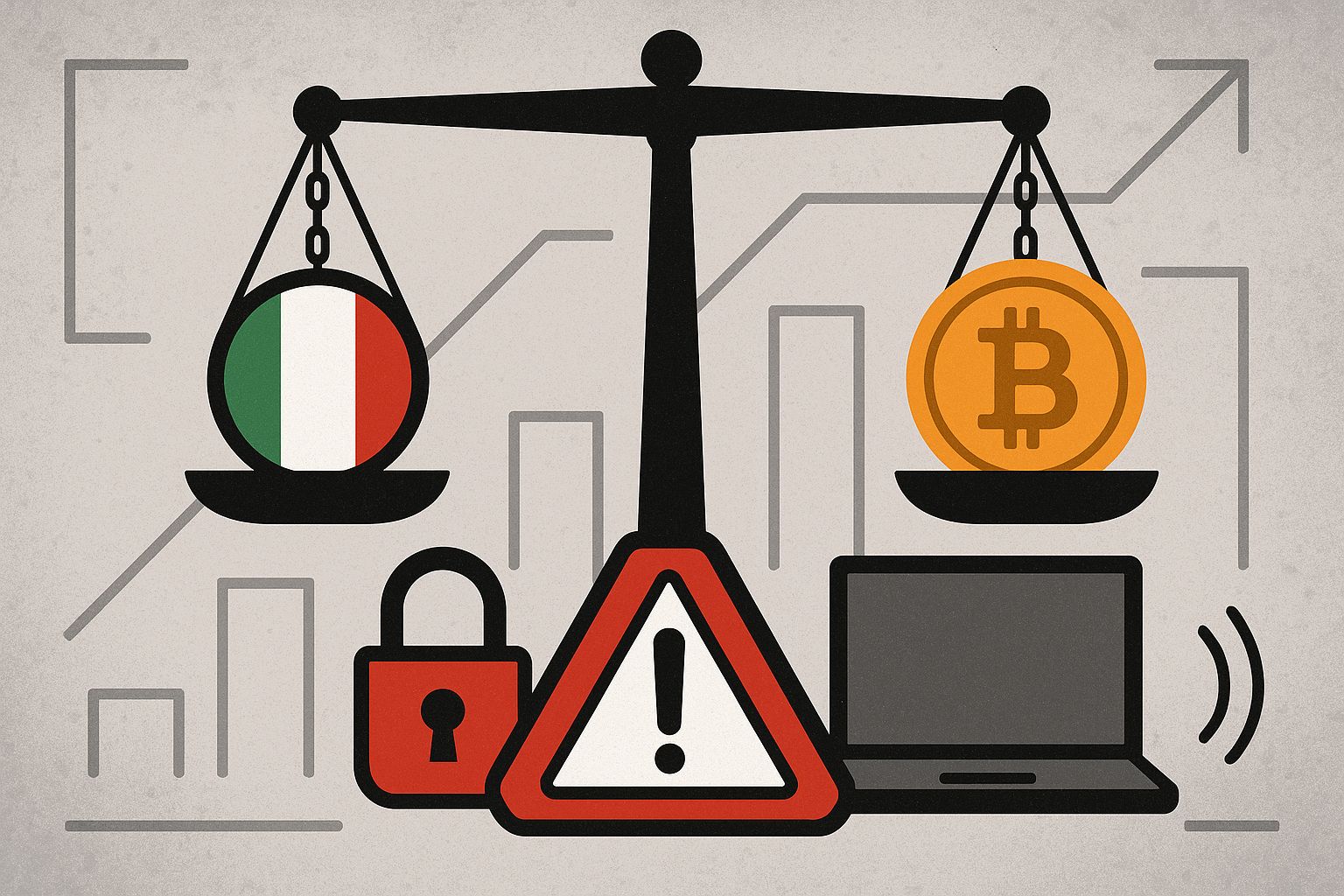
Italy orders non-compliant VASPs to exit as MiCAR rules kick in
Local Leadership and the Drive for Technological Advancement: How Minneapolis is Building Economic Strength
- Minneapolis integrates AI and centralized IT systems to boost municipal efficiency and tech-driven governance. - The city's medical tech sector leads with 16% U.S. talent share and 16 expansion projects in 2024. - Workforce shortages (59% hiring challenges) and rising costs hinder scalability despite innovation gains. - Investors face opportunities in medtech and AI tools but lack transparent metrics for evaluating tech ROI. - Minneapolis highlights the need for balancing tech innovation with accountabil

The Impact of a 30% Increase in ICP Token Value on Investments in Blockchain Infrastructure
- ICP's 30% price surge to $4.71 in November 2025 stems from ICP 2.0 upgrades (Caffeine, Internet Identity 2.0) and institutional partnerships with Microsoft Azure and Google Cloud. - This growth challenges AWS/Azure dominance, with ICP's Fission upgrade enabling scalable decentralized storage and attracting enterprises seeking alternatives to centralized cloud providers. - However, regulatory uncertainty and market volatility (e.g., 91% drop in token transfers during dips) raise questions about long-term

The Economic Impact of Incorporating AI in Sectors Driven by Data
- Global AI infrastructure investments by tech giants like Alphabet and Microsoft are projected to reach $315B in 2025, generating $15T in economic value by 2030 through automation and analytics. - The U.S. leads with $470B in AI infrastructure funding (2013-2024), driven by cloud expansion expected to hit $3.4T by 2040, creating fragmented markets for consolidation. - Data-centric ecosystems (e.g., JHU, ICP Caffeine AI) enable pharmaceuticals and finance firms to build competitive barriers via proprietary

Trending news
MoreCrypto prices
More





