
UAE’s M2 Capital Commits $20 Million to Establish Middle East as a Leading Synthetic Dollar Center
- UAE's M2 Capital invests $20M in Ethena's ENA token to expand synthetic dollar infrastructure in the Middle East. - Ethena's USDe/sUSDe products, with $14B TVL, offer crypto-native stablecoins using digital asset collateral and hedging strategies. - M2 plans to integrate Ethena's yield-generating stablecoins into its wealth management services for institutional clients in a regulated framework. - The partnership aims to position the UAE as a global digital asset hub by bridging DeFi yields with compliant

M2 Capital, the investment division of UAE-headquartered M2 Holdings, has pledged $20 million to Ethena’s governance token
Ethena’s USDe and sUSDe have become popular alternatives to standard savings products, with sUSDe achieving double-digit yields this year. The platform’s rapid expansion highlights the rising interest in yield-generating stablecoins within decentralized finance (DeFi). M2 Holdings intends to incorporate Ethena’s solutions into its wealth management branch, M2 Global Wealth, giving institutional and affluent clients in the Middle East compliant access to DeFi returns. Kim Wong, Managing Director and Head of Treasury at M2, described this step as establishing “a new standard for reliability, protection, and transparency in the region’s digital asset sector” title2 [ 2 ].
This investment supports M2’s wider objective to make the UAE a leading global center for digital assets. Operating under the oversight of the Abu Dhabi Global Market’s Financial Services Regulatory Authority (FSRA) and the Securities Commission of The Bahamas (SCB), M2 runs a multi-regulated platform to attract global investors. By bringing Ethena’s synthetic dollar products onboard, M2 seeks to provide institutional pathways to digital asset yields and liquidity. This follows M2’s previous involvement in funding for the
Ethena’s swift uptake has attracted institutional support, including a partnership with YZi Labs (formerly Binance Labs), which deepened its collaboration with
The Middle East’s rise as a digital asset center is being driven by regulatory progress and strategic alliances. M2’s backing of Ethena is part of a larger movement of institutional interest in synthetic dollars, which are viewed as essential for the next stage of DeFi expansion. By merging Ethena’s pioneering products with M2’s regulated framework, the collaboration seeks to speed up adoption while tackling issues like compliance and market volatility. This development comes after recent investments in Ethena by firms such as ArkStream Capital and Mega Matrix Inc., reflecting the protocol’s increasing acceptance in mainstream finance title4 [ 4 ].
Disclaimer: The content of this article solely reflects the author's opinion and does not represent the platform in any capacity. This article is not intended to serve as a reference for making investment decisions.
You may also like
PENGU USDT Sell Alert and Its Impact on the Stablecoin Market
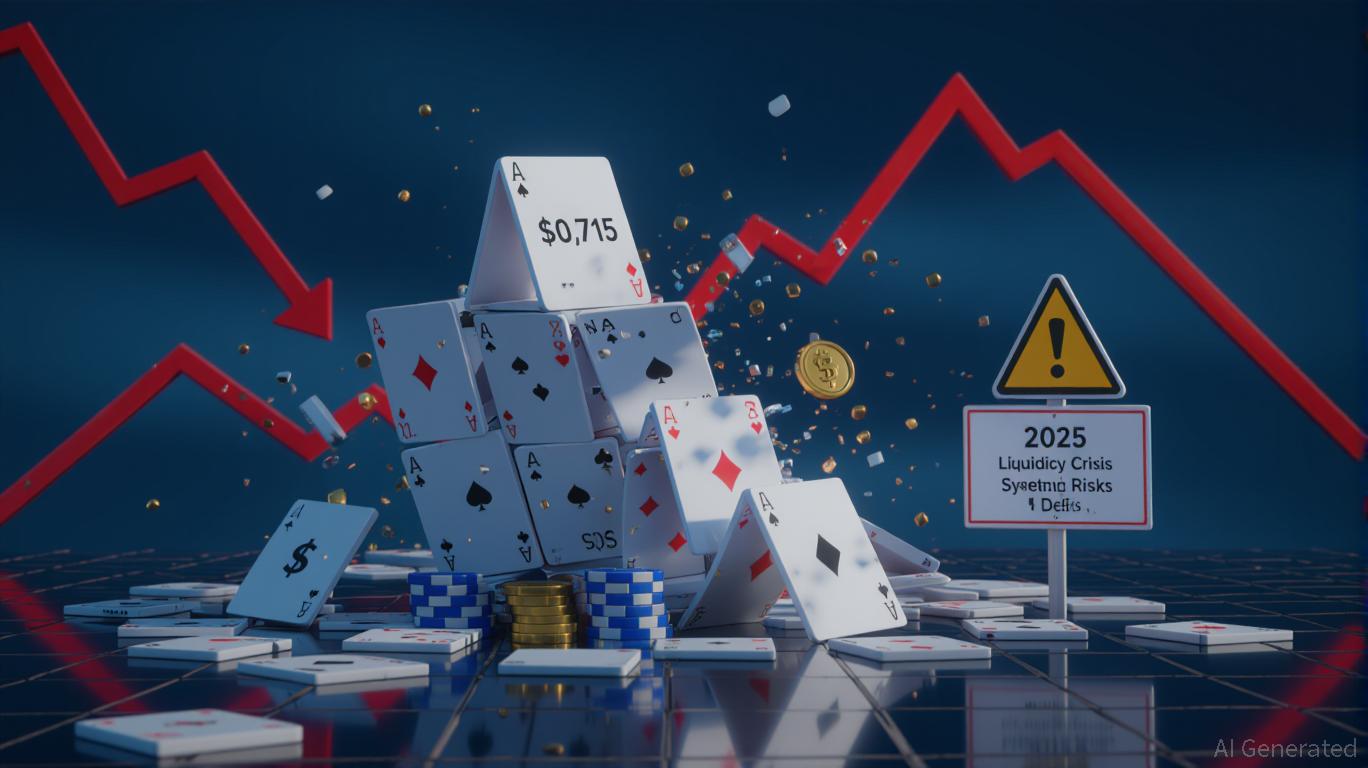
- PENGU USDT's 2025 depegging to $0.715 and $66.6M team withdrawals exposed systemic risks in algorithmic stablecoins. - Cascading failures in Ethena USDe and Staked Stream USD revealed liquidity crises exacerbated by smart contract flaws and macroeconomic shocks. - The U.S. GENIUS Act mandated 1:1 fiat backing for stablecoins, accelerating market shift toward compliant fiat-backed alternatives like USDC . - Investors now prioritize stablecoins with transparent reserves and robust governance amid regulator
The Decline in PENGU Value: Unexpected Market Turbulence or a Prime Moment to Invest?
- Pudgy Penguins (PENGU) token dropped 30% in late November 2025, sparking debate on systemic risks vs. undervaluation. - Analysts highlight valuation dislocation, with forecasts ranging from $0.015 to $0.068, amid broader crypto market instability. - Technical indicators and extreme Fear & Greed Index (28) signal volatility, while ecosystem utility remains a key uncertainty. - Investors must balance short-term risks with long-term potential, as PENGU's future depends on community resilience and macroecono

Trending news
MoreCrypto prices
More





