
Chainlink CEO Sees Tokenization as Sector's Rising Future After Meeting SEC's Atkins

Chainlink CEO Sergey Nazarov met with U.S. Securities and Exchange Commission Chairman Paul Atkins, who Nazarov said was keenly interested in how best to bring on-chain assets into compliance with securities laws.
The chief executive of Chainlink, a network specializing in authenticating real-world data for smart contracts, said he was impressed with how much the agency has shifted away from whether the U.S. should permit blockchain tokenization innovations into the financial system and instead is looking at how this can be conducted with maximum efficiency and market safety.
"While cryptocurrencies define the majority of our industry's value today, I personally feel very strongly that the real-world asset trend and digital-asset tokenization in the institutional world will grow to be the majority of the market cap in our industry," Nazarov told CoinDesk in an interview after his Friday meeting. He said Atkins "has very clear ideas and goals with getting the traditional financial system operating correctly on-chain."
Nazarov, who also met with the White House's new crypto liaison, Patrick Witt, on Friday, said he's very hopeful "based on the urgency and speed" the SEC and the White House are demonstrating. He said he thinks blockchain infrastructure will manage to find a place within broker-dealer and transfer agent rules, allowing full-in tokenization "maybe by the middle of next year."
The Chainlink co-founder said one central task is getting blockchains to fully meet the standards for a "legally binding transfer" of assets. "That's a class of problems that's now getting worked through with us," he said, adding that Atkins understands it well and noted the chairman's recent address in which he announced his "Project Crypto" initiative.
An SEC spokesman declined to comment on the meeting, though the agency has been building momentum with crypto-friendly statements, remarks and policy maneuvers. Just last week, the securities regulator issued a joint statement with the Commodity Futures Trading Commission to tell registered platforms that they're OK to pursue spot trading of certain crypto assets, issued a near-term agenda that is crowded with crypto initiatives and got together with the CFTC on Friday to tell reporters that the two markets regulators will now be working in lockstep to pave the way for crypto.
Under Atkins' predecessor, Gary Gensler, the agency had resisted embarking on tailored digital assets regulation. Atkins says the existing securities laws and agency powers offer ample authority to start work on friendly policies to clarify how the government approaches crypto.
Meanwhile, the Senate is working on a crypto market structure bill that would establish new laws for crypto and for its regulators. That effort saw some progress on Friday as a new, lengthier version of the Senate Banking Committee's earlier bill began circulating.
Chainlink's network was also among the digital assets venues chosen by the U.S. Department of Commerce last week when, for the first time, the federal government issued major economic data — the gross domestic product report — via blockchain. That's set to be an ongoing trend for Commerce and other agencies, according to the officials behind the release.
"Our industry has a very unique kind of moment in time right now, that if it uses it well it can solidify its position in the U.S. and therefore the global economy," Nazarov said.
Read More: SEC, CFTC Chiefs Say Crypto Turf Wars Over as Agencies Move Ahead on Joint Work
Disclaimer: The content of this article solely reflects the author's opinion and does not represent the platform in any capacity. This article is not intended to serve as a reference for making investment decisions.
You may also like
COC the Game Changer: When Everything in GameFi Becomes "Verifiable", the Era of P2E 3.0 Begins
The article analyzes the development of the GameFi sector from Axie Infinity to Telegram games, pointing out that Play to Earn 1.0 failed due to the collapse of its economic model and trust issues, while Play for Airdrop was short-lived because it could not retain users. COC Game has introduced the VWA mechanism, which verifies key data on-chain in an attempt to address trust issues and build a sustainable economic model. Summary generated by Mars AI. This summary was generated by the Mars AI model, and its accuracy and completeness are still being iteratively updated.

BTC Volatility Weekly Review (November 17 - December 1)
Key metrics (from 4:00 PM HKT on November 17 to 4:00 PM HKT on December 1): BTC/USD: -9.6% (...

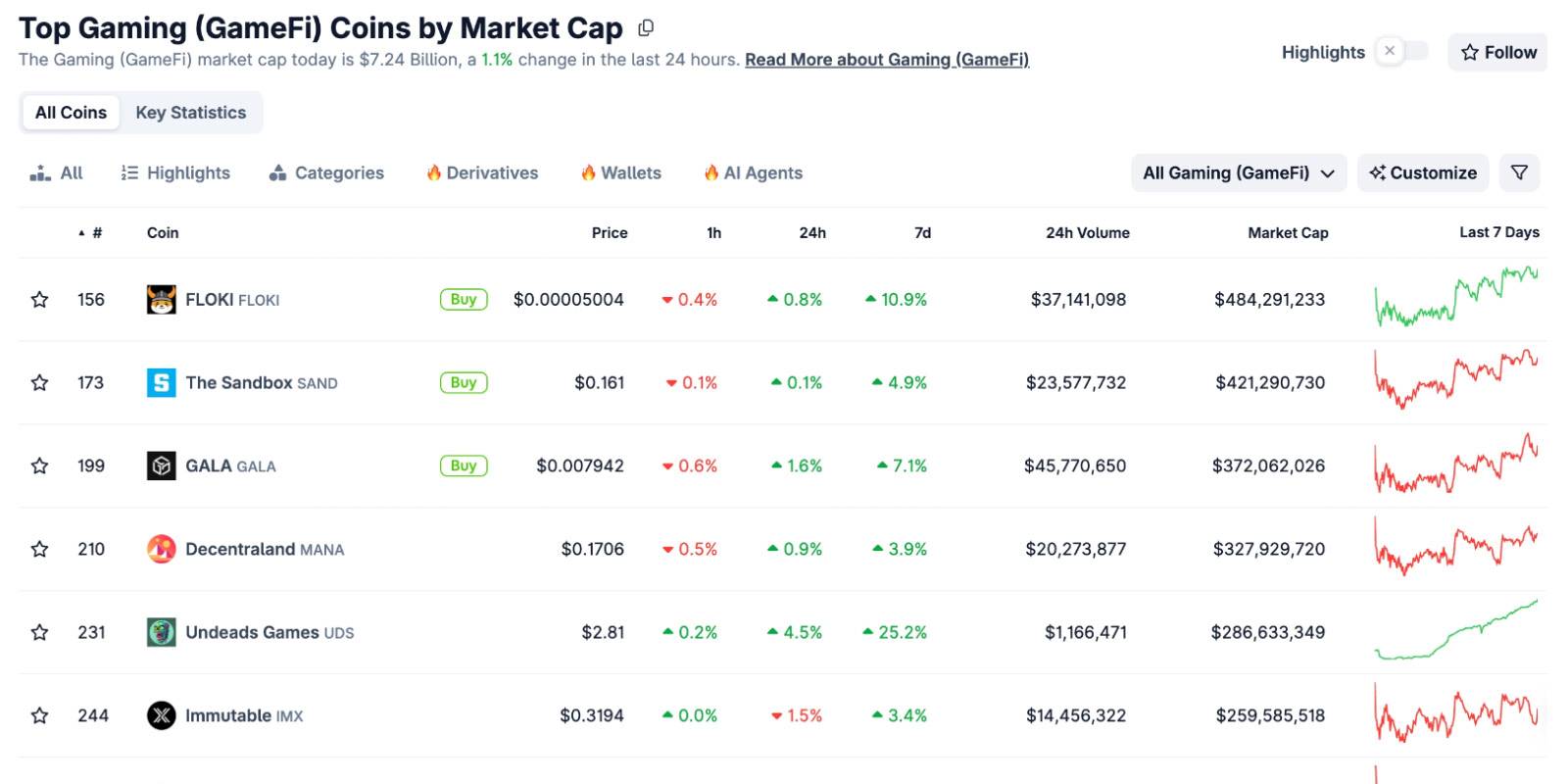
When all GameFi tokens have dropped out of the TOP 100, can COC reignite the narrative with a Bitcoin economic model?
On November 27, $COC mining will be launched. The opportunity to mine the first block won't wait for anyone.
Ethereum's Next Decade: From "Verifiable Computer" to "Internet Property Rights"
Fede, the founder of LambdaClass, provides an in-depth explanation of anti-fragility, the 1 Gigagas scaling goal, and the vision for Lean Ethereum.
Trending news
MoreCrypto prices
More






