
XRP's Strategic Rise: Regulatory Clarity and Cross-Border Payment Dominance in 2025
- Ripple's 2025 SEC legal resolution reclassified XRP as a commodity, removing regulatory barriers and unlocking institutional capital. - This spurred $1.2B in Q3 2025 ETF inflows and signaled U.S. policy shifts toward digital asset clarity. - XRP's cross-border payment efficiency, with 3-5 second settlements and low fees, drives adoption by major banks like Santander and SBI. - Technical advantages like energy-efficient XRP Ledger position XRP as a preferred infrastructure asset for institutions. - Analys
The resolution of Ripple’s decade-long legal battle with the U.S. Securities and Exchange Commission (SEC) in August 2025 marked a pivotal turning point for XRP’s institutional adoption. The joint dismissal of the case and the SEC’s reclassification of XRP as a commodity rather than a security eliminated a major regulatory overhang, unlocking a flood of institutional capital. This development, coupled with XRP’s technical advantages in cross-border payments, has positioned it as a cornerstone of the next-generation financial infrastructure.
Regulatory Clarity Fuels Institutional Confidence
The SEC’s decision to waive Ripple’s “bad actor” disqualification under Regulation D allowed the company to resume capital raising, while the reclassification of XRP as a commodity removed the legal ambiguity that had previously deterred institutional investors. This clarity catalyzed a surge in demand, with $1.2 billion in ETF inflows reported in Q3 2025 alone, including the launch of the ProShares Ultra XRP ETF (UXRP), which attracted $1.2 billion in assets under management within a month [1]. The resolution also signaled a broader shift in U.S. policy, as the Trump Administration’s Working Group on Digital Asset Markets emphasized the need for a clear jurisdictional framework between the SEC and CFTC to foster innovation while addressing risks [2].
Macroeconomic Tailwinds and Cross-Border Efficiency
Global macroeconomic trends have further amplified XRP’s appeal. Digital money and tokenization are reducing cross-border payment costs by up to 60%, with Ripple’s On-Demand Liquidity (ODL) service processing $1.3 trillion in transactions in Q2 2025 alone [1]. Santander reported a 40% increase in cross-border payment volumes via ODL in Q3 2025, particularly in corridors like Europe to Latin America, where XRP’s 3–5 second settlement times and $0.0002 fees outperform SWIFT’s 36–96 hour windows and $26–$50 per transfer costs [1]. The U.S. GENIUS Act of 2025, which mandated 1:1 reserves for stablecoins, further solidified trust in digital assets, enabling platforms like Ripple’s RLUSD to facilitate real-time settlements with 40–60% lower costs in key corridors [6].
Strategic Partnerships and Infrastructure Expansion
Ripple’s institutional partnerships have been instrumental in embedding XRP into global financial systems. Santander, SBI Holdings, and American Express now leverage XRP for high-volume remittances, reducing costs by up to 90% in corridors like Japan to Africa [3]. The launch of Ripple USD (RLUSD), backed by BNY Mellon and SBI, has expanded XRP’s utility by bridging traditional finance and DeFi ecosystems [1]. Additionally, Ripple’s acquisition of Rail and its EVM sidechain have enhanced its ability to offer stablecoin-centric solutions and virtual accounts, supporting enterprise-grade compliance and real-time reporting [4].
Technical Advantages and Future Outlook
XRP’s energy-efficient XRP Ledger (XRPL) and deterministic finality make it a preferred solution for institutions seeking to avoid the volatility and complexity of proof-of-work systems [1]. With 120+ institutional partnerships and SWIFT integration, Ripple has reduced adoption friction for banks, enabling seamless interoperability between blockchain and legacy systems [5]. Analysts project that XRP could capture 14% of SWIFT’s $150 trillion global volume within five years, potentially driving the token’s price to $10 or higher by 2030 [7].
Conclusion
Ripple’s strategic navigation of regulatory challenges, combined with its technical superiority in cross-border payments and macroeconomic tailwinds, has solidified XRP’s role as a critical infrastructure asset. As institutions increasingly prioritize speed, cost efficiency, and compliance, XRP’s dominance in high-volume corridors and its alignment with U.S. policy make it a compelling long-term investment.
**Source:[5] XRP's Strategic Value in Institutional Adoption and Blockchain Expansion [https://www.bitget.com/news/detail/12560604937530][7] XRP News: Token Could Capture 14% of SWIFT's Volume [https://www.bitget.com/news/detail/12560604937530]
Disclaimer: The content of this article solely reflects the author's opinion and does not represent the platform in any capacity. This article is not intended to serve as a reference for making investment decisions.
You may also like
Stablecoin Legislation Booms Globally, Why Is China Taking the Opposite Approach? An Article to Understand the Real National Strategic Choices
Amid the global surge in stablecoin legislation, China has chosen to firmly curb stablecoins and other virtual currencies, while accelerating the development of the digital yuan to safeguard national security and monetary sovereignty. Summary generated by Mars AI. This summary is produced by the Mars AI model and its accuracy and completeness are still being iteratively improved.

Liquidity migration begins! Japan becomes the Fed's "reservoir," 120 billions in carry trade returns set to ignite the December crypto market
The Federal Reserve has stopped quantitative tightening and may cut interest rates, while the Bank of Japan plans to raise rates, changing the global liquidity landscape and impacting carry trades and asset pricing. Summary generated by Mars AI. This summary is produced by the Mars AI model, and the accuracy and completeness of its content are still under iterative improvement.

Weekly Hot Picks: Bank of Japan Sends Strongest Rate Hike Signal! Is the Copper Market Entering a Supercycle Rehearsal?
The leading candidate for Federal Reserve Chair is being questioned for potentially "accommodative rate cuts." Copper prices have reached a historic high, and a five-hour meeting between the United States and Russia ended without results. Expectations for a Japanese interest rate hike in December have surged, and Moore Threads' stock soared more than fivefold on its first day... What market moves did you miss this week?
Monad Practical Guide: Welcome to a New Architecture and High-Performance Development Ecosystem
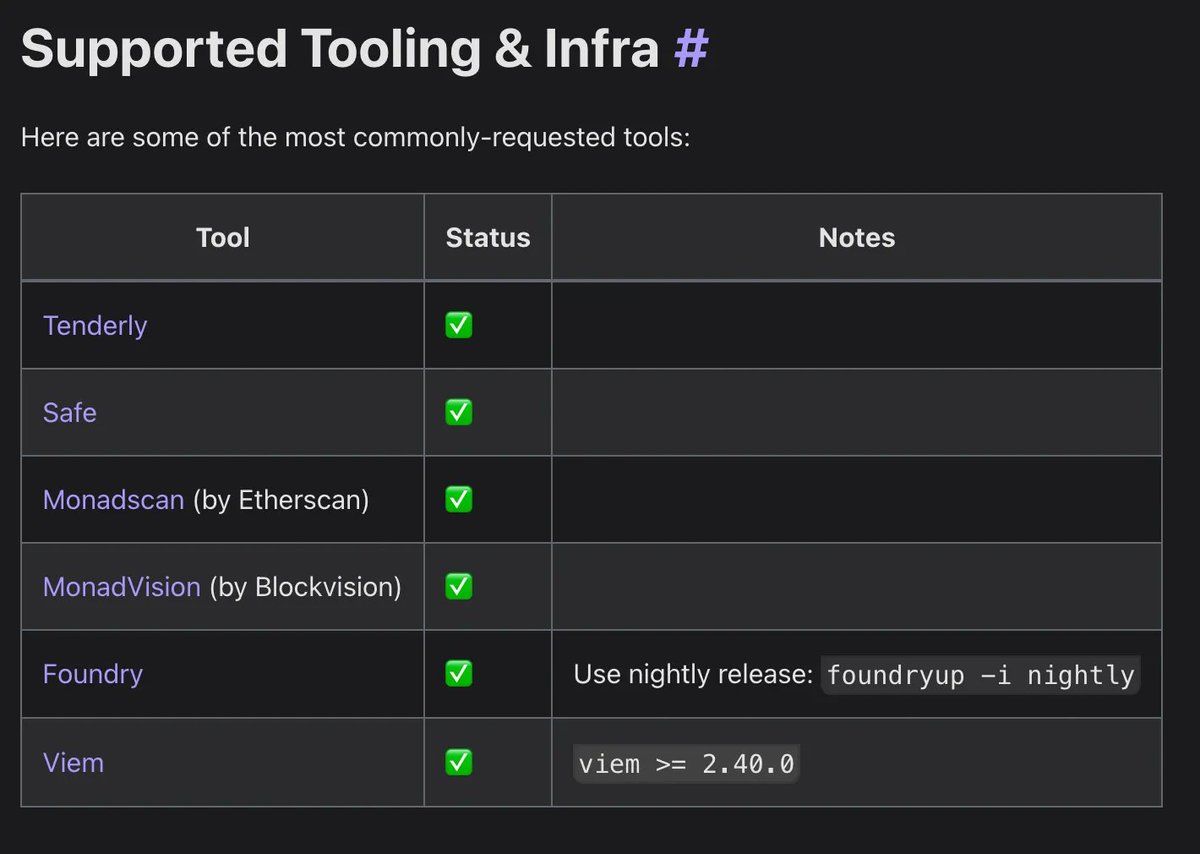
This article will introduce some resources to help you better understand Monad and start developing.
Trending news
MoreCrypto prices
More





