
Rising Institutional Interest in MUTM and Its Implications for Crypto Investors
- Institutional capital is shifting to DeFi as macroeconomic trends and utility-driven projects like MUTM attract $14.68M and 15,500 holders. - MUTM's hybrid P2C/P2P lending model, 95/100 CertiK audit score, and deflationary tokenomics align with institutional priorities for security and scalability. - Analysts highlight MUTM's Ethereum-pegged stablecoin and gas fee reduction potential as key advantages over speculative peers like Chainlink and XRP. - With 28.2% CAGR projected for DeFi, projects combining
The cryptocurrency market is undergoing a paradigm shift as institutional capital increasingly allocates to digital assets, driven by macroeconomic tailwinds and the emergence of utility-driven projects like Mutuum Finance (MUTM). This trend is not speculative but strategic, with institutions leveraging on-chain data to identify assets that align with long-term value creation. MUTM, a DeFi platform, has attracted over $14.68 million in capital and 15,500 token holders, signaling a growing institutional appetite for projects with robust infrastructure and deflationary tokenomics [1].
Institutional Capital Flow: From Bitcoin to DeFi
MicroStrategy’s Bitcoin accumulation strategy has set a precedent for institutional-grade crypto assets. By holding 629,376 BTC with an unrealized gain of $24.4 billion, the company has demonstrated Bitcoin’s role as a macroeconomic hedge and reserve asset [2]. However, the institutional narrative is expanding beyond Bitcoin. Chinese institutions, for instance, have accumulated 2.45 million ETH ($11 billion) through offshore channels, prioritizing Ethereum’s utility in DeFi, staking yields (3–6%), and cross-border settlements [1]. This diversification reflects a broader institutional recognition of blockchain’s infrastructure value, not just speculative potential.
MUTM’s On-Chain Momentum
Mutuum Finance (MUTM) is capitalizing on this institutional shift. On-chain data reveals whale accumulation patterns, with over 15,500 holders participating—a metric often correlated with institutional confidence [3]. The project’s hybrid Peer-to-Contract (P2C) and Peer-to-Peer (P2P) lending model, coupled with a 95.00 CertiK audit score and a $50,000 USDT bug bounty program, further solidifies its institutional-grade security profile [1].
Implications for Crypto Investors
For retail and institutional investors alike, MUTM’s trajectory highlights three key implications:
1. Utility-Driven Valuation: Unlike speculative tokens, MUTM’s Ethereum-pegged stablecoin and Layer-2 integration (targeting 80% gas fee reduction) position it as a scalable solution for DeFi’s infrastructure gap [2].
2. Deflationary Mechanics: Tokenomics designed to reduce supply—via staking and burn mechanisms—create scarcity, a critical factor in institutional asset evaluation [1].
3. Macro Alignment: With the DeFi market projected to grow at 28.2% CAGR, projects like MUTM that address liquidity and scalability are well-positioned to capture institutional capital [1].
Analysts project MUTM could achieve a 100X return by 2027, driven by its alignment with Ethereum’s scalability roadmap and institutional-grade security [1]. This contrasts with undervalued peers like Chainlink (LINK) and XRP , which lack MUTM’s hybrid lending model and deflationary incentives [1].
Conclusion
The convergence of institutional capital flow and on-chain activity in MUTM underscores a maturing crypto market. As institutions prioritize utility, yield, and security, projects like MUTM—backed by rigorous audits, whale accumulation, and macroeconomic alignment—will likely outperform speculative assets. For investors, this signals a shift from short-term volatility to long-term value creation, with MUTM serving as a case study in institutional-grade DeFi innovation.
**Source:[1] MUTM's Explosive Growth Potential from $0.035 to $3 [2] MicroStrategy's Bitcoin Accumulation Strategy and Its Market Impact
Disclaimer: The content of this article solely reflects the author's opinion and does not represent the platform in any capacity. This article is not intended to serve as a reference for making investment decisions.
You may also like
A decade-long tug-of-war ends: "Crypto Market Structure Bill" sprints to the Senate
At the Blockchain Association Policy Summit, U.S. Senators Gillibrand and Lummis stated that the "Crypto Market Structure Bill" is expected to have its draft released by the end of this week, with revisions and hearings scheduled for next week. The bill aims to establish clear boundaries for digital assets by adopting a classification-based regulatory framework, clearly distinguishing between digital commodities and digital securities, and providing a pathway for exemptions for mature blockchains to ensure that regulation does not stifle technological progress. The bill also requires digital commodity trading platforms to register with the CFTC and establishes a joint advisory committee to prevent regulatory gaps or overlapping oversight. Summary generated by Mars AI. The accuracy and completeness of this summary, generated by the Mars AI model, is still being iteratively updated.

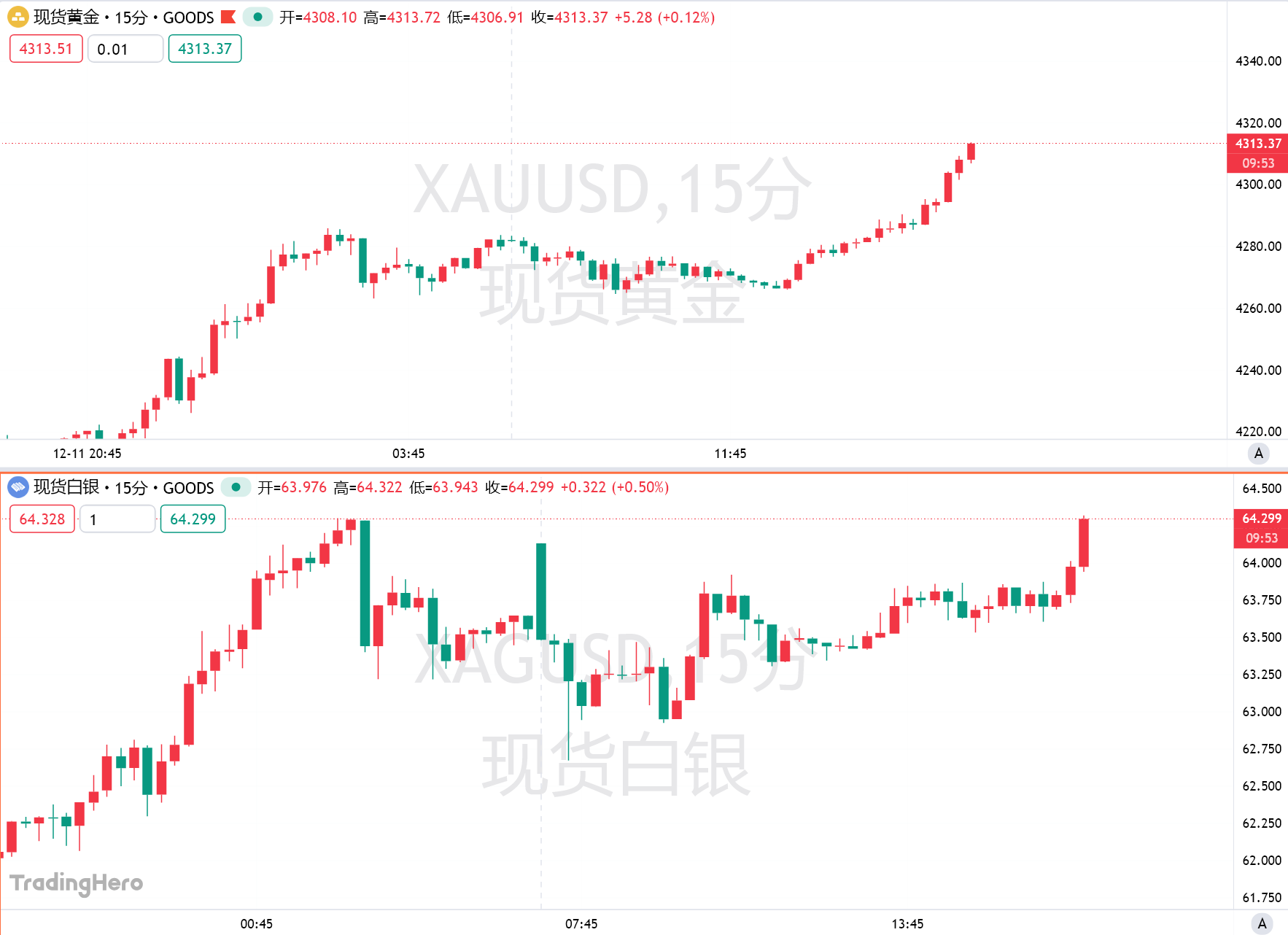
Gold surpasses the $4,310 mark—Is the "bull frenzy" returning?
Boosted by expectations of further easing from the Federal Reserve, gold has risen for four consecutive days. Technical indicators show strong bullish signals, but there remains one more hurdle before reaching a new all-time high.
Trend Research: Why Are We Still Bullish on ETH?
Against the backdrop of relatively accommodative expectations in both China and the US, which suppress asset downside volatility, and with extreme fear and capital sentiment not yet fully recovered, ETH remains in a favorable "buy zone."

Trending news
MoreCrypto prices
More





