
BOK Pauses Rates to Watch Housing and Debt Storm Clouds
- Bank of Korea (BOK) kept its 2.5% benchmark rate unchanged for the second consecutive meeting, aligning with market expectations amid housing market and household debt concerns. - BOK raised 2025 growth forecast to 0.9% from 0.8% due to supplementary budgets and improved consumer sentiment, marking its first upward revision this year. - Housing prices in Seoul rose despite tightened mortgage rules, while household debt grew at the fastest pace since 2021, prompting calls for new supply-side measures. - T
The Bank of Korea (BOK) has maintained its benchmark interest rate at 2.5% for the second consecutive meeting, a decision that aligns with market expectations and reflects the central bank’s cautious approach in monitoring financial stability amid ongoing concerns about the housing market and household debt [1]. The rate freeze follows a series of earlier reductions in 2025 as the central bank sought to temper inflationary pressures and manage economic growth [2]. Despite the unchanged policy rate, the BOK raised its growth forecast for 2025 to 0.9% from 0.8% in May, citing the impact of supplementary government budgets and improved consumer sentiment [3]. This revision marks the central bank’s first upward adjustment this year, as it acknowledges signs of modest economic recovery after a slow start to the year [4].
The central bank also revised its 2025 inflation forecast to 2.0% from 1.9%, noting that current inflation levels remain close to its target of 2%. The decision to keep rates on hold underscores the BOK’s preference for observing the effects of its recent measures to stabilize the housing market, particularly in the Greater Seoul area, where apartment prices continue to rise despite tightened mortgage loan restrictions [2]. The BOK emphasized the need to monitor household debt levels, which expanded at the fastest pace since 2021 in the second quarter of 2025, largely driven by increased mortgage lending [2].
The government is expected to announce new measures to address housing market imbalances, with officials indicating that additional supply strategies are under final coordination. These actions are part of broader efforts to ensure financial stability while supporting economic growth [2]. Meanwhile, the central bank highlighted the role of domestic demand in the recovery, citing the impact of supplementary budgets aimed at boosting household consumption. The BOK noted that these fiscal measures have helped offset early-year economic weakness, including a 0.25% contraction in the first quarter, the steepest among OECD members [3].
On the external front, the BOK acknowledged the positive impact of the recent South Korea–U.S. trade deal, which lowered U.S. tariffs on South Korean exports from 25% to 15%. The agreement, which includes a $350 billion investment pledge from South Korea, is expected to support export growth in the short to medium term. However, the central bank warned that U.S. tariff policies could gradually slow export momentum, especially in key sectors such as automobiles [1]. Exports accounted for 44% of South Korea’s GDP in 2023, with the U.S. serving as the country’s second-largest export market after China [1].
Looking ahead, the BOK signaled an openness to rate cuts within the next three months, with five out of six board members supporting the possibility of easing monetary policy. This stance aligns with forecasts from major investment banks, including Bank of America and Goldman Sachs , which anticipate rate reductions in late 2025 and early 2026 [1]. The central bank’s decision to delay rate cuts reflects a balance between supporting economic growth and managing inflationary and financial stability risks, particularly in light of the fragile global economic environment [3].
Source:
Disclaimer: The content of this article solely reflects the author's opinion and does not represent the platform in any capacity. This article is not intended to serve as a reference for making investment decisions.
You may also like
Stablecoin Legislation Booms Globally, Why Is China Taking the Opposite Approach? An Article to Understand the Real National Strategic Choices
Amid the global surge in stablecoin legislation, China has chosen to firmly curb stablecoins and other virtual currencies, while accelerating the development of the digital yuan to safeguard national security and monetary sovereignty. Summary generated by Mars AI. This summary is produced by the Mars AI model and its accuracy and completeness are still being iteratively improved.

Liquidity migration begins! Japan becomes the Fed's "reservoir," 120 billions in carry trade returns set to ignite the December crypto market
The Federal Reserve has stopped quantitative tightening and may cut interest rates, while the Bank of Japan plans to raise rates, changing the global liquidity landscape and impacting carry trades and asset pricing. Summary generated by Mars AI. This summary is produced by the Mars AI model, and the accuracy and completeness of its content are still under iterative improvement.

Weekly Hot Picks: Bank of Japan Sends Strongest Rate Hike Signal! Is the Copper Market Entering a Supercycle Rehearsal?
The leading candidate for Federal Reserve Chair is being questioned for potentially "accommodative rate cuts." Copper prices have reached a historic high, and a five-hour meeting between the United States and Russia ended without results. Expectations for a Japanese interest rate hike in December have surged, and Moore Threads' stock soared more than fivefold on its first day... What market moves did you miss this week?
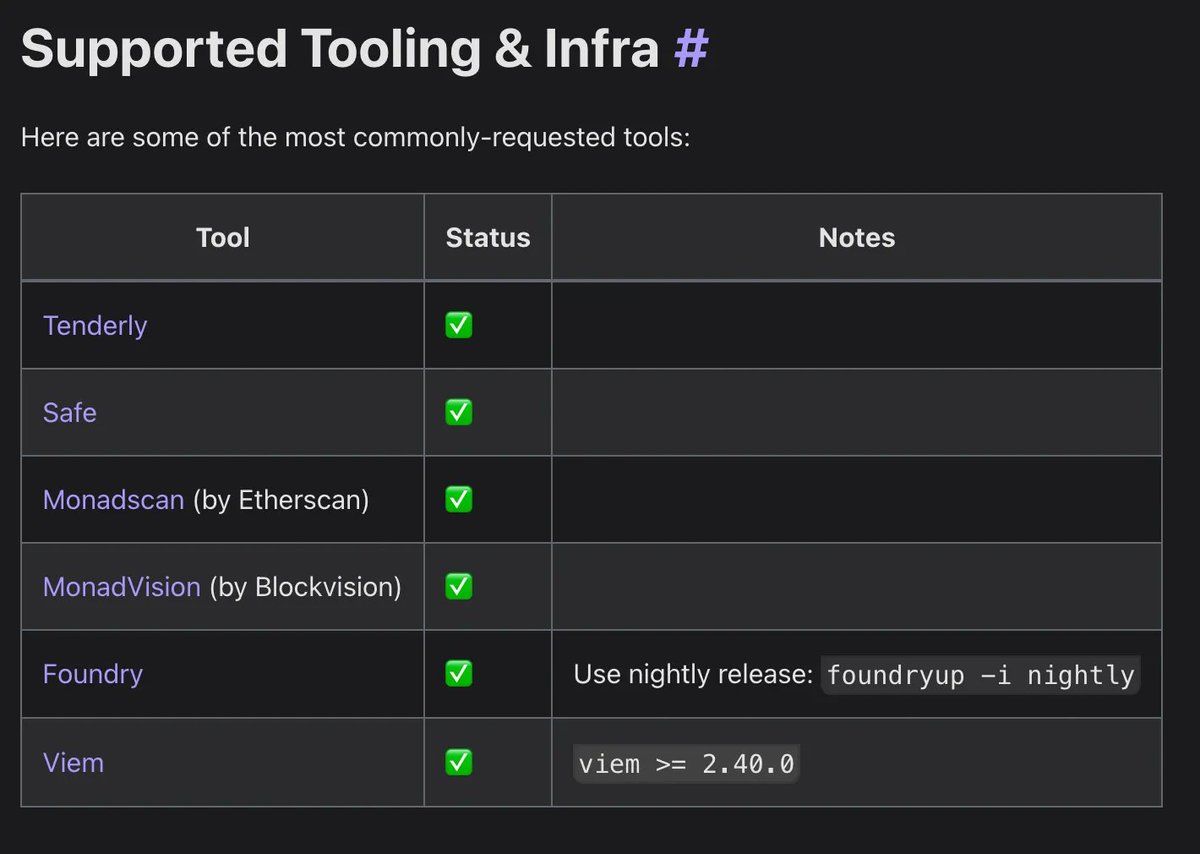
Monad Practical Guide: Welcome to a New Architecture and High-Performance Development Ecosystem
This article will introduce some resources to help you better understand Monad and start developing.
Trending news
MoreCrypto prices
More





