
Data Streams : Chainlink creates a bridge between crypto and traditional finance
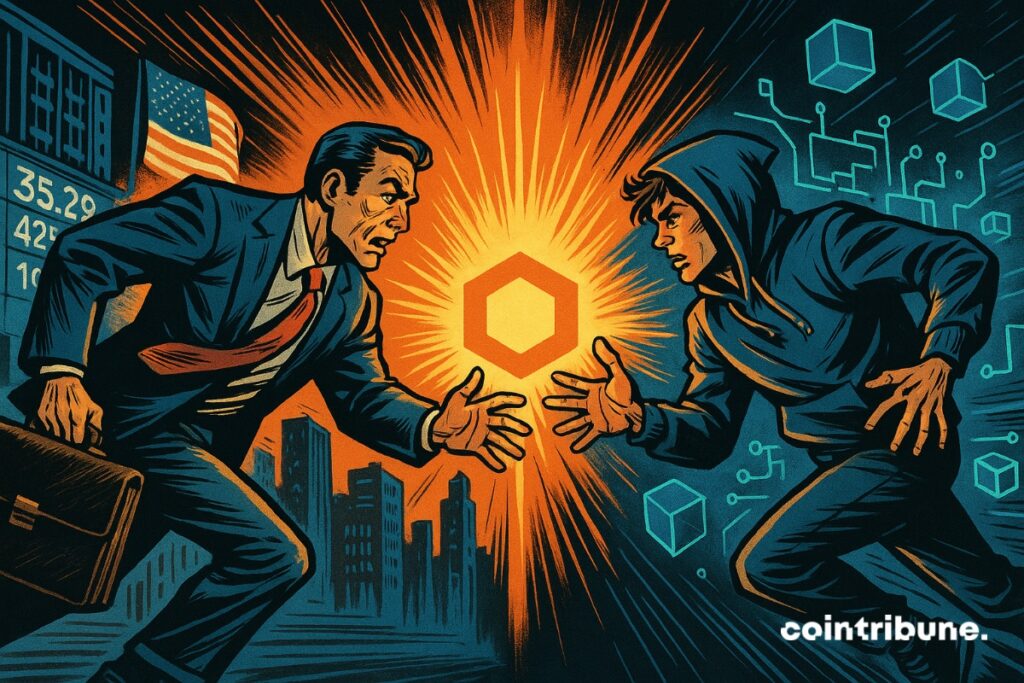
Chainlink propels crypto into a new dimension with its Data Streams: American stock market data is now available on‑chain. A major breakthrough for DeFi, enabling crypto protocols to interact with traditional markets in real time. The bridge between Wall Street and Web3 is underway.
In brief
- Chainlink makes stock market data accessible on‑chain via its Data Streams, covering US stocks and ETFs.
- DeFi protocols like GMX are already leveraging these streams to create financial products backed by real assets.
- Chainlink’s Data Streams pave the way for deeper integration between crypto and traditional markets.
An oracle infrastructure designed to revolutionize on‑chain stock market data
Launched on August 4, the Chainlink Data Streams solution now provides real-time streams on major US stocks, ETFs including SPY, CRCL, QQQ, NVDA, AAPL, and MSFT assets. This crypto data includes:
- OHLC values;
- Volumes;
- Critical metadata such as trading hours or market halts.
Available on over 37 crypto blockchains, they are designed to integrate directly with smart contracts. Tokenization of real assets, long hampered by the lack of reliable on‑chain data, finds a solution here. As Chainlink explains:
These data streams enable developers to create advanced onchain applications using secure, low-latency market data for tokenized assets.
DeFi grabs US stocks: a new playground opens
The immediate integration of Chainlink market data for tokenized stocks by leading protocols like GMX, Kamino, and GMX-Solana proves its direct utility. It transforms synthetic asset approaches in DeFi, previously limited to cryptos. These streams now enable the creation of products indexed to real values, with precision and responsiveness comparable to traditional markets.
By reducing information access delay to mere milliseconds, Chainlink meets the performance demands of DeFi traders and developers. Protocols can now develop collateralization or insurance mechanisms on stocks like Apple or Nvidia.
RWA: crypto assaulting a 30 trillion market
The RWA market currently weighs 275 billion dollars, projected to reach 30 trillion by 2030. This expected growth cannot happen without reliable infrastructures. Chainlink positions itself here as the technical gateway between the crypto world and traditional finance.
Deploying oracles capable of managing timing, halts, and financial data granularity, the protocol is at the heart of the future tokenized ecosystem. Its ability to standardize access to these streams multiplies possibilities for DAOs, DEXs, and other Web3 projects aiming to build financial products backed by the real economy.
5 crypto use cases to watch with Chainlink Data Streams
Concrete use cases of the Chainlink Data Stream are opening rapidly. Thanks to metadata included in each stream, crypto developers can model complex scenarios such as conditional triggers, halt alerts, or multi-asset strategies. Here are some direct applications already envisioned:
- On‑chain synthetic ETF creation from US stocks;
- Loans with dynamic collateralization on tokenized stock assets;
- Circuit breaker mechanisms integrated in DEXs;
- Automated arbitrage between real and synthetic prices;
- Data aggregation for crypto fundamental analysis portals.
Data granularity and freshness open a new era for finance-oriented Dapps, far beyond simple bitcoin trading.
Chainlink Data Streams are kickstarting a parallel financial market interconnected with traditional finance. Despite regulatory hurdles, Chainlink’s oracle infrastructure impresses. The 4% LINK rise and exploding volumes confirm a clear ambition: cryptos no longer copy Wall Street, they are taking position there.
Disclaimer: The content of this article solely reflects the author's opinion and does not represent the platform in any capacity. This article is not intended to serve as a reference for making investment decisions.
You may also like
Explosive Aave DAO Proposal Aims to Seize Control of Aave Labs’ IP and Equity
Gamma Prime Highlights Its Marketplace for Uncorrelated Strategies at the Tokenized Capital Summit in Abu Dhabi
SMARDEX Rebrands to Everything, Merging Liquidity, Loans and Perps into One Smart Contract
Trending news
MoreCrypto prices
More





