
Tether’s Crystal Intelligence stake adds teeth to stablecoin surveillance push

With law enforcement lagging and users losing billions of dollars to crypto-related scams every year, Tether’s new investment raises a provocative question: are stablecoin firms now the first line of defense?
On July 8, USDT issuer Tether announced a strategic investment in Crystal Intelligence, a blockchain forensics firm specializing in fraud detection, risk mapping and regulatory compliance.
The deal, undisclosed in size, cements a growing partnership between two firms already collaborating on scam-alert infrastructure and global investigations into illicit crypto flows. For Tether ( USDT ), it amplifies ongoing efforts to combat illicit stablecoin activity, reinforcing tools already used by law enforcement to track and freeze suspicious transactions.
By deepening its ties to Crystal, Tether signals a broader shift: Stablecoin issuers, once passive payment rails, are now actively shaping crypto’s security infrastructure.
“With the latest in advanced intelligence tools, like those being developed by Crystal Intelligence, we are enhancing our ability to assist authorities in tracing the movement of funds in real time,” Paolo Ardoino, CEO of Tether said. “This strategic investment will strengthen our capacity to collaborate more effectively and reinforce a clear message: USD₮ is the digital dollar for the people, bad actors will be stopped.”
Why Tether is betting big on blockchain forensics
Tether’s aggressive push into blockchain surveillance is more about survival than optics. A January 2025 UN report singled out USDT as the “preferred choice” for money launderers and scammers across Southeast Asia, citing its stability and pseudonymous transactions as ideal for illicit flows.
Yet that same report contained an inconvenient truth for crypto critics: Less than 1% of all cryptocurrency transactions fund criminal activity.
The contradiction underscores Tether’s dilemma. As the world’s most traded crypto asset, with $61.9 billion in daily volume as of press time, dwarfing even Bitcoin ( BTC ), USDT has become both a pillar of crypto markets and a lightning rod for regulators. When nearly 60% of all crypto trades involve Tether, its integrity isn’t just a compliance issue; it’s the linchpin holding together decentralized finance’s liquidity.
Since the UN’s rebuke, Tether has gone on the offensive. Its collaboration with the DOJ in June to seize $225 million from pig-butchering rings demonstrated a tangible counterstrike. Now, by investing in Crystal’s forensic tools, Tether is addressing the surveillance gap that regulators have struggled to fill.
The strategy serves dual purposes: It disrupts criminal networks exploiting USDT while preempting regulatory crackdowns that could destabilize the stablecoin’s $158.7 billion ecosystem. When law enforcement lacks resources to track cross-border crypto crime, Tether’s real-time freezing capabilities, which are used in 55 jurisdictions, have effectively made the company a private-sector sheriff.
With the latest investment, Tether appears to be doubling down on forensic infrastructure before mandates force its hand. With $2.7 billion already frozen and scams proliferating, the message is clear: USDT’s future hinges on being the cleanest dirty shirt in crypto’s laundry.
Disclaimer: The content of this article solely reflects the author's opinion and does not represent the platform in any capacity. This article is not intended to serve as a reference for making investment decisions.
You may also like
Mars Morning News | Ethereum Fusaka upgrade officially activated; ETH surpasses $3,200
The Ethereum Fusaka upgrade has been activated, enhancing L2 transaction capabilities and reducing fees; BlackRock predicts accelerated institutional adoption of cryptocurrencies; cryptocurrency ETF inflows have reached a 7-week high; Trump nominates crypto-friendly regulatory officials; Malaysia cracks down on illegal Bitcoin mining. Summary generated by Mars AI. The accuracy and completeness of this summary are still undergoing iterative updates.

Do you think stop-losses can save you? Taleb exposes the biggest misconception: all risks are packed into a single blow-up point.
Nassim Nicholas Taleb's latest paper, "Trading With a Stop," challenges traditional views on stop-loss orders, arguing that stop-losses do not reduce risk but instead compress and concentrate risk into fragile breaking points, altering market behavior patterns. Summary generated by Mars AI. The accuracy and completeness of this summary are still being iteratively improved by the Mars AI model.
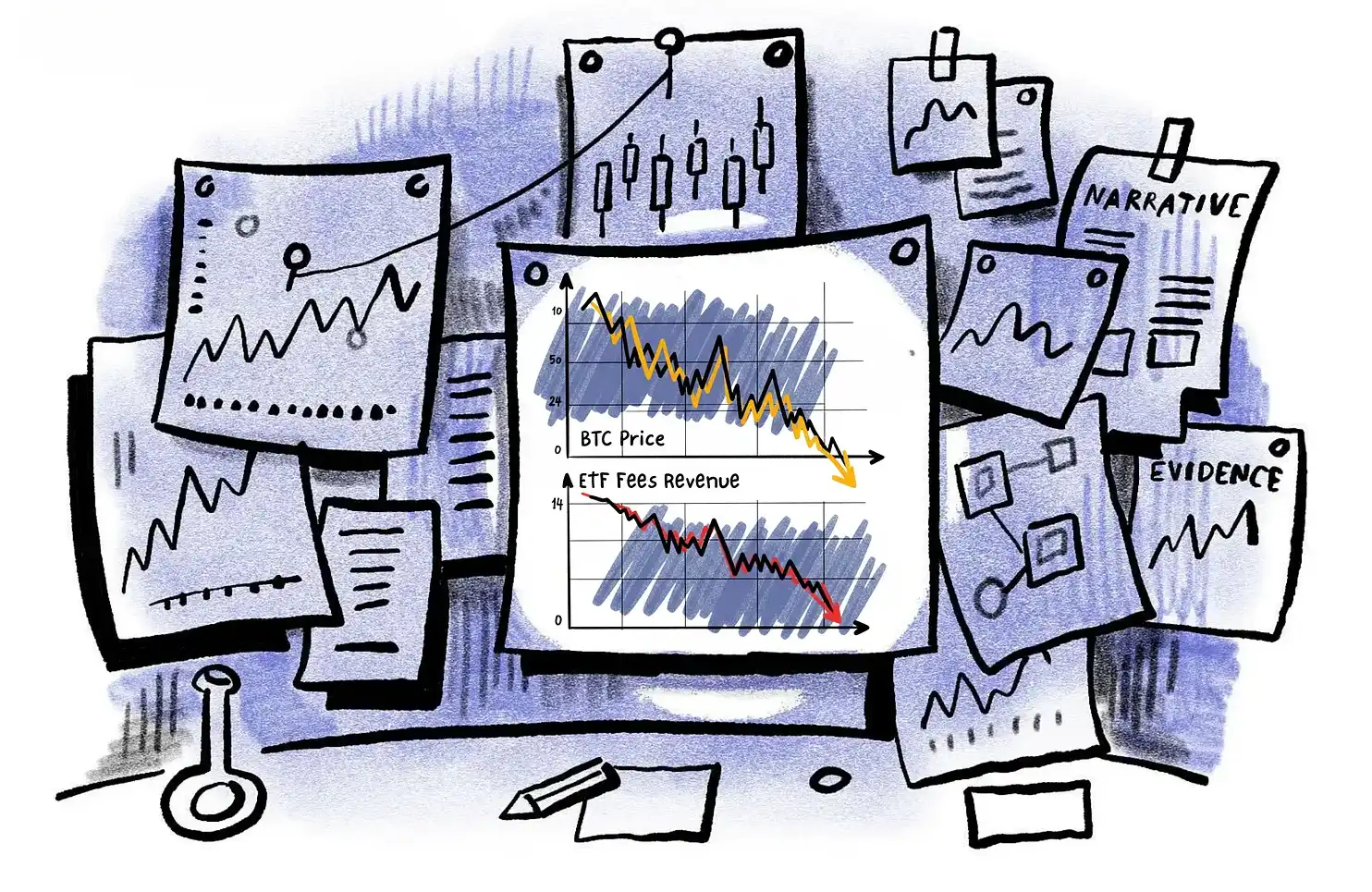
With capital outflows from crypto ETFs, can issuers like BlackRock still make good profits?
BlackRock's crypto ETF fee revenue has dropped by 38%, and its ETF business is struggling to escape the cyclical curse of the market.
Incubator MEETLabs today launched the large-scale 3D fishing blockchain game "DeFishing". As the first blockchain game on the GamingFi platform, it implements a dual-token P2E system with the IDOL token and the platform token GFT.
MEETLabs is an innovative lab focused on blockchain technology and the cryptocurrency sector, and also serves as the incubator for MEET48.

Trending news
MoreCrypto prices
More






