
US Republicans declare ‘Crypto Week’ to mull 3 crypto bills

US Republican House leaders have pledged to consider three key crypto bills starting in mid-July as part of a regulatory “Crypto Week.”
House Finance Committee Chair French Hill, House Agriculture Committee Chair Glenn Thompson and Speaker Mike Johnson said on Thursday that they’d use the week of July 14 to 18 to look over a crypto market structure bill, a stablecoin bill and a bill on central bank digital currencies (CBDCs).
“House Republicans are taking decisive steps to deliver the full scope of President Trump’s digital assets and cryptocurrency agenda,” Johnson said
“During ‘Crypto Week,’ the House looks forward to the timely consideration of three landmark pieces of legislation: the CLARITY Act, the Anti-CBDC Surveillance State Act, and the Senate’s GENIUS Act,” he added.
 Source: Financial Services GOP
The party’s push comes as President Donald Trump said last month that he wants the stablecoin-regulating GENIUS Act passed as soon as possible , before Congress goes on a month-long break in August.
The bills would begin to deliver on Trump’s crypto-focused promises during his campaign, which the crypto industry heavily backed and bankrolled.
GENIUS considered over STABLE
The House is seemingly moving ahead with the Senate-led GENIUS Act over its own similar bill known as the STABLE Act, which the House Finance Committee passed in May but has yet to see a full floor vote.
The Senate passed the GENIUS Act with bipartisan support last month, meaning if the House passes the bill as-is, it’ll be sent to Trump to sign into law.
However, legal analysts at Pillsbury Law said on Wednesday that the House could amend “key provisions, including those related to issuer eligibility, state-federal oversight dynamics and compliance requirements.”
If that happens, it’ll be sent back to the Senate for a vote to approve the changes.
Lawyers at Troutman Pepper Locke said last Tuesday that the House and Senate may form a committee to reconcile the differences between the GENIUS and STABLE Acts, which would then need approval from both chambers before it’s sent to Trump.
A notable difference between the bills is around oversight, as the STABLE Act stipulates strict federal oversight of stablecoin issuers while the GENIUS Act allows for state supervision.
CLARITY could be next on Trump’s desk
A crypto market structure bill, called the CLARITY Act, could be the next on Trump’s desk after the House Financial Services Committee and the Agriculture Committee advanced it on June 10 to put it before the full House.
The bill, which still needs to pass the Senate, stipulates the jurisdiction that the Securities and Exchange Commission and the Commodity Futures Trading Commission have over crypto.
It would require most types of crypto exchanges to register with the CFTC and lays out rules for disclosure, customer asset segregation and recordkeeping.
 Robert “Bo” Hines, a top White House crypto policy adviser, expects the CLARITY Act to quickly pass the House. Source: Bo Hines
Democrats have largely opposed both the GENIUS and CLARITY Acts, citing the growing crypto empire Trump and his family are building, which includes a crypto exchange, stablecoin and multiple crypto tokens.
GOP bill aims to ban CBDCs
The last bill the House will consider is the Anti-CBDC Surveillance State Act, which has an identical bill in the Senate in a bid to speed up the legislative process.
The bill would prohibit the Federal Reserve from being able to test, develop, create or issue a digital currency in any form and stop the central bank from offering financial products directly to individuals.
The bill was introduced in the last Congress by House Majority Whip Tom Emmer, but it expired at the end of that Congress’s term after it passed the House in May 2024.
Emmer revived the bill in the current Congress, and the House Finance Committee passed its version of the bill in April, while the Senate version is still sitting in the chamber’s Banking Committee.
Disclaimer: The content of this article solely reflects the author's opinion and does not represent the platform in any capacity. This article is not intended to serve as a reference for making investment decisions.
You may also like
Mars Morning News | Ethereum Fusaka upgrade officially activated; ETH surpasses $3,200
The Ethereum Fusaka upgrade has been activated, enhancing L2 transaction capabilities and reducing fees; BlackRock predicts accelerated institutional adoption of cryptocurrencies; cryptocurrency ETF inflows have reached a 7-week high; Trump nominates crypto-friendly regulatory officials; Malaysia cracks down on illegal Bitcoin mining. Summary generated by Mars AI. The accuracy and completeness of this summary are still undergoing iterative updates.

Do you think stop-losses can save you? Taleb exposes the biggest misconception: all risks are packed into a single blow-up point.
Nassim Nicholas Taleb's latest paper, "Trading With a Stop," challenges traditional views on stop-loss orders, arguing that stop-losses do not reduce risk but instead compress and concentrate risk into fragile breaking points, altering market behavior patterns. Summary generated by Mars AI. The accuracy and completeness of this summary are still being iteratively improved by the Mars AI model.

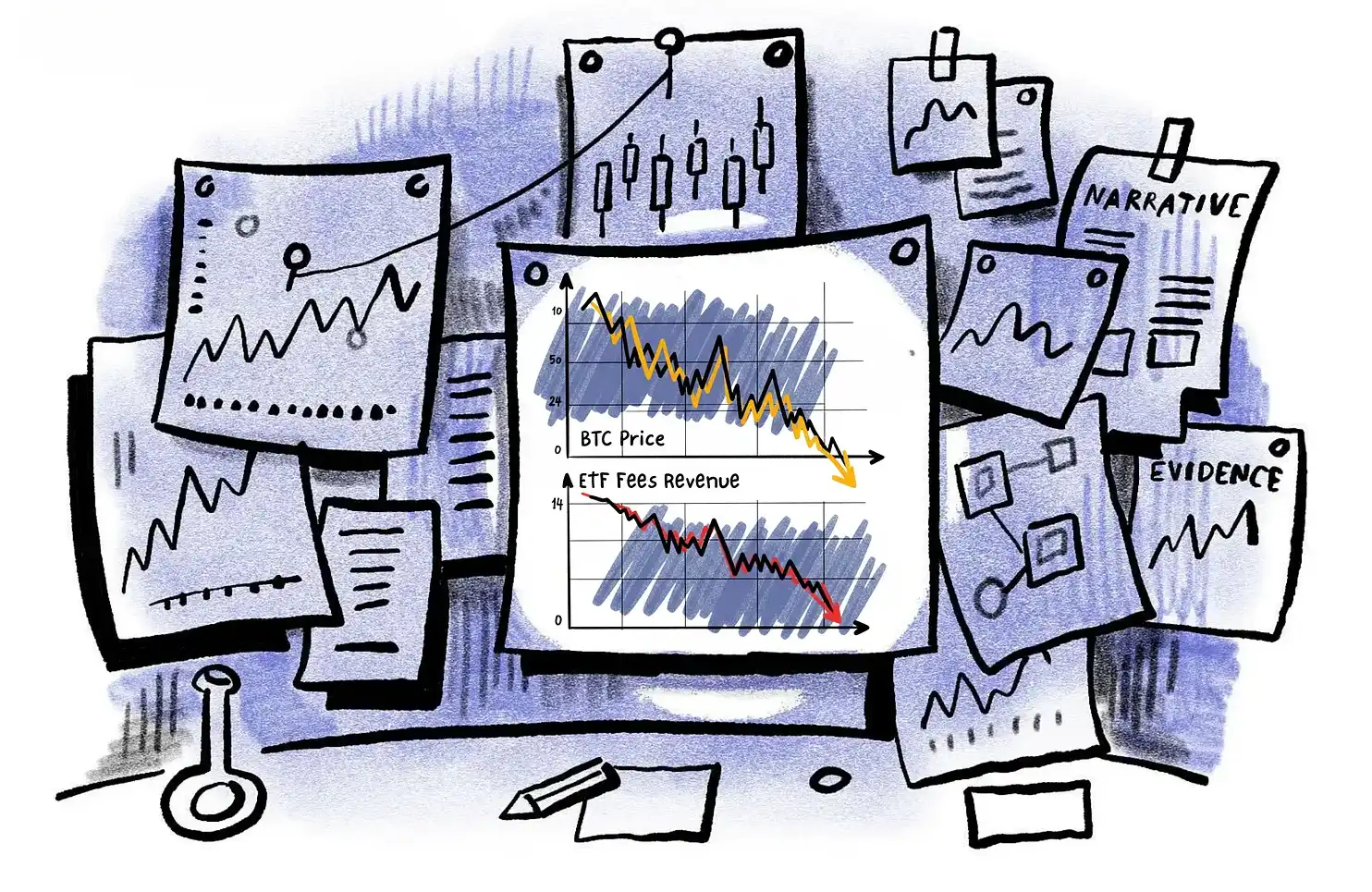
With capital outflows from crypto ETFs, can issuers like BlackRock still make good profits?
BlackRock's crypto ETF fee revenue has dropped by 38%, and its ETF business is struggling to escape the cyclical curse of the market.
Incubator MEETLabs today launched the large-scale 3D fishing blockchain game "DeFishing". As the first blockchain game on the GamingFi platform, it implements a dual-token P2E system with the IDOL token and the platform token GFT.
MEETLabs is an innovative lab focused on blockchain technology and the cryptocurrency sector, and also serves as the incubator for MEET48.

Trending news
MoreCrypto prices
More






