
MicroStrategy's $46 Billion Bitcoin Bet: A Double-Edged Sword for the Market

MicroStrategy’s 439,000 BTC stash showcases bold corporate adoption, but its concentration raises concerns about decentralization and market stability.
MicroStrategy, under the leadership of Michael Saylor, has pushed the boundaries of corporate Bitcoin adoption.
With a remarkable holding of 439,000 Bitcoin, valued at approximately $46.92 billion, the company now owns over 2% of the total Bitcoin supply.
MicroStrategy’s Bitcoin Playbook
This aggressive strategy has both cemented Bitcoin’s place in corporate finance and sparked concerns about market stability. While supporters view MicroStrategy’s actions as a milestone for Bitcoin’s legitimacy, critics warn of the risks inherent in such concentrated holdings.
MicroStrategy has redefined the role of corporate treasuries by making Bitcoin its primary reserve asset. Unlike traditional reserves held in cash or low-risk assets, MicroStrategy has pursued Bitcoin acquisitions funded by clever financial tools, such as 0% convertible bonds and equity sales.
Most recently, the company raised $1.5 billion through equity sales, issuing 3.8 million shares to purchase 15,350 Bitcoin at an average price of $100,386 per coin.
“This strategy gave MicroStrategy a significant first-mover advantage,” Alexandre Schmidt, Index Fund Manager at CoinShares told BeInCrypto in an interview.
The company has positioned itself as a proxy for Bitcoin investment, offering stockholders leveraged exposure to Bitcoin’s price without requiring direct cryptocurrency ownership.
However, this approach comes with risks. MicroStrategy’s market value significantly exceeds the value of its Bitcoin holdings, which are driven by premiums on its shares. This creates vulnerabilities if Bitcoin’s value declines or the premium narrows, Schmidt explains.
The cryptocurrency market in 2024 has experienced record-breaking growth, with Bitcoin surpassing $100,000 on December 5.
 Bitcoin Price Performance. Source:
BeInCrypto
Bitcoin Price Performance. Source:
BeInCrypto
This surge was at least partly fueled by optimism surrounding the nomination of Paul Atkins, a pro-crypto figure, as the incoming SEC Chair under President-elect Donald Trump. The broader cryptocurrency market’s value has nearly doubled in 2024, surpassing $3.8 trillion from $1.6 trillion in January.
 Total Cryptocurrency Market Cap in 2024. Source:
CoinGecko.
Total Cryptocurrency Market Cap in 2024. Source:
CoinGecko.
An increasing number of companies have incorporated Bitcoin into their treasuries, signaling growing confidence in digital assets. On December 9, Riot Platforms, a leading Bitcoin mining and digital infrastructure company, announced plans to raise $500 million by offering convertible senior notes to buy Bitcoin.
One week earlier, Marathon Digital Holdings announced that it was raising $700 million to extend its Bitcoin purchases. However, MicroStrategy’s dominance within this trend has also raised questions about market stability.
Blockstream, a leading company in blockchain technology, has also been steadily accumulating Bitcoin and runs a Bitcoin treasury:
“In November, we established a new asset management division to serve as a catalyst to help other corporate Bitcoin treasuries maximize returns on their Bitcoin investments. We expect broader adoption by major companies and nation states that are already rethinking their approach to Bitcoin and a steady stream of positive news on this front in the coming year,” Sean Bill, Chief Investment Officer at Blockstream told BeInCrypto in an interview.
Can Bitcoin Stay Decentralized Amid Institutional Influence?
MicroStrategy’s 439,000 Bitcoins represent a double-edged sword for the market. On the positive side, the company has legitimized Bitcoin as a strategic asset, inspiring other corporations to consider Bitcoin for their reserves. Yet, this concentration also introduces systemic risks.
“The potential for such a liquidation raises concerns about liquidity and market stability. Even if Bitcoin’s price fell below $18,000—an 80% drop from current levels—MicroStrategy’s holdings would still provide a buffer against immediate financial pressure. However, such a scenario would have broader implications for the entire market,” Schmidt says.
 MicroStrategy Bitcoin Portfolio. Source:
Saylortracker
MicroStrategy Bitcoin Portfolio. Source:
Saylortracker
Historical events support this view: in 2024, the German government sold 50,000 Bitcoin over five weeks, causing a 13% price decline. While disruptive, this event demonstrated Bitcoin’s resilience in absorbing large sales.
MicroStrategy’s dominance has reignited debates about Bitcoin’s decentralization. Exchange-traded products (ETPs) further complicate the picture by concentrating ownership among fewer entities.
While these vehicles make Bitcoin more accessible to traditional investors, Schmidt believes that ETPs cater to diverse investor pools, maintaining some level of decentralization.
Corporate Lessons from MicroStrategy
While MicroStrategy’s aggressive approach has garnered attention, companies like Block Inc. have taken a more measured path. Block reinvests Bitcoin-based profits into its reserves rather than relying on debt financing.
“Companies can opt to purchase Bitcoin directly using cash reserves or operating profits, avoiding the financial risks associated with leveraging or taking on debt. This strategy minimises exposure to market volatility while ensuring a more stable approach to building Bitcoin holdings. For instance, Block Inc. (formerly Square) exemplifies this method by reinvesting 10% of its Bitcoin-based profits into a Bitcoin treasury. This approach, rooted in organic company growth and financial fundamentals, reflects a balanced strategy for accumulating Bitcoin,” Schmidt explains.
Corporations exploring Bitcoin adoption must consider their risk tolerance, financial structure, and long-term goals. For individual Bitcoin holders, focusing on fundamentals is key. Bitcoin’s scarcity and decentralized nature remain unchanged.
“Bitcoin’s fundamental architecture, especially its decentralisation and unique consensus mechanism, means no single entity can control its future. While MicroStrategy’s influence is significant, it is only one participant in an increasingly diversified ecosystem. Bitcoin holders should focus on the fundamentals: its scarcity, robustness, and utility, all of which remain unchanged, and adopt a long-term perspective accordingly,” Bill said.
Schmidt, meanwhile, suggests diversification to mitigate risks tied to MicroStrategy’s actions.
“Keep an eye on market signals, like management changes or major share sales. Long-term strategies are crucial. Bitcoin has survived numerous 50%+ drawdowns. Patience rewards long-term holders,” he concludes.
MicroStrategy’s strategy highlights both the potential and risks of corporate Bitcoin adoption. While it has supported Bitcoin’s legitimacy and driven institutional adoption, it also spotlights the challenges of concentrated holdings in a decentralized network.
The cryptocurrency market’s growth in 2024 illustrates digital gold’s resilience and appeal. However, as more institutions enter the space, the balance between decentralization and institutional participation will shape Bitcoin’s narrative.
Disclaimer: The content of this article solely reflects the author's opinion and does not represent the platform in any capacity. This article is not intended to serve as a reference for making investment decisions.
You may also like
Ethereum undergoes "Fusaka upgrade" to further "scale and improve efficiency," strengthening on-chain settlement capabilities
Ethereum has activated the key "Fusaka" upgrade, increasing Layer-2 data capacity eightfold through PeerDAS technology. Combined with the BPO fork mechanism and the blob base price mechanism, this upgrade is expected to significantly reduce Layer-2 operating costs and ensure the network’s long-term economic sustainability.

Down 1/3 in the first minute after opening, halved in 26 minutes, "Trump concept" dumped by the market
Cryptocurrency projects related to the Trump family were once market favorites, but are now experiencing a dramatic collapse in trust.

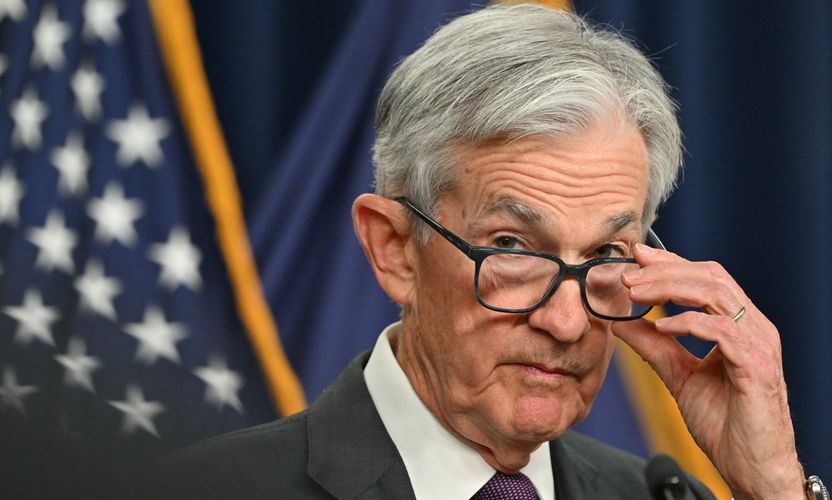
Can the Federal Reserve win the battle to defend its independence? Powell's reappointment may be the key to victory or defeat
Bank of America believes that there is little to fear if Trump nominates a new Federal Reserve Chair, as the White House's ability to exert pressure will be significantly limited if Powell remains as a board member. In addition, a more hawkish committee would leave a Chair seeking to accommodate Trump's hopes for rate cuts with no room to maneuver.
From panic to reversal: BTC rises above $93,000 again, has a structural turning point arrived?
BTC has strongly returned to $93,000. Although there appears to be no direct positive catalyst, in reality, four macro factors are resonating simultaneously to trigger a potential structural turning point: expectations of interest rate cuts, improving liquidity, political transitions, and the loosening stance of traditional institutions.

Trending news
MoreCrypto prices
More






